

Bankrupt Black Restaurant Owner Saves a Stranger During a Storm — He Turned Out to Be a Billionaire
00:00
00:00
01:31
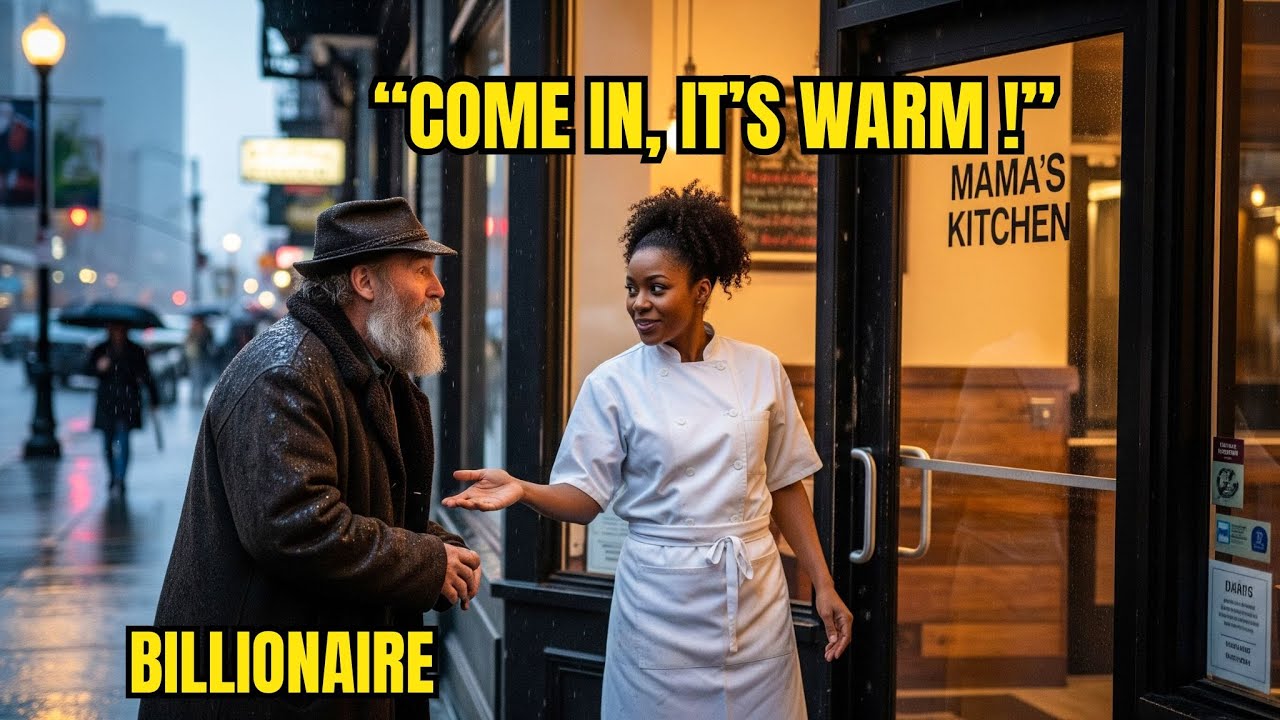
Thunder crashes outside Mama’s kitchen as Kesha Williams watches a well-dressed stranger stumble through the rain. His expensive suit is soaked. His leather briefcase clutches tight to his chest. He’s clearly lost. Most people would assume he can take care of himself. Most people would mind their own business, but Kesha doesn’t hesitate.
She unlocks her door and calls out into the storm, “Come in. You’ll catch your death out there.” The man’s grateful eyes meet hers as steam rises from his designer clothes. She hands him towels without asking questions. Starts brewing fresh coffee like he’s family. But what Kesha doesn’t know is that this storm soaked stranger holds the power to either save her dying restaurant or destroy it completely.
And the choice he makes will change everything. But let’s rewind 12 hours because to understand what happens next, you need to see how desperate Kesha’s situation really was. Dawn breaks over Detroit’s Corktown district. Kesha Williams pulls up to Mama’s kitchen at 5:00 a.m. sharp. The same time she’s arrived every morning for the past 3 years.
Ever since her mother, Clara, passed away and left her this restaurant. She sits in her beat up Honda for a moment, staring at the building that holds everything she has left in this world. The metal security gate bears fresh scratches from last week’s break-in attempt. The blue awning needs replacing, but costs $800 she doesn’t have.
And taped to the front door, impossible to ignore, is a bright yellow notice that makes her stomach turn every time she sees it. Foreclosure notice, 30 days remaining. Kesha takes a deep breath. Unlock the gate. Steps inside her mother’s dream. The restaurant holds 40 seats when it’s packed. Today, like most days, she’ll be lucky to fill 10.
Mismatched chairs surround worn wooden tables. Every piece of furniture tells a story. The corner booth where the Martinez family celebrated their daughter’s Quinciiera. The round table where Mr. Johnson proposed to his girlfriend last Christmas. Faded photographs line the walls like a timeline of better days. Her mother Clara flipping golden pancakes.
The grand opening 23 years ago with lines stretching around the block. Holiday gatherings when money wasn’t tight and the future felt bright. Each image feels like a ghost now. Kesha walks to the register and counts yesterday’s earnings, $47.50. She needs $3,200 for monthly rent. The electricity bill shows $340 overdue. Her business savings account has $23.12.
Her personal account isn’t much better. She pulls out her phone and opens the calculator app. Adds up the minimum she needs to survive another month. Rent, utilities, food costs, employee wages. The number makes her hands shake. $6,000 minimum. Come on, mama. She whispers to Clara’s photo behind the register.
Show me how to make miracles from nothing. But even as she says it, Kesha knows the math. Three customers a day at $15 on average doesn’t equal survival. It equals slow death. The morning prep routine begins anyway. Dice onions for the collared greens. Season the mac and cheese that could feed 50, but will probably serve eight.
Mix cornbread batter using Clara’s exact recipe. Two cups flour, one cup cornmeal, three eggs, and love. Always love. Each dish carries her mother’s memory. The way Clara would taste everything twice before serving. How she’d adjust seasoning based on the weather. The secret ingredient she’d whisper while stirring.
Love makes everything better, baby girl. At 7:00 a.m., her nephew Jerome arrives looking exhausted. 19 years old with dreams of college and the work ethic to achieve them. He pulls security shifts at the warehouse from midnight to 6:00, then comes straight here for morning prep. “Tia,” he says gently, using the Spanish nickname he’s called her since childhood.
The morning crowd’s getting smaller every week. Kesha sees the worry in his dark eyes. “This job pays for his community college classes. Losing it means losing his future. Maybe we should talk about not today, baby.” Kesha forces optimism into her voice. Today feels different. I can feel it.
But the truth she won’t speak aloud weighs heavy on her chest. Her landlord, Mr. Patterson, called twice yesterday. Left voicemails about discussing options and timeline flexibility. Code words for eviction procedures. The health inspector rescheduled next week’s visit. Usually a bad sign. Probably means someone complained about something.
The local food blogger who promised to review them never showed up. Another broken promise in a year full of them. Her commercial insurance premium jumped 40% due to neighborhood risk factors. Translation: Too many break-ins, too much crime, too much poverty. At 900 a.m. sharp, Kesha flips the sign to open.
Through the front window, she watches her neighborhood wake up. Kids heading to school with backpacks too big for their small bodies. Commuters rushing toward bus stops. Phones pressed to ears. Elderly residents begin their daily walks, moving carefully on uneven sidewalks. This community raised her, supported Clara’s dream through good times and bad.
Celebrated every birthday, graduation, and milestone. She cannot let them down. Miss Dorothy arrives at 9:30. 73 years old with arthritis in her hands, but refuses to slow down. She’s worked here 6 years, ever since her husband died and social security wasn’t enough to cover rent. “Morning, honey?” Dorothy says, tying on her apron.
“Are we ready for another day?” Kesha nods, swallowing the fear that threatens to spill over. “We’re always ready.” What she doesn’t say, “Dorothy needs this job more than anyone. Needs the income, the purpose, the family feeling that comes from feeding people who genuinely appreciate the work.” Santiago arrives last, apologizing in rapid Spanish for being 3 minutes late.
Recent immigrant with three kids and a wife who cleans office buildings at night. His English improves every week. His work ethic never waivers. Together, they prepare for a day that might bring enough customers to matter or might not. Lord, Kesha prays quietly while adjusting fresh flowers in a mason jar discount wilted ones from the corner store revived with sugar water and hope.
I’m not asking for much, just enough to keep going. Just enough to honor Mama’s memory. What Kesha doesn’t realize is that across the city, powerful forces are already in motion. Decisions being made in boardrooms that will change everything. But first, there’s a storm coming. But sometimes the universe has plans you never see comi
- By 200 p.m., only two customers had entered Mama’s kitchen. Mrs. Brooks ordered coffee and a slice of sweet potato pie. Mr. Williams bought cornbread to go. Total earnings $12.50. Kesha stands behind the register practicing her speech for tomorrow’s bank meeting. She’s written it out on napkin paper. I rehearsed it 20 times. Mr.
Davidson, I know the loan payment is overdue, but if you could give me just 30 more days. Her phone buzzes with a weather alert. She glances at the screen and her stomach drops. Severe thunderstorm warning. Tornado watch in effect. Dangerous winds and flooding expected. Through the front window, the sky darkens unnaturally fast, like someone dimmed the lights on the entire city.
Wind rattles the old windows with increasing force. Then the first drops hit. Within minutes, sheets of rain blur the street completely. Lightning cracks overhead. Thunder follows instantly, meaning the storm is directly above them. Quesa moves quickly, unplugging electronics and lighting candles as backup power. She’s lived in Detroit long enough to recognize a dangerous storm, the kind that floods intersections and sends people running for cover.
Cars crawl through rising water on Michigan Avenue. Pedestrians duck into doorways, waiting it out. The few people brave enough to venture outside move fast and purposefully. That’s when she sees him. Through the rain distorted glass, a figure stumbles down the sidewalk. Tall, well-dressed, despite being completely soaked. He clutches a leather briefcase protectively against his chest like it contains something precious.
His suit catches her attention immediately. Even drenched, she recognizes quality fabric. Her mother used to alter clothes for wealthy clients and taught Kesha to spot expensive tailoring. This man’s clothing costs more than most people make in a month, but right now he looks helpless. His dress shoes slip on wet pavement as he shields his face against driving rain.
Water streams from his silver hair. His expensive glasses fog with moisture. He stops under the broken street light outside her restaurant. Clearly disoriented, pulls out what looks like an expensive phone, but the screen appears dead. Water damage, probably. The man looks left, then right. Obviously lost. The storm intensifies around him.
Hail begins pounding the metal awning above, creating a thunderous drum beat. Most people would assume he can afford a taxi. has resources, doesn’t need help from someone struggling to pay her own bills. Most people would mind their own business, but something in his posture triggers Kesha’s protective instincts. The way he hunches against the wind reminds her of her father during his final illness.
Proud but vulnerable, dignified, but desperate, she moves toward the door. Tia, don’t be stupid. Jerome calls from the kitchen where he’s been washing dishes. You don’t know this guy, baby. I know enough. Kesha replies, already turning the deadbolt. She knows what it looks like when someone needs help.
Knows what her mother would do in this situation. Clara Williams never turned away a soul in need, regardless of their bank account or zip code. The wind fights against her as she opens the door. Rain immediately soaks her apron. Sir, sir, come inside. The man looks up startled. Through the downpour, she sees his face clearly for the first time.
distinguished features, kind eyes behind those fogged glasses. There’s something almost familiar about his bearing, though she can’t place it. He hesitates. Why would someone hesitate when offered shelter from a storm? “Please!” Kesha shouts over another crack of thunder. “You’ll get sick out there.” The hesitation breaks.
He hurries toward her door, briefcase held high against the downpour. As he crosses the threshold, she notices details that don’t quite fit the neighborhood. His watch gleams despite the water. Sophisticated, custommade, worth more than her monthly rent, easy. His shoes, even soaked, show hand stitching and premium leather. The kind of footwear that comes from stores with individual customer appointments.
This man doesn’t belong in struggling Cork Town. So, what was he doing walking alone in a thunderstorm? Thank you, he says, breathing heavily from his sprint to safety. I my driver was supposed to meet me, but driver. Of course, he has a driver. Don’t worry about that now. Kesha locks the door behind him, already moving toward the kitchen.
Let me get you some towels. Maybe some hot coffee to warm you up. She doesn’t ask what he was doing in her neighborhood. Doesn’t question why his driver left him stranded. Don’t wonder about the expensive briefcase or the custom watch or the obvious wealth gap between them. Those questions feel invasive. Wrong. Somehow instead she sees only what her mother taught her to see.
A human being who needs help. I don’t know how to thank you, the stranger says, voice carrying an unfamiliar authority even while shivering. No need, sugar, Kesha replies, already reaching for her best towels. We all need shelter sometimes. But what neither of them realizes is that this random meeting isn’t random at all.
Forces larger than the weather have been building toward this moment. and what happens next will change both their lives forever. What happens next reveals everything you need to know about Kesha Williams character. She returns with three thick towels and her warmest smile. Here, sugar, get yourself dry. The stranger accepts the towels with surprising grace.
Not the entitled grab of someone accustomed to being served, but genuine gratitude. He pats his face first, then his silver hair, then carefully dries his briefcase before tending to himself. Even soaking wet, his priorities show consideration. I’m Robert Brooks, he offers, extending a damp hand. Kesha Williams. This is Mama’s kitchen.
She gestures around proudly. Been in my family 23 years. Robert’s eyes sweep the restaurant with unexpected attention. He notices the family photographs lining the walls, the handwritten menu board with daily specials, the mismatched chairs that somehow create warmth instead of chaos. His gaze lingers on the community bulletin board.
Job postings, lost cat flyers, thank you notes from satisfied customers, a handwritten sign reading, support local business. Mama’s kitchen needs customers. Coffeey’s fresh, Kesha continues, already moving behind the counter. And if you’re hungry, I’ve got cornbread that’ll warm you right up. She doesn’t mention it’s yesterday’s cornbread.
Don’t say leftover because that sounds like charity. Pride dictates that guests receive abundance, even when abundance requires creative presentation. Robert accepts the steaming mug with both hands, inhaling deeply. This smells incredible. I haven’t had real coffee in weeks. What does that mean, real coffee? As he sips, his shoulders relax for the first time since entering.
The corporate tension melts away. Kesha bustles around instinctively, adjusting the heater vent toward him, bringing honey and cream without being asked. She checks his phone. Waterlogged and unresponsive. Won’t turn on, Robert confirms. And I’m somewhat geographically challenged at the moment. Where are you trying to get to? A pause. Too long.
Like he’s calculating his answer. Downtown the Renaissance Center. Kesha nods knowingly. That’s a good 20-minute drive in this weather. Maybe longer with all the flooding. Outside. The storm rages harder. Street lights flicker. A tree branch crashes somewhere nearby, making Robert flinch. This man isn’t used to being vulnerable, she realizes.
You know what? You’re stuck here until this passes. Kesha’s tone Brooks no argument. Let me heat up some real food. Can’t send you back out there on just coffee. She disappears into the kitchen, leaving Robert alone with his thoughts and his briefcase. From the prep area, Kesha watches him discreetly.
He’s examining the restaurant again, but differently now. Studying the efficiency of her setup, the cleanliness, despite obvious age, the way everything has been maintained with love, if not money, Robert opens his briefcase just slightly. Through the gap, she catches glimpses of legal documents, financial reports.
A folder marked with text she can’t quite read from this distance. Then something small falls out, catching the light. A silver keychain with an engraved logo. who she almost recognizes but can’t place. He quickly retrieves it, handling the keychain with unusual care, almost reverence. 20 minutes later, Kesha emerges with a full plate. Mac and cheese with a golden crust, collarded greens seasoned to perfection, fresh cornbread with honey butter, a generous slice of sweet potato pie.
Mama’s special, she announces, setting it before him. No charge. Storm victims eat free. Robert stares at the plate like he hasn’t seen home cooking in years. Take a bite of mac and cheese, closes his eyes. This is extraordinary secret ingredient. Kesha winks. Love. As Robert eats, something shifts in his demeanor.
The corporate stiffness completely disappears. He asks about her mother’s recipes, about the neighborhood, how long the restaurant’s been operating. His questions feel genuine, not politely obligatory. Is business good? He inquired gently. Kesha’s smile falters for just a moment, long enough for Robert to notice. Oh, you know, ups and downs.
The economy’s been tough on small businesses. She doesn’t mention the foreclosure notice, the empty seats most days, the sleepless nights calculating impossible math. But Robert’s observant eyes see the overdue bills stacked near the register, the two clean restaurant that suggests few customers. the way her hands shake slightly when she thinks he’s not looking. The storm begins to ease.
Through the windows, they watch rain slow from downpour to steady drizzle. I should call for a ride, Robert says reluctantly. Use my phone, Kesha hands it over without hesitation. As Robert dials, she notices how he speaks. Authoritative, accustomed to immediate responses. The person who answers clearly recognizes his voice responds with urgent deference.
Who is this man that people drop everything when he calls? James, yes, I’m safe. Send a car to. He looks questioningly at Kesha. Corner of Michigan and 14th. Tell them to look for the soul food place with the blue awning. After hanging up, Robert reaches for his wallet. Expensive leather that bulges with credit cards and cash.
Let me pay for the meal at least. Absolutely not. Kesha’s voice carries quiet finality. Hospitality isn’t for sale. Besides, you do the same for me. Robert studies her face. The quiet dignity, the genuine warmth, the refusal to profit from basic human kindness. Yes, he says slowly. I believe I would, but something in his tone suggests surprise.
Like refusing payment is a foreign concept in his world. You have a family, Robert? Not really. Work keeps me. The loneliness in his voice triggers Kesha’s maternal instincts. Successful or not, this man needs more than business meetings and professional drivers. Well, you have a family now. Mama’s kitchen is always here if you need shelter from another storm.
Robert looks around the restaurant one more time at the photographs of celebrations and milestones. The community board is full of human connections, the warmth that money can’t buy. Family, he repeats quietly. I haven’t had that in a very long time. A black sedan with tinted windows pulls up outside.
Not a taxi or ride share, something more formal. The driver emerges with an umbrella, moving with practiced efficiency. The real world is calling Robert Brooks back, but something has changed in the last hour. Something neither of them fully understands yet. What Robert doesn’t reveal, he’s never encountered someone who refused his money without wanting something else in return.
And what Kesha doesn’t know, this simple act of refusing payment has just made her the most interesting person Robert Brooks has met in 20 years. The seeds of transformation have been planted. Now they need time to grow. Sometimes the smallest gestures leave the biggest clues. The black sedan idles outside with luxury car quietness.
Through tinted windows, Kesha glimpses expensive leather seats. This isn’t just transportation, it’s a statement. Robert rises, straightening his now dry suit. The expensive fabric holds no wrinkles despite its storm ordeal. I cannot express how grateful I am. Robert extends his hand for a proper goodbye. His grip is firm, warm, genuine.
Your kindness today was nothing special. Kesha interrupts gently. Just what neighbors do. Neighbors. Robert repeats the word like he’s testing its flavor. I haven’t had neighbors in a very long time. Something in his tone suggests loneliness despite obvious success. Kesha’s maternal instincts activate automatically. Well, you got them now.
Doors always open if you need shelter from another storm. Robert pulls out his business card. Thick, expensive card stock with minimal text. Kesha accepts it politely, glancing at the information. Robert Brooks, chief executive officer. No company name, just a phone number and email address. But as he hands over the card, something else falls from his jacket pocket.
That silver keychain she glimpsed earlier. It hits the floor with a distinctive metallic clink. Both reach for it simultaneously. Their hands brush as Kesha retrieves it. And for a moment, they’re both studying the keychain together. The logo is elegant, minimalist, a stylized sea intertwined with what looks like a building or tower.
Familiar yet elusive, like a word on the tip of her tongue. Thank you. Robert takes the keychain with unusual care. Almost reverence. This was my father’s. That’s when Kesha notices his watch more clearly. Not just expensive, but distinctive. Custommade with the same C logo embedded in the face. Who has custom watches made with their family in the beginning? The sedan’s driver appears at the door speaking in low respectful tones. Mr.
Brooks, we should proceed. The board meeting was rescheduled for 4:30. Board meeting. Another clue. Corporate executive, professional driver, carrying legal documents, wearing custom accessories. This man operates in circles far above Mama’s kitchen. Of course. Robert turns back to Kesha one final time. If there’s ever anything I can do, just take care of yourself out there.
Kesha’s smile is genuine. And maybe avoid walking in storms. Robert laughs, the first truly relaxed sound he’s made. I’ll try to remember that. As he moves toward the door, Robert pauses at the community bulletin board. His eyes scan the job postings. Apartment rentals. Someone seeking babysitting help. One posting catches his attention.
Support local business. Mama’s kitchen needs customers. Best soul food in Detroit. Posted by someone named Dorothy. Written in shaky handwriting with obvious love. Your customers are loyal, Robert observes. Like family, Kesha confirms. This neighborhood takes care of its own. Robert nods slowly, filing away this information.
Family? Yes, I can see that. The sedan door closes with luxury car quietness. Through tinted windows, Kesha glimpses Robert making phone calls, already back in his highpowered world. As the car disappears down Michigan Avenue, Kesha examines his business card more carefully. No company name still bothers her. Just CEO and contact information.
CEO of what? She tucks the card into the register next to overdue bills and Dorothy’s supportive flyer. Jerome emerges from the kitchen. Who was that guy? Tia just someone caught in the storm. Kesha wipes down the table where Robert Saturday said his name was Robert Brooks. Chen. Jerome pauses. That name sounds familiar.
Like really familiar. Maybe he’s been here before. No, not like that. Like news familiar. Business familiar. Jerome pulls out his phone. Let me Google. Baby, don’t. Kesha stops him gently. Man’s entitled to his privacy. Storm’s over. He’s gone. Life goes on. But even as she says it, something feels unfinished.
The way Robert studied their setup, asked pointed questions about the business, lingered at the community board. Most people in expensive suits would have eaten quickly and left. Robert seemed invested. What Kesha doesn’t realize, that business card will change her life in ways she cannot imagine. And across town, Robert Brooks is about to make decisions that will ripple through every aspect of her world.
What Kesha doesn’t know is that across Detroit, Robert Brooks is about to make a decision that will change everything. Later that evening, Jerome helps Kesha close up. They count the day’s earnings better than usual thanks to three customers who braved the storm’s aftermath, but still nowhere near sustainable. $47 total. Not even enough to cover electricity.
Who was that guy earlier? Jerome asks, wiping down tables. The one in the fancy suit. Just someone caught in the storm, Kesha examines Robert’s business card again. The thick card stock feels expensive between her fingers. Said his name was Robert Brooks Chen. Jerome pauses midwipe. Tia, that name sounds familiar. Like really familiar.
Maybe he’s been here before. No, not like that. Like news familiar or business familiar? Jerome pulls out his phone. Let me Google baby don’t. Kesha stops him gently. Man’s entitled to his privacy. Besides, it doesn’t matter who he is. Storm’s over. He’s gone. Life goes on. But even as she says it, something feels unfinished.
The way Robert studied their menu, asked pointed questions about the business, lingered at the community board like he was memorizing details. Most people in expensive suits would have eaten quickly, and left. Robert seemed invested. That night, across Detroit, Robert Brooks sits in his downtown penthouse office. Floor toseeiling windows overlook the city.
Thousands of businesses, millions of people, endless opportunities for expansion. He can’t focus on quarterly projections. His assistant Sarah brings the rescheduled board meeting notes. The Detroit acquisition project is ready for final approval. Sir Legal has reviewed all properties in the target zone. Robert accepts the folder without looking.
Inside are detailed reports on urban renewal opportunities, a business euphemism for buying struggling properties at below market prices, demolishing them, and constructing luxury developments. Page 47 contains a familiar address. Corner of Michigan and 14th Street. Current tenant, Mama’s Kitchen, Soul Food Restaurant. Status: Behind on rent, foreclosure pending, excellent redevelopment potential.
Robert stares at the page for a long time. The same corner where he found shelter today. The same restaurant where Kesha Williams refused his money and called him family. “Sir, should I confirm tomorrow’s demolition survey appointments?” “Cance them,” Robert says quietly. “All of them? All of them? I need to review the project parameters.
” After Sarah leaves, Robert opens his desk drawer and removes the silver keychain. His father’s legacy. The elder Brooks had built their fortune through careful development, but always with community consideration. Profit without compassion is just theft, he used to say. Robert pulls out his phone and dials a number from memory.
James, I need you to research something quietly. Everything about a restaurant called Mama’s Kitchen. Financial status, community impact, family history, everything. He pauses, looking at the acquisition folder again. and James, do it tonight. I have a feeling time is running out. What Robert doesn’t yet understand.
This investigation will reveal more than Kesha’s story. It will uncover his own forgotten values. The collision between two worlds has begun, and neither of them knows what’s coming next. 3 days later, everything Kesha thought she knew about Robert Brooks came crashing down. Her phone rings during the morning prep. Unknown number.
Miss Williams, this is Sarah Kim from Brooks Development Corporation. Mr. Brooks would like to schedule a meeting with you regarding your restaurant. Quesa’s blood turns to ice. Chen Development Corporation. She recognizes that name now. The company that’s been systematically buying properties throughout Corktown, displacing longtime businesses with luxury condos and boutique shopping centers.
Robert Brooks isn’t just any CEO. He’s the CEO of the company that’s been gentrifying her neighborhood. I I don’t understand what kind of meeting. Mister Brooks would prefer to discuss that in person. Would tomorrow at 2 p.m. work? Kesha’s hands shake as she hangs up. She immediately calls Jerome, then Dorothy, then Santiago.
The emergency family meeting convenes within an hour around Mama’s kitchen center table. Chen Development bought Murphy’s hardware store last month. Dorothy confirms grimly. Tore it down in two weeks. Now it’s going to be some fancy coffee place charging $8 for what we make for two. And the Rodriguez family’s grocery store, Santiago adds, his English heavy with emotion.
They offered half what the building was worth. The family couldn’t afford to fight it. Jerome pulls up Brooks Development’s website on his phone. The homepage shows Robert Brooks in a crisp suit standing before a gleaming skyscraper transforming communities through strategic development. Everyone in the room knows transforming means displacing. He was casing the place.
Jerome realizes anger building in his voice. All those questions about the business, studying the layout, looking at our customer base. He wasn’t lost in the storm. He was doing reconnaissance. Kesha stares at the photo of Robert Brooks on the screen. The same kind eyes that had looked so grateful over her coffee.
The same warm smile that had laughed at her jokes. The same man who’d said this neighborhood felt like family. Had it all been an act. What do we do, Tia? We meet with him, Kesha says quietly. And we find out exactly what he wants. The next afternoon, Robert Brooks arrives at Mama’s kitchen in the same black sedan, but this time he brings backup Sarah and another associate, a man in an expensive suit carrying a leather portfolio labeled acquisitions.
The dynamic has changed completely. Robert’s casual warmth from 3 days ago has been replaced by professional courtesy. He sits across from Kesha like this is a boardroom negotiation, not the place where she’d offered him shelter. Miss Williams, I want to be direct with you.
Brook’s development is interested in acquiring this property. There it is. The truth laid bare. For how much? Kesha’s voice stays steady despite her racing heart. Sarah slides a contract across the table. The number at the bottom makes Kesha blink twice. $450,000. More money than Mama’s Kitchen has ever generated.
Enough to pay off every debt with plenty left over. This is a generous offer, Robert continues, his tone professionally neutral. Significantly above current market value for a restaurant in foreclosure. Foreclosure. The word hangs between them like an accusation. How does he know about the foreclosure notice? Unless he’s been investigating her situation all along.
You’ve done your research, Kesha says carefully. It’s what we do. Robert’s tone remains neutral. We identify properties with potential and make competitive offers, but something in his eyes looks conflicted. The man who’d sat in this same chair 3 days ago, savoring her mac and cheese and calling this place extraordinary, now speaks about it like a spreadsheet entry.
What happens to the restaurant? Kesha asks. To the jobs? To the people who depend on this place? Robert’s associate introduced as head of acquisitions answers smoothly. The development plan calls for mixeduse retail space. There could be opportunities for food service vendors within the new structure. Translation: Mama’s kitchen would be replaced by a food court stall in someone else’s building.
And if I refuse, long pause. Robert exchanges glances with his team. For a moment, his professional mask slips, revealing something that looks almost like guilt. The foreclosure process will proceed naturally, Sarah says diplomatically. at which point the property will likely sell at auction for significantly less than our current offer.
The threat is politely delivered but unmistakable. Take our money now or lose everything later for pennies on the dollar. Kesha looks around her restaurant at her mother’s photographs lining the walls. The community bulletin board is full of thank you notes. The mismatched chairs that have hosted thousands of conversations, celebrations, and moments of human connection.
23 years of history, three generations of recipes, a cornerstone of community life, all reduced to a number on a contract. I need time to consider this. Of course, we can give you 48 hours. As Robert and his team prepare to leave, he hangs back for just a moment. When they’re alone, his professional mask slips slightly.
Kesha, the offer is genuinely fair. More than fair. You could start over anywhere. Do anything. Could I? Her voice carries quiet disappointment that cuts deeper than anger. Could I rebuild 23 years of community trust? Could I replace my mother’s legacy? Could I find jobs for Jerome and Dorothy and Santiago that actually matter to them? Robert has no answer for that.
3 days ago, you told me this neighborhood takes care of its own. You said you could see we were like family. Kesha’s eyes hold him steadily. I guess I misunderstood what that meant to you. The words hit Robert like a physical blow. For the first time in years, a business decision feels like a betrayal of something larger than profit margins.
I thought you were different, Kesha continues quietly. Thought maybe you understood what this place means, but you’re just another developer who sees dollar signs where other people see home. As Robert leaves, the weight of her words settles over him like storm clouds. What Robert doesn’t realize, this confrontation has awakened something in him that’s been dormant for decades.
And what Kesha doesn’t know, her words are about to change everything. The real storm is just beginning. That evening, Robert Brooks sits alone in his penthouse office, staring at two documents that represent two different futures. Document one, the Brooks development acquisition contract for Mama’s Kitchen. Legal has approved it.
The board expects his signature tomorrow. The demolition company is on standby. Document two, a handwritten letter he’s been drafting and reddrafting for 3 hours. The words keep coming out wrong, too corporate, too distant from the truth he’s struggling to express. His father’s keychain sits between the papers, a reminder of values he thought he’d outgrown.
“Profit without compassion is just theft,” the elder Brooks had said. But the son had built an empire by forgetting that lesson, convincing himself that displacement was progress, that gentrification was an improvement. Until 3 days ago, when a struggling restaurant owner offered him shelter from a storm, Robert picks up his phone and calls James, his driver.
I need you to take me somewhere. And James, we’re going alone. No Sarah, no associates, no contracts. At 8:00 p.m., Robert Brooks knocks on Mama’s kitchen’s locked door. Through the window, he sees Kesha alone inside, counting receipts by lamplight. The foreclosure notice still clings to the glass like a scar.
She opens the door with visible reluctance. We’re closed, Mr. Brooks. I know. I came too. I need to explain something. May I come in? Something in his voice, vulnerable, uncertain, makes her step aside. Robert enters the restaurant that looks so different from his boardroom perspective. here surrounded by Clara’s photos and community memories.
The idea of demolition feels like cultural vandalism. I owe you an apology, he begins. And the truth. Kesha waits, arms crossed, guarded, but listening. 3 days ago, I wasn’t lost in a storm. I was conducting site surveys for our development project. Your restaurant was already on our acquisition list. The admission hits like a physical blow.
So Jerome was right. You were chasing the place initially. Yes. Robert sits down without invitation. Suddenly looking older than his years, but something happened that I didn’t expect. You treated me like a human being instead of a business opportunity. You offered genuine hospitality to a stranger. You refused payment not because you couldn’t afford to feed me, but because caring for others isn’t transactional for you.
Quesa’s expression softens slightly, but she remains cautious. When I got back to my office, I tried to proceed as usual. Sign the contracts, approve the demolition, move forward with development, but I kept thinking about what you’d said that this neighborhood takes care of its own. That you’re like family.
Robert pulls out his phone and shows Kesha a faded photograph. A small grocery store with Chen’s market painted on the window. A young boy stands beside an older man, both wearing aprons. My father started with nothing. I came here from Taiwan with $200 and a dream of serving his community. He built Brooks’s Market in Chinatown, and for 30 years, it was exactly what Mama’s Kitchen is now, a gathering place, a source of jobs, a cornerstone of neighborhood life. The parallel isn’t lost on Kesha.
What happened to it? Developers bought the block. I offered my father twice what the store was worth. He took the money and used it to start what became Brooks Development Corporation. Robert’s voice carries old pain. He thought he was being smart, building something bigger, but he never stopped missing the store, never stopped missing the community.
Now Kesha understands the keychain, the careful way Robert had handled it. The keychain was from the original store. His keys to Brooks’s market, the only thing he kept when we sold. Robert looks directly at Kesha. He died 5 years ago. Right before he passed, he made me promise to remember that businesses aren’t just numbers on spreadsheets. They’re people’s lives.
The silence stretches between them, heavy with implication. So, what are you saying, Robert? I’m saying I want to honor that promise and I want to make you an offer that has nothing to do with acquisition. Robert pulls out a different contract, handwritten, personal, nothing like the corporate document from yesterday.
I want to become your business partner. Not to buy you out, but to invest in what you’re already building. $200,000 immediate capital injection. Enough to pay off your debts, renovate the kitchen, expand your seating, hire more staff. Kesha stares at the handwritten proposal. In exchange for what? 20% equity in mama’s kitchen.
You retain full creative and operational control. I provide capital, business expertise, and connections. But the restaurant stays exactly what it is, a community cornerstone. It’s not just money. It’s validation of everything she’s fought to preserve. There’s more, Robert continues. I want to pilot something new.
Instead of demolishing neighborhood businesses, Brooks development will invest in them. Provide capital, resources, and protection from gentrification. Create a model for development that strengthens communities instead of displacing them. You want to start with Mama’s Kitchen? I want to start with Mama’s Kitchen. And if it works, if we can prove that community- centered development is profitable, we’ll expand it throughout Detroit, maybe beyond.
Kesha looks around her restaurant with new eyes. Not just a struggling family business, but the seed of something revolutionary. Why should I trust you? Yesterday, you were ready to tear this place down. Robert reaches into his jacket and pulls out his father’s keychain. He places it on the table between them.
Because I’m betting my father’s memory on this. And because three days ago you showed me what I’d forgotten, that some things are worth more than profit margins. Kesha picks up the keychain, feeling its weight. The engraved C catches the lamplight. Your father would be proud, she says quietly. I hope so.
But more importantly, I think my father and your mother would have understood each other. They both built something bigger than themselves. For the first time since Robert revealed his identity. Kesha smiles genuinely. Mama always said the best partnerships start with shared values, not shared profits. Then we have a foundation. Robert extends his hand. Partners.
Kesha shakes it firmly. Partners? But I have conditions. Name them. Jerome, Dorothy, and Santiago keep their jobs with raises. The menu stays true to Mama’s recipes. And we don’t change the name. This will always be mama’s kitchen. Agreed. All of it. What neither of them realizes yet, this handshake is about to transform not just one restaurant, but an entire approach to urban development.
6 months later, Mama’s kitchen buzzes with the kind of energy Kesha thought she’d never see again. The renovation doubled the seating capacity while maintaining every ounce of original character. Clara’s photos now hang in custom frames, illuminated by warm lighting that makes the memories glow. The community bulletin board expanded to cover an entire wall overflowing with job postings, thank you notes, and announcements of neighborhood kids earning scholarships.
The kitchen gleams with professional equipment that makes Dorothy’s arthritis friendly prep work possible. Jerome no longer works two jobs as assistant manager of Mama’s Kitchen. He earns enough to attend Wayne State University part-time, studying business administration with dreams of opening a second location. Dorothy coordinates the new community care program, free meals for seniors every Tuesday, subsidized lunches for struggling families, cooking classes for neighborhood kids.
Her official title is director of community outreach, and she wears it with fierce pride. Santiago now manages a staff of eight, including three other immigrants who found steady work and dignity through Mama’s Kitchen’s expansion. His youngest daughter speaks fluent English. His oldest earned a scholarship to community college.
His wife started a successful catering business using Mama’s Kitchen as her commercial base. The local food blogger, who’d originally stood Kesha up, published a glowing review titled Mama’s Kitchen, where soul food meets social change. The restaurant earned mentions in Detroit magazine Midwest Living and eventually a feature in Food and Wine about community centered dining.
But the transformation extends far beyond one restaurant. Chen Development’s community investment initiative launched with Mama’s Kitchen as the flagship success story. Instead of buying struggling businesses to demolish them, the company now identifies community anchors worth preserving and investing in. Murphy’s hardware, slated for demolition 6 months ago, received a $75,000 renovation loan through the program.
Old Man Murphy expanded into tool rental and DIY workshops, creating jobs while serving neighborhood needs that big box stores ignore. The Rodriguez family grocery store became a community fresh market with Brooks Development Funding that expanded their produce section, added a small pharmacy, and created a community meeting space in the back room.
Local news covered the transformation with headlines like Detroit neighborhood fights gentrification with partnership model. National outlets picked up the story. Harvard Business School requested case study materials. Urban planning conferences invited Robert Brooks as a keynote speaker about profitable community development.
But the most meaningful changes aren’t captured in headlines. Mrs. Patterson, the 87year-old widow from down the block, hasn’t missed a Tuesday senior meal in 4 months. She brings photos of her late husband to share with other diners, finding a community she’d lost when so many neighbors moved away. Teenage Marcus, who buses tables after school, saved enough money to buy his first car and takes college application fees in stride because his mama’s kitchen wages provide stability his family hasn’t known in years. The monthly community
forum meetings in Mama’s kitchen’s expanded dining room draw 40 plus neighbors discussing everything from schoolboard elections to block party planning. Democracy happens around tables where people share meals and stories. Robert Brooks’s office moved from the downtown high-rise to a renovated building two blocks from Mama’s kitchen.
He walks to work now, stopping for coffee and conversation with business owners who know him by name rather than net worth. His business model evolved, too. Brooks Development still builds luxury developments, but now balances them with community investment projects. Profit margins are smaller, but more sustainable. Employee retention improved dramatically.
The company’s reputation shifted from neighborhood gentrifier to community partner. 6 months later, Kesha stands in her bustling restaurant kitchen at 6:00 p.m. on a Friday night. Dinner rush is controlled chaos orders flowing smoothly. Staff moving with practiced efficiency. The sounds of satisfaction echoing from the dining room.
Through the kitchen’s pass through window, she sees Robert at table 7 sharing dinner with his elderly aunt who visits monthly from San Francisco. Not the CEO conducting business, but a nephew enjoying family time in a place that’s become his second home. The cash register shows numbers that would have been impossible to imagine 8 months ago.
More importantly, the community board overflows with success stories, job announcements paying living wages, thank you notes from families who found stability, pictures of neighborhood kids graduating, getting married, starting businesses. This is what success looks like when it’s measured in human terms instead of just financial ones.
Kesha catches Robert’s eye through the window. He raises his coffee cup in a small toast to partnership, to community, to the storm that brought them together. She smiles back, thinking of her mother’s words. Love makes everything better, baby girl. Clara was right. But sometimes love needs a little help from unexpected places.
And sometimes the most powerful storms bring exactly what you didn’t know you needed. One year later, another storm rolls through Detroit. Not as fierce as the one that changed everything, but enough to send people seeking shelter. Kesha, now confident in her role as owner operator of Detroit’s most celebrated soul food restaurant, watches through windows that no longer need security gates.
The foreclosure notice has been replaced by framed reviews and a James Beard Award nominated plaque. At 300 p.m., someone pounds urgently on the door. Through the rain streaked glass, Kesha sees a young woman, maybe 25, soaked through, clutching a baby against her chest. Behind her, an older man in workclo struggles with an umbrella turned inside out by wind.
Without hesitation, Kesha opens the door. Come in. Come in. You’ll catch your death out there. The words echo exactly what she’d said to Robert a year ago. The woman rushes inside, grateful tears mixing with rainwater. Thank you. My car broke down six blocks away. And my baby, don’t worry about that now.
Kesha’s response mirrors her instincts from that first storm. Let me get you some towels, maybe some hot soup. Robert emerges from the kitchen wearing an apron he’s been learning Clara’s cornbread recipe under Kesha’s patient instruction. He sees the scene, understands immediately, and disappears to gather dry clothes from the emergency supply they now keep for exactly these situations.
The baby, maybe 8 months old, stops crying the moment Kesha takes her. She bounces the little girl gently while her mother catches her breath. I’m Maria Santos, the young woman offers. This is my daughter Sophia and my grandfather Eduardo. We were trying to get to the job interview downtown when job interviews can wait, Kesha says firmly. Storms don’t respect schedules.
As Maria warms up over coffee and fresh cornbread, her story unfolds. I recently graduated from a community college culinary program. single mother living with her grandfather since her husband died in military service. The interview was for an assistant chef at a downtown restaurant, her first real opportunity in her field.
Robert and Kesha exchange meaningful glances. Maria, Kesha says carefully. What kind of cooking experience do you have? Mexican traditional, some French technique from school, but honestly, I just love feeding people, making them feel cared for through food. Robert smiles. How would you feel about a different kind of interview? We’re looking for a sue chef who understands that cooking is about community, not just cuisine.
The circle completes itself. Storm brings strangers to shelter. Kindness offered without expectation. Opportunity discovered through human connection as Maria’s eyes widen with possibility. Baby Sophia reaches for Kesha’s necklace. A silver pendant with Clara’s photo that catches the light exactly like Robert’s keychain had a year ago. Some storms.
Kesha murmurs to Robert. Bring exactly what we didn’t know we needed. Robert nods, thinking of his father’s words about profit and compassion. About the keychain in his pocket that reminds him daily why this work matters. Outside, the rain slows to a gentle patter. But inside Mama’s kitchen, the warmth continues.
The tradition of kindness grows stronger. One storm, one stranger, one act of grace at a time. Because when you open your doors to help others, you never know who might walk through them. And you never know how that moment might change everything. The magic of Mama’s Kitchen didn’t happen because of money or business plans.
It happened because one person chose kindness over caution, opened her door to a stranger, refused to profit from basic human decency. That choice to see people instead of problems, to offer shelter instead of suspicion, transformed two lives and rippled outward to change an entire community. In our world of increasing division and distrust, Kesha Williams reminds us that the smallest acts of grace can create the biggest changes.
A cup of coffee in a storm, a refusal to charge for kindness, a willingness to trust that doing right will somehow lead to being right. What storms are raging in your community? who needs shelter that only you can provide. Your act of kindness might be someone else’s life-changing moment. If this story touched your heart, share it with someone who needs to remember that good things still happen to good people.
Like this video if you believe in the power of community and subscribe Black Soul Stories for more stories that prove humanity’s best impulses still matter. Keep your doors open and your hearts ready. You never know what storms might bring.