

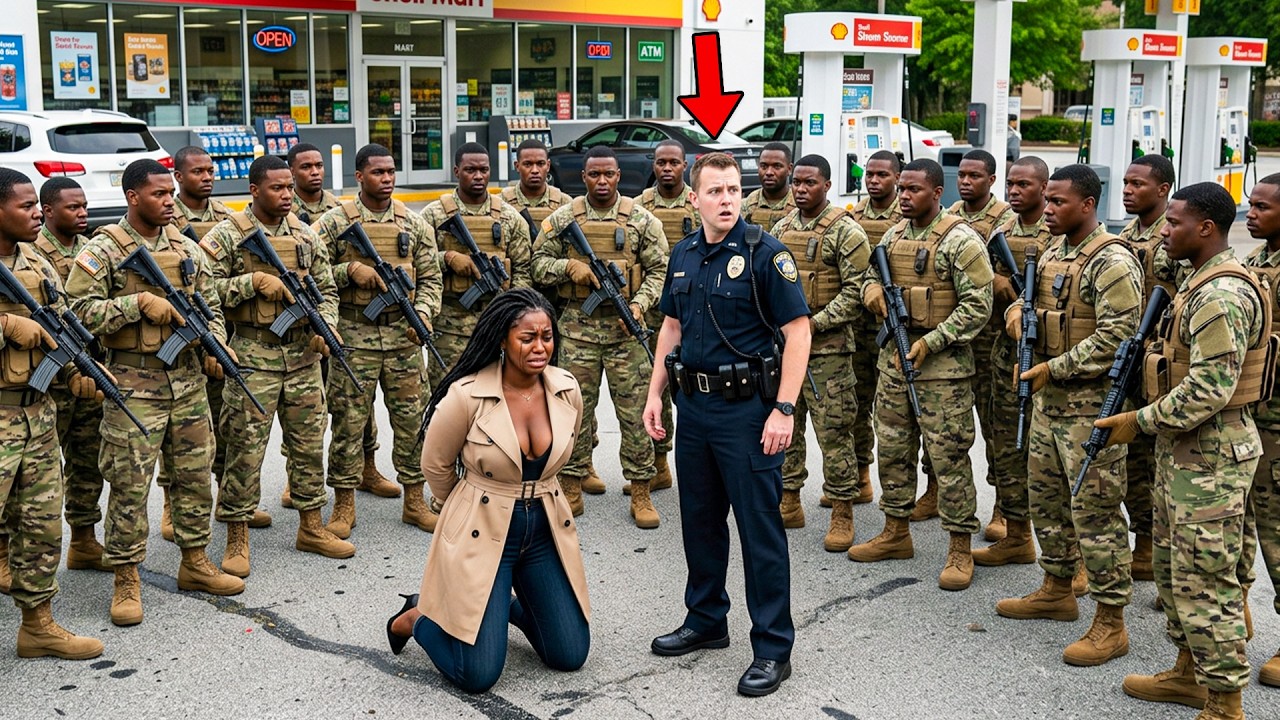
Cops Arrest Black Woman At Gas Station—Pentagon Responds In 5 Mins, She’s The Wife Of 4-Star General
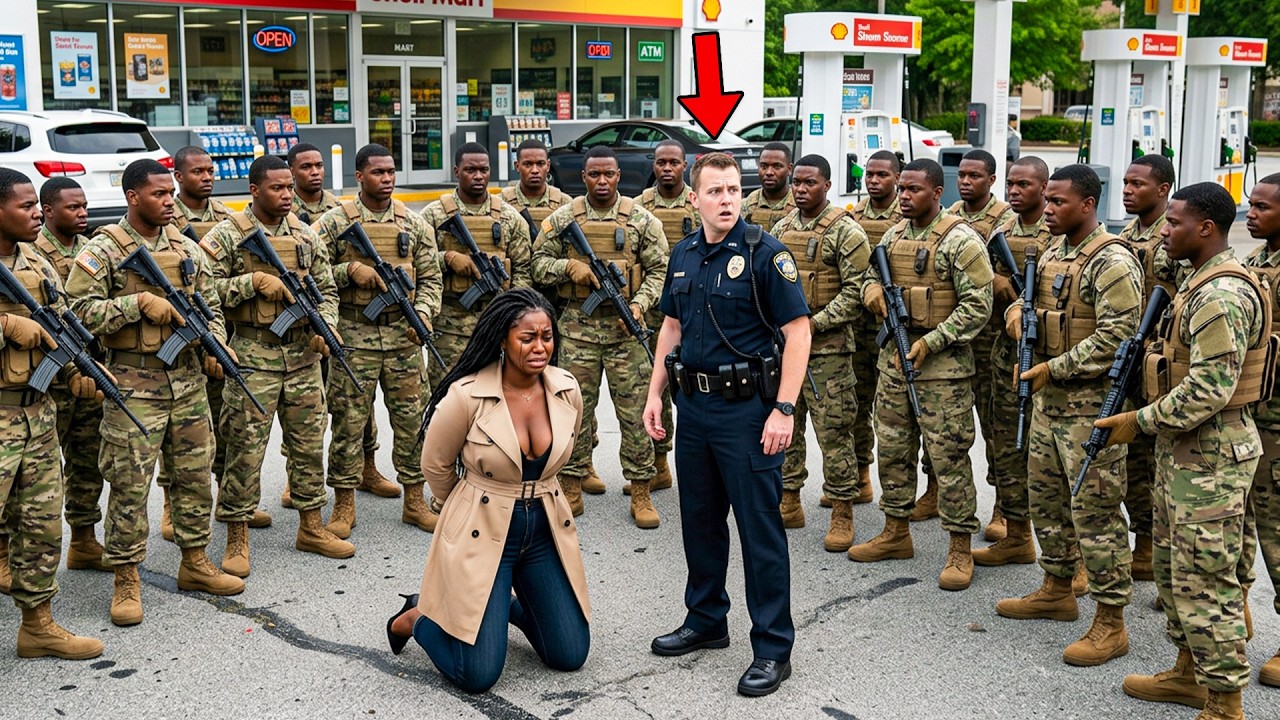
On your knees. You don’t look like the kind who owns a car like this. Officer Rourke’s voice cut through the hum of the pumps as his hand slammed into Evelyn Brooks’ shoulder, forcing her down. But before her knees hit the asphalt, her fingers slipped into her coat pocket. One quick, precise motion and pressed a hidden emergency dial.
Then, the impact came. Rough concrete biting through fabric as her keys skidded away and Rourke kicked them aside like they were evidence. “I’ve seen this before.” He said louder, playing to the growing audience. “Borrowed car, fake story, and suddenly you’re the victim.” Her registration was already in his hand.
Valid, clean, and he crushed it anyway, snapping the cuffs tighter around her wrists as if force could make his version true. Evelyn didn’t resist, didn’t argue, just watched him with unsettling calm. Rourke smirked, convinced he was in control, completely unaware that the signal she triggered seconds earlier was already moving faster than anything he could stop.
Before continuing, comment where in the world you are watching from and make sure to subscribe because tomorrow’s story is one you can’t miss. The late afternoon sun cast long shadows across the gas station’s weathered concrete as Evelyn Brooks guided her dark blue sedan into an empty spot near pump number four.
The day’s heat still lingered, making the air shimmer above the asphalt. Her fingers drummed briefly on the steering wheel as she noted the few locals scattered around the station. Their eyes tracking her movements before she even opened her door. She’d driven this route dozens of times before, usually with Raymond.
But today, she was making the journey alone before meeting him at the military family scholarship banquet. The station’s fluorescent lights buzzed to life overhead, creating harsh pools of artificial brightness that competed with the golden hour sunlight. A red pickup truck idled near the store entrance. Its driver watching her through the rearview mirror.
Evelyn gathered her wallet and stepped out of the car, her movements measured and dignified. The click of her sensible shoes against the pavement seemed unnaturally loud in the heavy afternoon air. She’d spent decades in military intelligence. She knew when she was being watched, knew how to read a situation.
Right now, every instinct told her this stop wouldn’t be as simple as she’d hoped. Inside the store, the air conditioning hit her like a wall. The linoleum floors gleamed with fresh mopping and the coffee machine gurgled in the corner. Behind the counter, a woman with graying hair and a name tag reading Lorna Pike straightened up.
Her expression shifting from bored to alert. “Afternoon.” Evelyn said pleasantly, selecting a bottle of water from the cooler and filling a coffee cup for the road. When she approached the counter, Lorna’s eyes narrowed slightly. “Will that be all?” she asked. Her tone carrying an edge that didn’t match the simple question. “Yes, thank you.
” Evelyn placed her items down and pulled out her wallet. “Pump four as well, please.” She handed over her ID with the cash, watching as Lorna studied the license far longer than necessary, turning it over multiple times. The cashier’s fingers lingered on the federal clearance marker visible in the corner. “Something wrong?” Evelyn asked calmly.
“No. No.” Lorna replied quickly, too quickly, handing back the ID. “That’ll be 47.50 with the gas.” Evelyn counted out $50 in cash, maintaining her composed demeanor despite the growing tension. As she gathered her items and headed for the door, she heard the distinct sound of a phone being picked up behind her.
Outside, the temperature had barely dropped, but a new heaviness hung in the air. The man from the red pickup had gotten out and was leaning against his truck, making no effort to hide his staring. Evelyn began pumping her gas, her movements efficient and practiced. “Don’t look like she belongs in that car.
” The man muttered, loud enough to carry across the concrete. A few other customers nodded in agreement. Evelyn kept her eyes on the pump’s digital display, refusing to give them the reaction they wanted. She’d faced far worse in her career. Tense operations, hostile interrogations, direct threats. This kind of small-town intimidation was amateur hour in comparison.
Still, she noted every detail, every face, every word. Habits ingrained from years of intelligence work. The sound of approaching sirens cut through the humid air. Two patrol cars pulled into the station, lights flashing but sirens cutting off as they parked at angles that effectively boxed in her sedan. Officer Dale Rourke emerged from the first vehicle, his hand already resting on his belt as he approached.
His face wore an expression Evelyn had seen countless times before. Someone who’d already made up his mind before hearing a single word. “Ma’am, step away from the vehicle.” Rourke called out, his voice carrying that particular tone of authority that expected immediate compliance. “Is there a problem, officer?” Evelyn asked, maintaining her position but keeping her hands visible.
“Had a report of suspicious activity.” Rourke said, moving closer. “Need to see some ownership papers for this vehicle. Why are you lingering here?” “I’m not lingering, officer. I’m pumping gas, as you can see.” Evelyn’s voice remained steady and clear. “The ownership papers are in the glove compartment.
Would you like me to retrieve them?” “I said step away from the vehicle.” Rourke repeated, his hand shifting slightly on his belt. “You’re being evasive.” From the second patrol car, Officer Brent Halverson approached with noticeably more caution, his younger face showing hints of uncertainty as he took in the scene.
His eyes moved between Evelyn’s composed stance and Rourke’s aggressive posture. “Ma’am.” Halverson started, then glanced at his senior officer as if seeking guidance. Evelyn stood perfectly still, her mind already cataloging every detail of this encounter. Rourke’s badge number, the patrol car numbers, the gathering crowd of onlookers with their phones partially hidden, the security cameras mounted on the station’s corners.
She’d learned long ago that in situations like this, control came not from immediate reaction, but from careful observation and documentation. The gas pump clicked off, the sound sharp in the tense atmosphere. The golden sunlight had shifted to deeper amber, casting long shadows across the scene as Rourke took another step forward, his stance widening as if preparing for resistance that Evelyn hadn’t shown.
The metal of the gas pump felt cool against Evelyn’s palm as she carefully replaced the nozzle. Officer Rourke moved with exaggerated authority, positioning himself between her and the driver’s side door of her sedan. His boots scraped against the concrete as he widened his stance, one hand still hovering near his belt. “We’ve had reports of a suspicious vehicle matching this description.
” Rourke announced, his voice carrying across the parking lot. “Care to explain what you’re doing in our town?” “I’m passing through on my way to an event.” Evelyn replied evenly. “What specific law have I broken, Officer Rourke?” His jaw tightened at her direct question. Behind him, Officer Halverson shifted his weight, eyes darting between the growing crowd near the convenience store entrance and Evelyn’s calm demeanor.
Several phones had appeared, held at waist level but clearly recording. “Ma’am, we’ll ask the questions here.” Rourke snapped. “Your attitude isn’t helping.” “I’m simply asking what law I’ve broken.” Evelyn repeated, her voice remaining steady. “That’s a reasonable question, isn’t it?” Rourke’s face darkened.
“This kind of defiance “The registration.” Halverson cut in, his voice notably softer than his partner’s. “Could you tell us where to find the vehicle registration, ma’am?” “It’s in the glove compartment.” Evelyn said, keeping her hands visible at her sides. “Along with all other relevant documentation.” “Don’t move.
” Rourke ordered sharply, though Evelyn hadn’t shifted an inch. “Keep those hands where I can see them.” Through the storefront windows, Evelyn could see Lorna Pike watching intently, phone still in hand. The realization crystallized. The call had been made before any legitimate concern could have existed.
Before she’d done anything but exist in a space they’d decided wasn’t meant for her. Rourke circled the sedan like a predator, making a show of examining every detail. “Vehicle matches the description exactly.” He declared, though he hadn’t specified what description or from where. “What description would that be?” Evelyn asked.
“There you go again, questioning authority.” Rourke said. “Every time you speak, you’re demonstrating non-compliance. The evening air had grown heavier, charged with tension. More vehicles had pulled into the station, their occupants emerging with poorly concealed interest in the unfolding scene. Evelyn counted at least five phones recording now, not including whatever footage the station’s security cameras were capturing.
Roark yanked open the driver’s side door, leaning in to pop the glove compartment. Papers rustled as he pulled out her registration and other documents. His expression shifted slightly as he examined her federal retiree credentials. The official seals and clearance markers unmistakable even in the fading light. Halverson edged closer, peering at the documents. “Sir, these appear to match.
” “Could be forged.” Roark cut him off. But there was a new note in his voice. Not uncertainty, but something worse. Determination. “In fact, this makes the situation more serious. These are high-level credentials. What are you doing with them?” “Those are my legitimate credentials.” Evelyn stated.
“As you can see from the photos and dates, they’re mine.” “You expect me to believe someone like you has this level of clearance?” Roark’s emphasis on “someone like you” hung in the air, heavy with implication. A murmur went through the crowd. Someone whispered, “She’s awful calm for someone with something to hide.” Another voice responded, “Or awful calm for someone who knows she’s right.
” “Officer,” Evelyn said, her voice carrying clearly across the parking lot. “I’m going to say this one more time. Those are my legitimate credentials. I’ve broken no laws. Your suspicions are based on assumptions, not evidence.” Roark’s face flushed red. “Turn around and place your hands behind your back.
” “On what charge?” “Impersonating federal personnel.” He snapped. “Using forged documents, resisting an officer.” “I haven’t resisted anything.” Evelyn noted calmly. “And those documents are genuine, as any check will confirm.” “Turn around.” Roark repeated, pulling his handcuffs free. “Do it now, or we’ll add another charge.” Evelyn met his gaze steadily, then turned, keeping her movements slow and deliberate.
The crowd had grown silent, phones still recording as the handcuffs clicked into place around her wrists. The metal was cold against her skin, but her expression remained unchanged. “You’re making a serious mistake.” She said quietly. “Keep talking.” Roark replied, tightening the cuffs a notch further than necessary.
“Just keep digging that hole deeper.” Officer Halverson stood to the side, his discomfort now visible as he watched Roark grab Evelyn’s arm. The younger officer’s hand moved toward his own phone, then dropped away, his face a mask of indecision. The gas station’s lights had fully taken over from the setting sun, casting harsh fluorescent shadows across the scene.
In the store window, Lorna Pike had finally turned away, perhaps realizing that her call had set in motion something larger than she had intended. The crowd’s phones continued recording, capturing every moment as Roark made a show of checking the cuffs one final time. The fluorescent lights of the gas station canopy cast harsh shadows across Evelyn’s face as she stood beside the patrol car, her wrists secured behind her back.
Her handbag vibrated against the hood where Roark had tossed it, likely Raymond wondering why she hadn’t checked in. Around her, the crowd had grown to nearly 20 people, their phones raised like digital witnesses to her humiliation. “Let’s see what else you’re hiding.” Roark announced, dumping the contents of her purse onto the hood.
Lipstick, tissues, and her wallet clattered across the metal surface. Her phone kept buzzing. Evelyn watched him sort through her belongings with theatrical suspicion, her mind already working several steps ahead. 23 years in military intelligence had taught her to stay calm in crisis, to see opportunities others missed.
While Roark made a show of examining her chapstick for hidden compartments, she shifted her weight, angling herself toward her phone. “These credit cards, we’ll need to verify every single one.” Roark declared, spreading them across the hood. “Could all be stolen.” “Those cards match the name on my ID.” Officer Halverson pointed out, his voice carrying an edge of uncertainty.
“And the federal credentials look real. The watermarks, the security features.” “Could all be faked.” Roark cut him off. “You’d be amazed what criminals can do these days.” Evelyn’s phone buzzed again. Roark glanced at it with annoyance, then turned to rifle through her car’s center console. The moment his back was turned, she moved.
With practiced precision, she bumped her hip against the hood, causing her phone to slide closer. Years of training let her activate the emergency protocol through the lock screen with two quick taps, a safety feature she and Raymond had set up for traveling spouses of high-ranking officers. The signal would reach Raymond’s security detail within seconds.
She’d never had to use it before, but she knew exactly what would happen next. The protocol would trigger an alert showing her GPS location, the time, and a snapshot from her phone’s camera, capturing the patrol car, the handcuffs, everything. “What are you doing?” Roark demanded, spinning back around.
“Standing exactly where you put me.” Evelyn replied evenly. “Officer, you’re making a mistake that will reach well beyond your local chain of command.” Roark laughed, but there was an edge to it. “More threats? More name-dropping?” He snatched up her phone, shoving it into his pocket. “Let me guess. You know important people. They’ll be very angry about this.
” “I don’t make threats.” Evelyn said. “I’m simply stating facts.” Halverson had picked up her federal credentials again, studying them with growing concern. “Sir, these really do look authentic. The holographic seals, the security threading. This level of documentation isn’t something you typically see.” “Did I ask for your opinion?” Roark snapped.
“No, sir, but “Then secure the scene and manage that crowd. I’ll handle this situation.” The younger officer hesitated, then moved toward the onlookers, his posture radiating discomfort. Several people had their phones pointed directly at him now, capturing his obvious reluctance to participate. Less than 5 minutes had passed since the handcuffs clicked shut when the radio on Roark’s shoulder crackled to life.
The voice that came through wasn’t the usual local dispatch. “Unit 47, confirm current status of detainee Evelyn Brooks. Over.” Roark frowned, keying his radio. “Dispatch, unit 47. Handling a suspicious person with probable forged federal credentials. Situation under control.” “Negative, unit 47. Please verify.
Do you currently have Evelyn Brooks in custody? This is a priority verification request. Authentication code echo 79 delta.” Inside the Pentagon, Raymond Brooks stood in his dress uniform, staring at the alert on his secure phone. The image showed his wife of 37 years handcuffed beside a patrol car, her dignity intact despite the obvious humiliation.
His jaw tightened as he read the GPS coordinates and timestamp. Back at the gas station, confusion crossed Roark’s face as he tried to make sense of the unusual radio traffic. “Dispatch, please repeat authentication code?” “Unit 47, this is a federal priority channel override. Confirm status of Evelyn Brooks immediately.
” Evelyn watched Roark’s expression shift from confusion to the first flickers of worry. She could almost see him trying to process how quickly this had escalated beyond his control. His hand moved to his radio, then dropped away as if unsure how to respond. “Sir.” Halverson called from near the crowd. “There’s something else.
The credentials, they’re showing active in the federal database. I just ran them.” Roark’s face flushed red. Rather than acknowledge the mounting evidence, he grabbed Evelyn’s arm roughly. “Get in the car. We’ll sort this out at the station.” “That would be unwise.” Evelyn said calmly. “Shut up.
” Roark snarled, yanking open the rear door. “You don’t give the orders here.” With firm hands, he pushed her into the backseat, not bothering to ensure she could sit comfortably with her hands cuffed behind her. The door slammed shut with unnecessary force, sealing her in the cage-divided space. “Unit 47, respond immediately regarding status of Evelyn Brooks.
” The radio insisted. Roark ignored it, jumping into the driver’s seat. Halvorsen, we’re moving out. Now. The patrol car’s tires crunched over gravel as they pulled away from the gas station. Through the reinforced glass partition, Evelyn watched Rourke’s shoulders tense, rigid with anger. The handcuffs bit into her wrists, but she kept her breathing steady, her face composed.
The radio continued to crackle with unusual traffic that Rourke pointedly ignored. Think you’re pretty smart, don’t you? Rourke’s eyes found hers in the rearview mirror. All those fancy credentials, those important connections you keep hinting at. Evelyn said nothing, instead noting the street signs as they passed. Third Street. Marshall Avenue.
Each turn, each timestamp locked into her memory. Habits from decades of intelligence work that had never faded. Silent treatment now? Rourke’s voice grew harder. That attitude’s what got you into this mess. But go ahead, keep acting superior. See where that gets you. The second patrol car’s lights flashed behind them, Halvorsen following at a precise distance.
Through the rear window, Evelyn could see him talking into his radio, his expression troubled. She knew he had seen something on his computer terminal that disturbed him. Probably the first waves of federal inquiries hitting their system. Miles away at the Pentagon, Raymond Brooks stood in his dress uniform, phone pressed to his ear.
The banquet hall buzzed with pre-event activity behind him, but his focus was laser sharp. Yes, immediately, he said to the military legal counsel. I want the Inspector General’s Office notified, and I need civilian oversight contacted. This isn’t just about my wife. This is about abuse of power caught on camera.
The lawyer’s response was quick. Already reaching out to federal liaisons, sir. We’re getting pushback from local jurisdiction, but then push harder. Raymond’s voice was calm, but carried the weight of decades of command. They arrested a former intelligence officer with active federal clearance based on nothing but prejudice.
Make them understand the gravity of their mistake. Back in the patrol car, Rourke took a sharp turn that sent Evelyn sliding across the seat. Oops, he said, not bothering to hide his satisfaction. These roads can be tricky. Evelyn steadied herself, noting the street sign. Parkway Drive. Time, 6:47 p.m. She could feel Rourke’s growing agitation in every aggressive acceleration, every jerky stop at traffic lights.
You know what I think? Rourke’s voice had taken on a taunting edge. I think you’re just another con artist who got hold of some good forgeries. Probably thought you could fool everyone with that calm act. That fancy car, those federal IDs. He was trying to provoke her, she realized. Every word was calculated to make her angry, to give him something he could write up as combative behavior in his report.
The tactic was transparent, almost amateur in its obviousness. At the Bellhaven Police Department, Chief Marion Keats set down her phone with a frown. The call she’d just received had been oddly vague, but carried clear warnings. The suspect being brought in had significant federal connections that needed to be verified before processing.
Her office intercom buzzed. Chief, we’ve got multiple inquiries coming in about a detention in progress. Something about federal oversight and military legal counsel. Before she could respond, the radio on her desk crackled with Rourke’s voice. Station, unit 47. Coming in with one for booking. Need to process quickly.
Suspect involved in potential identity theft and fraud. Keats heard the strain in his voice, the forced authority covering something else. She’d known Rourke long enough to recognize when he was trying to establish his version of events before questions could be asked. The patrol car passed another intersection.
Main Street, 6:52 p.m. Evelyn kept her mental log running, each detail crystal clear. She noticed Rourke checking his mirrors more frequently now. Not just watching her, but scanning the roads behind them as if expecting something. Almost there, he announced with false cheerfulness. Then we can have a nice long talk about those fake credentials.
Maybe figure out who you really are. But his knuckles were white on the steering wheel. The radio’s silence about his ignored verification requests was clearly unnerving him. Evelyn could read the signs of a man realizing he’d made a serious error, but choosing to dig deeper rather than admit his mistake. Halvorsen’s car stayed close behind, its presence a reminder of the younger officer’s witnessed hesitation.
Through the gathering dusk, Evelyn could see the police station’s lights ahead, harsh fluorescent against the darkening sky. She noted the time again. 6:55 p.m. Less than 15 minutes had passed since leaving the gas station, but she could feel the shift in power dynamics. Rourke wasn’t acting from authority anymore.
He was acting from fear. The patrol car slowed, turning into the station’s lot as the last rays of sunlight faded from the sky. Security lights cast sharp shadows across the pavement, and Evelyn could see several officers standing near the entrance, their postures suggesting they were waiting specifically for this arrival.
One held a phone to his ear, gesturing with obvious concern. The fluorescent lights hummed mercilessly as Rourke marched Evelyn through the station’s booking area. Officers looked up from their desks, their whispered conversations growing quiet as they caught her name during processing. The institutional smell of cleaning products and stale coffee hung in the air.
Name for the record, the booking officer demanded, not looking up from his computer. Evelyn Marie Brooks, she stated clearly, her voice carrying across the now hushed room. Several heads turned. One officer stopped mid-conversation on his phone, his expression shifting from bored to concerned.
Rourke stepped forward, slapping a preliminary charge sheet onto the desk. Booking her for obstruction, failure to properly identify, and suspected fraudulent use of federal credentials. His voice was loud, performative, as if trying to convince everyone within earshot. I require legal counsel, Evelyn said firmly. And I’d like to speak with your commanding officer.
The booking officer glanced uncertainly at Lieutenant Wade, who stood near his office door watching the proceedings. Wade, a career bureaucrat more interested in following procedure than questioning it, merely nodded for them to continue processing. Counsel can be arranged once booking is complete, Wade said flatly.
Process her first. Officer Halvorsen hovered near the edge of the booking desk, shifting his weight from foot to foot. His hand kept moving toward his pocket where his phone sat, then pulling back. The young officer’s face showed clear discomfort, but he remained silent as Evelyn was photographed and fingerprinted.
Remove any jewelry, the booking officer instructed. With steady hands, Evelyn unclasped her necklace, a simple gold chain with her wedding ring threaded onto it, a habit from her intelligence days when rings could be dangerous in the field. The booking officer dropped it into a plastic evidence bag with mechanical indifference.
I need to document these charges properly, Rourke insisted, hovering over the booking officer’s shoulder. Make sure everything’s noted about her aggressive non-compliance at the scene. I was neither aggressive nor non-compliant, Evelyn stated calmly. And I believe the bystander videos will confirm that. Rourke’s face flushed red.
You refuse to I refuse to accept unlawful detention, Evelyn interrupted, her voice level. There’s a difference. Across town, Raymond Brooks’ influence was beginning to land with seismic force. A Defense Department legal liaison was on the phone with the state’s public safety office, his words carrying the full weight of Pentagon authority.
We have a situation in Bellhaven that requires immediate attention, the liaison stated. A retired federal intelligence officer with active clearance has been detained without cause. This is now a matter of military family security protocol. The public safety officer’s response was immediate.
Sending notification to Bellhaven command staff now. Who exactly was detained? Evelyn Brooks, wife of General Raymond Brooks. There was a long pause on the line. Four-star General Brooks? The same. In her office across town, Chief Marion Keats was just finishing a budget meeting when her phone lit up with multiple high-priority messages.
She opened the first one and felt her stomach drop. The name Evelyn Brooks jumped out at her followed by terms like federal oversight and military liaison. Her phone rang immediately after. Chief Keats, the state public safety director’s voice was tense. Are you aware that your department has arrested the wife of a four-star general? Keats felt her professional composure crack slightly.
I was just notified of a detention, but not the full circumstances. I’m heading to the station now. Fix this, the director ordered. The Pentagon has already been involved for There was a pause as he checked something. Jesus, less than 5 minutes after the initial detention. This is about to become a nightmare if it’s not handled properly.
Back at the station, Evelyn stood with perfect posture as her belongings were cataloged, her phone, her purse, her car keys. Each item tagged and bagged while Roark stood nearby, his earlier bravado cracking under the increasing number of worried glances from his colleagues. Through the station’s windows, emergency lights suddenly reflected off the walls.
A vehicle had pulled up fast outside. The front doors burst open as Chief Keats strode in, her face a mask of controlled alarm. She took in the scene, Evelyn standing dignified in custody, Roark trying to appear busy with paperwork. Halverson looking like he wanted to disappear. Why? Chief Keats demanded, her voice cutting through the station’s uneasy quiet.
Is Evelyn Brooks in a holding cell? The fluorescent lights continued their relentless buzzing, highlighting the growing tension in the room. Every officer present seemed to be holding their breath, aware that they were watching the beginning of what could become a career-ending disaster for everyone involved. The harsh fluorescent lights cast stark shadows across the holding area as Chief Keats’s heels clicked sharply against the linoleum floor.
She found Evelyn Brooks sitting perfectly straight on the metal bench, her hands folded in her lap where faint red marks from the handcuffs were still visible. Despite the institutional surroundings, Evelyn’s composure remained unshaken. Get this cell opened right now, Keats ordered, her voice tight with controlled panic.
The attending officer fumbled with his keys, the metal jangling loudly in the tense silence. Mrs. Brooks, Keats said, adopting a diplomatic tone as the cell door swung open. I want to personally apologize for this unfortunate misunderstanding. We’ll have you out of here immediately. Evelyn stood slowly, her movements deliberate.
A misunderstanding, she repeated, her voice level, but carrying an edge that made Keats shift uncomfortably. Is that what we’re calling unlawful detention now? The situation escalated unnecessarily, Keats offered, gesturing toward the corridor. I assure you we can correct any paperwork and resolve this quickly.
The paperwork? Evelyn’s gaze was steady. Will correcting paperwork erase the spectacle of my arrest at that gas station? Will it undo Officer Roark’s false charges? Or perhaps it will magically make everyone forget watching me being handcuffed without cause? From a speakerphone in Keats’s office, General Raymond Brooks’s voice carried through the open door.
Chief Keats, I want to be absolutely clear. My wife will not be pressured into quietly accepting what’s happened here. Keats glanced toward her office where the conference call with Washington remained active. General Brooks, I understand your concern. We’re working to You don’t understand yet, Raymond interrupted.
His calm tone carrying decades of command authority. But you will. A civil rights attorney, Sonya Vale, is already en route to your station. I suggest you ensure all evidence is properly preserved until she arrives. Officer Roark burst into the holding area, his face flushed. Chief, I can explain everything. The vehicle matched Matched what exactly? Evelyn turned to face him.
The registration and insurance were in order. My federal credentials were valid. What exactly justified your actions? Roark’s mouth opened and closed, but no coherent defense emerged. The documents found in Evelyn’s car had demolished his claims of suspicious activity or vehicle theft.
His earlier certainty crumbled under her direct gaze. Keats watched the exchange with growing dread. She had seen enough internal affairs cases to recognize when a situation was spiraling beyond containment. Lieutenant, she called to Wade who hovered nearby. I want all body camera footage from officers Roark and Halverson preserved immediately.
Get me the dispatch recordings and any security footage from the gas station as well. Already done, Chief, Wade replied quietly. The state oversight office called. They were insistent about proper evidence preservation. The fluorescent lights continued their merciless humming as Keats led Evelyn toward the booking area to process her release.
Each step echoed with the weight of consequences neither Roark nor the department had anticipated an hour ago. Your personal effects are being gathered, Keats said, trying to maintain professional courtesy. Your vehicle will be brought around front. My vehicle never should have been impounded, Evelyn stated, just as I never should have been arrested.
Let’s be very clear about that, Chief Keats. In the main office, Officer Halverson sat at his desk looking increasingly ill as he reviewed his own body camera footage. The video showed exactly what Evelyn had described. An immediate escalation without cause, Roark’s dismissal of valid identification, and the deliberate humiliation of a woman who had done nothing wrong.
The booking officer returned with Evelyn’s belongings in a plastic property bag. Her phone showed multiple missed calls from military and civilian contacts. The necklace with her wedding ring was carefully removed from its evidence bag, and Evelyn placed it back around her neck with dignity that made several officers avert their eyes.
Through the station’s front windows, camera flashes began popping as reporters gathered on the sidewalk. News traveled fast in Bel Haven, and the arrest of a four-star general’s wife was exactly the kind of story that drew media attention like moths to flame. A sleek black sedan pulled up to the curb, and a woman in a sharp business suit stepped out, briefcase in hand.
Sonya Vale’s reputation preceded her. She had successfully handled multiple civil rights cases against law enforcement agencies. Her arrival made Chief Keats’s stomach tighten with professional dread. Mrs. Brooks, Keats tried one final time. I want to assure you that the department will be held accountable, Evelyn finished quietly.
Not because of who my husband is, but because what happened today was wrong. And it happens to people without my connections every day in places just like this. The front doors opened, and Sonya Vale strode into the station, her heels clicking against the floor with purpose. The reporters outside pressed closer to the windows, cameras raised as the story they sensed was about to become even bigger than they imagined.
The fluorescent lights hummed in the small interview room as Sonya Vale settled her briefcase on the metal table. Through the frosted glass, camera flashes flickered like distant lightning. Evelyn sat with perfect posture, her hands folded neatly on the scratched surface. Don’t let them rush you out of here, Sonya advised, pulling out a legal pad.
Chief Keats wants this wrapped up quickly, but we need to be thorough. Have they given you documentation showing all charges are formally dropped? They just processed my release papers, Evelyn replied. The desk sergeant seemed eager to get me out the door. Sonya’s eyes narrowed. Let me check something. She stepped out briefly and returned with a young clerk who clutched a Manila folder.
The charges are currently marked as pending review, the clerk explained, shifting uncomfortably under Sonya’s sharp gaze. Pending review? Sonya’s voice could have cut steel. So they’re maintaining the option to pursue charges after the media attention dies down? Absolutely not. She turned to Evelyn. This is a classic move.
Release you now to diffuse tension, then quietly process charges later when nobody’s watching. The clerk backed toward the door. I’ll I’ll let Chief Keats know you have questions about the status. Through the window, more camera flashes illuminated the parking lot. Clara Vance pushed through the gathered reporters, her press badge catching the light.
Inside, she pulled out her phone, comparing the bystander videos she’d seen online with the scene unfolding before her. The department’s attempt to minimize the incident already clashed with the raw footage showing Roark’s aggressive approach and Evelyn’s calm dignity. Evelyn’s phone buzzed. A secure video call from Raymond.
His face appeared on the screen, command presence intact despite the worry in his eyes. “I can be there in 2 hours.” he said without preamble. “The joint chiefs will understand.” “No.” Evelyn replied firmly. “Stay where you have the most impact. This isn’t about using rank to fix one incident. It’s about making sure they can’t bury what happened.
” “You’re sure?” His concern was evident even through the encrypted connection. “I’m sure. Use the channels that matter. Make the system work the way it should.” Evelyn’s voice held the same steady authority it had maintained throughout the ordeal. A knock at the door preceded Chief Keats’s entrance. She’d switched to a more conciliatory tone, but tension lined her face.
“Mrs. Brooks, we can have an officer drive you to a hotel.” she offered. “There’s no need to deal with the media circus out front.” “Actually, there is.” Sonia interjected. “My client was publicly humiliated without cause. She’ll leave publicly on her own terms, not sneaked out the back like someone who has something to hide.
” “The department has apologized.” Keats began. “Verbally.” Sonia cut in. “While maintaining pending charges and refusing to acknowledge wrongdoing. That’s not an apology, Chief Keats. That’s damage control.” Outside the interview room, Clara watched Officer Halvorson slump at his desk staring at his incident report.
His discomfort was visible as he glanced between the blank form and his body camera footage playing silently on his monitor. Rourke paced near the break room, his earlier arrogance curdled into defensive anger. “She was argumentative.” he muttered to anyone who would listen. “Refusing to comply?” “The videos show otherwise.
” Clara spoke up making notes. “In fact, they show quite clearly that you escalated without cause.” Rourke’s face darkened. “Press isn’t allowed back here.” “Public building.” Clara replied calmly. “And this is a story of public interest.” Back in the interview room, Sonia gathered her materials. “We’re ready to leave through the front door.
” “The media.” Keats started. “We’ll see exactly who you arrested today.” Sonia finished. “A respected military spouse and retired federal employee who committed no crime but was treated like a criminal. That’s not our problem to manage, Chief Keats. It’s yours.” Evelyn stood smoothing her jacket. Despite hours in a holding cell, she carried herself with unshakable composure.
Her wedding ring caught the light as she adjusted her necklace. “One more thing.” Sonia added. “We’ll need copies of all footage, radio traffic, and documents related to this incident. I’m sure you understand why.” Keats’s jaw tightened, but she nodded to the records clerk hovering nearby. They moved toward the lobby where the media lights created a wall of white through the glass doors.
Clara Vance watched Evelyn’s measured steps, noting how officers moved aside, some averting their eyes. This wasn’t just about one bad arrest or one officer’s prejudice. This was about power, accountability, and what happened when the system chose the wrong target. Evelyn paused at the doors squaring her shoulders.
Camera flashes sparked like lightning against the glass. Behind her, Rourke stood in the hallway. His face twisted with the realization that his actions had sparked something far beyond his control. Halvorson remained at his desk still staring at his blank report form. Sonia placed a steady hand on the door. “Ready?” Evelyn nodded, her dignity intact despite everything they’d put her through.
“Ready.” In the quiet of room 214 at the Bellhaven Motor Lodge, Evelyn sat in an armchair beneath flickering fluorescent lights. Her hand steady as she arranged her thoughts. Sonia Vales spread documents across the small table while Clara Vance’s recorder blinked red. Raymond’s face watched from a secure tablet propped against a lamp.
“Start from the beginning.” Sonia said pen poised. “Every detail matters.” Evelyn’s voice remained measured, professional. “I pulled in around 5:40 p.m. The station wasn’t busy, maybe four other vehicles total. I noticed the cashier watching me through the window before I even got out of the car.” “This would be Lorna Pike.
” Clara confirmed checking her notes. “Yes. When I went inside to pay, she held my ID longer than necessary studying it like she expected to find something wrong. I bought water and coffee, paid cash. As I was leaving, I saw her pick up the phone.” Clara’s pen moved quickly. “Did you hear the call?” “No, but her body language changed completely when she made it.
She turned away, spoke quietly. It wasn’t a casual conversation.” “And outside?” Sonia prompted. “A man in a red pickup truck was watching me pump gas. He said loud enough for others to hear, ‘She doesn’t look like she belongs in that car.’ I chose not to engage. That’s when the first patrol car arrived.” Raymond’s jaw tightened on the screen.
“How long between the cashier’s call and police arrival?” “Less than 5 minutes.” Evelyn replied. “Officer Rourke approached immediately aggressive demanding to know why I was lingering. When I explained I was simply getting gas, he insisted the vehicle matched a suspicious report. But he never provided any details about this supposed report.
” Clara looked up from her notebook. “The bystander videos start around here, but they miss this initial context. The narrative begins mid-confrontation. Officer Halvorson arrived second.” Evelyn continued. “He stayed back, watched everything. When I mentioned my registration was in the glove compartment, he asked politely, but Rourke interrupted said I needed to keep my hands visible at all times.
” Sonia made another note. “He was building a paper trail of non-compliance.” “Yes. Every calm response was treated as defiance. When they found my federal credentials, Rourke claimed they must be fake. That’s when he decided to arrest me for fraud.” Raymond’s voice carried barely controlled anger. “The credentials were legitimate.
Multiple forms of ID, all ignored.” “We need to move quickly.” Sonia said. “By morning, they’ll have their story straight. They’ll paint this as a reasonable mistake based on available information.” Clara scrolled through her phone. “The videos are spreading, but they’re fragmentary. We need the full station security footage, dispatch recordings.
” “There’s something else.” Evelyn said quietly. She reached for her retrieved phone. “When I was first detained, I activated an emergency protocol, something from my intelligence work days. It sends location data and partial audio metadata to secure servers.” Sonia straightened. “You have transmission records from the actual arrest?” “Yes.
The system captured GPS coordinates and sound pattern data before Rourke took my phone. It won’t have complete audio, but it proves I triggered a real-time emergency alert. The timestamp will match dispatch records.” “That’s crucial.” Clara said. “It shows you had immediate concern for your safety, enough to activate official protocols.
And it contradicts any claim that this was a routine stop that simply went wrong.” Raymond nodded on screen. “Federal Civil Rights Division is aware and monitoring. But they can’t simply take over local jurisdiction without clear evidence of rights violations, which is why we need to secure everything tonight.” Clara said standing.
“Witnesses remember details better immediately after events. And footage has a way of developing technical problems when departments have time to review it.” Evelyn watched the young journalist gather her things. “Be careful. Rourke won’t appreciate you digging.” “I’m counting on it.” Clara replied. “His reaction to questions will tell its own story.
” Sonia began organizing files. “We’ll need statements from the gas station customers who recorded videos. And we should request Officer Halvorson’s separate account before the department coordinates responses. He wanted to speak up.” Evelyn noted. “I saw it in his face when Rourke escalated. He knew something was wrong.
” Raymond’s voice carried authority even through the tablet speaker. “This isn’t over just because they released you. They’ll try to minimize everything, make it disappear. Which is exactly why it can’t disappear.” Evelyn said firmly. “This wasn’t about me. It was about power and assumptions and what happens when no one speaks up.
” Clara checked her phone one last time. “The gas station closes at midnight. If I leave now, I can catch the night shift workers before they head home.” Sonia handed her a card. Call immediately if anyone gives you trouble. And Clara, get everything on record. Every word. The journalist nodded, shouldering her bag. The room felt heavy with purpose as she moved toward the door.
Outside, Bellhaven streets were quiet except for occasional police cruisers making slow passes past the motel. We should review your statement again, Sonia said to Evelyn as Clara left. The timeline needs to be absolutely precise. The clock on the wall ticked past midnight. In the soft lamp light, Evelyn’s composure remained unshaken as she prepared to revisit every moment of her humiliation.
Not for revenge, but for accountability. The fluorescent lights of the Bellhaven Gas and Go cast harsh shadows across the nearly empty parking lot as Clara pulled in just after midnight. Only two other vehicles remained. A battered maintenance truck and what appeared to be the night clerk’s sedan. The neon open sign buzzed faintly, creating an eerie glow against the dark windows.
Inside the hotel room across town, Evelyn sat at the small desk, methodically reviewing her handwritten account while Sonia cross-referenced times and locations. The scratching of their pens filled the quiet room. Clara pushed through the gas station’s glass door, triggering a tired electronic chime. Behind the counter, a young man with sandy hair and a name tag reading Mike looked up from his phone.
We’re still open for another hour, he said automatically. I’m Clara Vance with the Bellhaven Herald, she replied, showing her press badge. I need to speak with Lorna Pike about an incident that occurred here earlier today. Mike shifted uncomfortably. Lorna left early. Said she wasn’t feeling good after what happened.
Manager let her go home around 8:00. Feeling shaken up was she? Clara pressed, pulling out her notebook. About calling the police on an innocent woman? Look, I just started my shift at 10:00, Mike said, but his eyes darted away. I wasn’t here for any of that. But you’ve heard about it. What exactly did Lorna tell you during shift change? Mike hesitated.
Just that there was some trouble with a customer. But she seemed really nervous. Kept saying how fast the police showed up after she called. Like way faster than normal. Clara’s pen moved quickly. How fast do police usually respond to calls from this location? Depends. Maybe 15, 20 minutes for something routine.
But today? He shook his head. Lorna said it was like they were waiting around the corner. Couldn’t have been more than three or four minutes. Looking up from her notes, Clara spotted the surveillance cameras mounted in the corners. I’ll need to speak with the owner about preserving all security footage from today.
That’s Mr. Whitaker. He’s not here this late. Clara was already pulling up the gas station’s business listing on her phone. Then I’ll call him at home. This is time-sensitive. Back at the hotel, Sonia’s laptop screen illuminated her focused expression as she drafted urgent legal notices. We need to demand immediate preservation of all video evidence, radio traffic, dispatch logs, and booking documentation, she explained to Evelyn.
Once these notices are served, destroying or altering records becomes a separate offense. Evelyn nodded, but her mind kept returning to the crowd at the gas station. What bothers me most isn’t Rourke’s behavior. We expect some officers to abuse power. But all those people just watched. No one spoke up. The bystander effect, Sonia said quietly.
Everyone assumes someone else will intervene. The tablet on the desk lit up with Raymond’s incoming call. His face appeared, looking tired but determined. I’ve made arrangements to fly in at 600, he said. And I’ve been speaking with Judge Marshall. She’s retired from the federal bench, but still has connections.
She can recommend civil rights attorneys who specialize in cases like this. Good, Sonia replied. We’ll need strong representation. Local counsel won’t be enough for what’s coming. Evelyn’s phone buzzed with a news alert. She opened it and felt her stomach tighten. They’re already spinning their story. The Bellhaven Police Department had just issued a statement.
Earlier today, officers responded to reports of suspicious activity at a local business. The subject in question initially refused to comply with lawful commands during a routine investigation. While regrettable, all actions taken by officers were appropriate and in accordance with department policy regarding suspicious vehicle alerts and potential identity fraud.
We are reviewing the incident internally, but maintain that proper procedures were followed. Sonia read over Evelyn’s shoulder and swore softly. They’re not even waiting until morning to start the cover-up. They’re calling me the subject, Evelyn said, her voice steady but tight. Dehumanizing what they did. Making it clinical.
At the gas station, Clara’s persistent calls finally reached Mr. Whitaker. After explaining the situation and hinting at possible media coverage of evidence destruction, she secured his promise not to override the surveillance footage. The night clerk, Mike, had become more talkative once he realized Clara was investigating the department rather than the gas station.
Lorna’s not a bad person, he insisted. But she gets nervous around certain customers, you know? Calls the cops too quick sometimes. And the officers encourage that? Clara asked. Mike nodded. They tell us better safe than sorry. Report anything suspicious. He paused. But what happened today, that wasn’t right. That lady wasn’t doing anything wrong.
The clock on the wall ticked past 1:00 a.m. as Evelyn read the police statement again on her phone. Each carefully crafted line twisted reality. Transformed her dignity into defiance, her composure into non-compliance. They had taken her humiliation and reframed it as justified procedure. So, that’s how they want to play this, she said quietly.
Raymond’s voice came through the tablet, firm with conviction. Then we’ll show them exactly who they chose to target. The digital clock on the motel nightstand blinked 1:17 a.m. as Evelyn rubbed her tired eyes. The room had become a makeshift command center with papers spread across every surface and the constant glow of screens illuminating determined faces.
Despite the exhaustion setting in, no one suggested stopping. Clara’s text messages kept lighting up Sonia’s phone as she tracked down witnesses from the gas station incident. Got another confirmation, Sonia announced, scanning the latest update. A truck driver named Marcus Webber recorded most of the interaction on his phone.
He’s willing to submit a sworn statement about Rourke’s behavior. Evelyn nodded from her position at the small desk, where she continued documenting every detail she could remember. The coffee from the motel lobby had grown cold, but she sipped it anyway. The gas station owner finally agreed, Clara reported through the speakerphone.
Mr. Whitaker says he’ll secure the surveillance footage until your team arrives in the morning, Sonia. He seemed nervous about getting involved, but he’s cooperating. That’s something, Sonia replied, making another note in her legal pad. If we can get clean copies of that footage before anyone has a chance to interfere, it could be crucial.
Around 2:30 a.m., Raymond called with an update from Washington. I’ve arranged a meeting with state-level investigators for 9:00 a.m., he said, his voice showing no signs of fatigue despite the hour. They’re taking this seriously, especially given the potential civil rights implications. The news that Chief Keats had placed Officer Rourke on administrative leave came through shortly after 3:00 a.m.
Sonia received the official notification on her laptop and quickly scanned the details. It’s paid leave, she noted, but at least they’re acknowledging the need for some action. They’ve also requested all officers involved submit detailed reports before their next shifts. They’re trying to show good faith, Evelyn observed, though her tone remained skeptical.
Or at least the appearance of it. The room fell into focused silence for the next hour, broken only by keyboard clicks and occasional updates from Clara, who was still out gathering statements from witnesses. The first hints of pre-dawn began to lighten the sky outside their window when everything started to unravel.
Sonia’s laptop chimed with a new message at 4:15 a.m. Her expression darkened as she read it. We have a problem, she announced, causing both Evelyn and Raymond, still connected by video call, to look up. The body camera footage from Rourke. They’re claiming the file is corrupted. Convenient. Evelyn said quietly.
That’s not all, Sonia continued, scrolling through the notification. The dash cam upload is showing as incomplete with critical segments missing. And they’ve amended Rourke’s initial booking report with new language about your demeanor, Evelyn. They’re painting you as confrontational and uncooperative from the start.
Raymond’s voice came through sharp and clear. Can they substantiate any of these claims? That’s the problem, Sonia replied, frustration evident in her tone. The technical issues create reasonable doubt. They can claim equipment malfunction rather than deliberate tampering. And booking reports are routinely updated with additional details.
They’ll say they’re just being thorough. Clara’s voice joined in through the speakerphone. What about the suspicious vehicle alert Rourke used as his pretext? I’ve been trying to track down its origin. Already looked into that, Sonia said. There’s no clear paper trail. The dispatch logs show it was called in, but the details are vague. Without the original radio traffic, we can’t prove Rourke fabricated the alert or acted on unfounded suspicions.
The room grew quiet as the implications sank in. Their early momentum, the sense that truth would prevail through proper channels, suddenly felt naive. The system wasn’t just resistant. It was actively working to protect itself. Evelyn stood and walked to the window, looking out at the empty motel parking lot.
They’re not just denying wrongdoing, she observed. They’re building a counter narrative. One that makes their actions seem justified. Even necessary. The timing isn’t accidental, Sonia added. They’re moving quickly. While witnesses are tired, memories are fresh, and pressure is high. Every hour that passes makes it harder to challenge their version of events.
The sky had begun to lighten imperceptibly as 5:30 a.m. approached. Raymond’s voice came through one last time before he boarded his flight. I’m about to take off. Stay focused. They may have institutional power, but we have truth on our side. As the first hints of dawn touched the horizon, Bellhaven was waking up.
Police shift changes were beginning. Reports were being finalized. Stories were being aligned. The machinery of departmental self-preservation was already in motion, working to transform a clear case of prejudice and abuse into a murky question of procedure and perception. Clara’s final update of the night came through.
Just heard from a source inside dispatch. They’re calling in their union reps and legal team for an early morning briefing. Bellhaven PD is circling the wagons. The clock hit 5:30 a.m. just as Raymond’s plane touched down at the regional airport. In the motel room, Evelyn watched the sun begin to rise over a town that had wronged her.
And now sought to deny that wrong had ever occurred. The motel room door opened softly at 6:15 a.m. as Raymond Brooks entered. Still in his formal military attire from the previous evening’s interrupted banquet. Evelyn stood from her position at the desk, her posture straight despite the exhaustion evident in her eyes.
The couple shared a quiet moment, exchanging a look that carried decades of shared strength. You didn’t have to come, Evelyn said, though her hand reached for his. Yes, I did, Raymond replied simply, his calm presence filling the room without dominating it. He studied her face, noting the marks on her wrists from the handcuffs, but followed her lead in maintaining composure.
Sonia looked up from her laptop, giving them a moment before speaking. General Brooks, we need to move quickly this morning. Bellhaven PD is already working to control the narrative. I’m aware, Raymond nodded, setting his briefcase down. And please, call me Raymond. We’re all on equal footing here. He turned to Evelyn. This is your fight.
Tell me how I can support you. Evelyn gestured to the papers spread across the room. We’ve been mapping out our immediate priorities. The gas station footage is critical. We need to secure it before anyone can suggest technical difficulties with those cameras, too. I’ve drafted preservation letters, Sonia added, holding up a stack of documents.
We need to serve them immediately. Not just to the station, but to dispatch, the department, and any business with security cameras in line of sight. The door opened again as Clara entered, carrying fresh coffee and a determined expression. I’ve got something, she announced, setting the drinks down. Two witnesses are ready to go on record.
Including Marcus Webber, a truck driver who was filling up at the far pump. What did he capture? Sonia asked, immediately alert. Video and audio from before Rourke even approached Evelyn, Clara explained, pulling up the clip on her phone. Webber was suspicious of how the officers arrived so quickly. So, he started recording early.
You can hear Rourke’s tone from the start. Aggressive, accusatory. There’s no evidence of resistance because there wasn’t any. Evelyn watched the small screen, her expression tightening as she relived the moment. Raymond placed a steady hand on her shoulder, but remained silent, letting her process the footage on her own terms.
This directly contradicts their statement about your behavior, Sonia noted, already making notes. Webber’s willing to sign an affidavit? Clara nodded. He’s a regular long-haul driver. No criminal record, no agenda. Just a citizen who recognized injustice when he saw it. He’s waiting at the truck stop down the road, ready to make a formal statement.
We need to move now, Evelyn decided, gathering her belongings. The gas station opens for morning rush in less than an hour. Once the day starts flowing, it’ll be harder to access their systems without interruption. The group moved with purpose, taking two cars to maintain mobility. Raymond drove Evelyn while Sonia and Clara followed, all arriving at the Bellhaven Gas and Go just as the manager, Tom Whitaker, was unlocking the front doors.
Mr. Whitaker, Sonia called out, approaching with her credentials ready. I’m Sonia Vail, legal counsel for Mrs. Brooks. We spoke by phone earlier about preserving your security footage. Whitaker glanced nervously between the group and the empty street. Look, I don’t want any trouble. This is a small town.
There won’t be any trouble, Raymond assured him, his presence professional rather than intimidating. We’re simply here to secure evidence before it can be lost or altered. The preservation letter protects you legally, Sonia explained, handing him the document. It shows you complied with proper procedure. Whitaker read the letter quickly, then nodded.
The system’s in my office. It keeps 72 hours of footage before overwriting. He led them inside, past the counter where Lorna Pike had made her suspicious call the previous evening. The security setup was basic, but functional. Four exterior cameras and two interior, all recording continuously.
Whitaker pulled up the previous day’s timeline, and the group watched as Evelyn’s sedan appeared on screen. The footage was telling. From the moment she pulled in, every movement was calm and deliberate. She paid for her gas, made her small purchases, and returned to her car without incident. The interior camera caught Lorna Pike’s furtive phone call, and the exterior views showed the rapid arrival of patrol cars that followed.
Most importantly, the cameras captured the entire interaction with crystal clarity. Evelyn’s composed responses. Rourke’s aggressive stance. The unnecessary escalation to handcuffs. There was no resistance, no suspicious behavior, nothing to justify the force used or the charges filed. Sonia began the process of properly downloading and documenting the video files, while Clara took detailed notes about camera angles and timestamps.
Evelyn watched the scene unfold again on the monitor. Her dignity intact even as she relived the humiliation. The final frame showed Officer Rourke taking physical control of a situation that had never required force. His hand on Evelyn’s arm, his posture rigid with unearned authority, his expression showing satisfaction rather than concern for public safety.
The county administration building loomed stark against the morning sky as Evelyn, Raymond, Sonia, and Clara made their way through security. The conference room on the third floor already held a mix of tense energy and starched professionalism. Two state investigators sat reviewing preliminary reports while Chief Marion Keats stood by the window, her blazer perfectly pressed, her expression carefully neutral.
“Mrs. Brooks,” Keith said, stepping forward with an extended hand. “I want to personally express my regret for any inconvenience.” “Let’s save the apologies for after we review the evidence,” Sonia interrupted, setting up her laptop. The state investigators, Martinez and Collins, straightened in their chairs.
Keith took her seat, smoothing her jacket. “Of course, we’re here to establish the full context of last evening’s incident.” “Officer Rourke was responding to what he believed was a credible vehicle theft concern.” “That’s not supported by the evidence,” Sonia said, turning her screen to face the room.
“We have complete footage from the gas station, starting with Mrs. Brooks’s arrival.” The video played in silence. Evelyn’s calm transaction inside, the cashier’s furtive call, the rapid arrival of patrol cars that suggested prejudgment rather than investigation. “As you can see,” Sonia continued, “there was no suspicious behavior to justify the initial approach. Mrs.
Brooks provided her registration when asked. The vehicle was properly registered in her name.” Martinez made notes while Collins studied the footage. “Chief Keith, when exactly was the vehicle theft alert issued?” Keith shifted slightly. “We’re still confirming the exact timeline of the dispatch log.
” “Because we have no record of any such alert in the system prior to Mrs. Brooks’s arrival at the gas station,” Collins said. “The first mention appears after Officer Rourke was already on scene.” The room temperature seemed to drop a few degrees. Keith maintained her professional demeanor, but her fingers tightened around her pen.
“Officers sometimes receive verbal notifications that may not immediately appear in the system.” “That’s not department protocol,” Martinez noted. A knock at the door interrupted them. A junior officer stepped in, speaking quietly to Keith. She nodded, looking troubled. “Officer Halverson has requested to speak with the investigators,” she announced.
“He’s currently being questioned about the incident down the hall. We should hear what he has to say,” Collins decided, standing. “Let’s take 15 minutes.” Sonia exchanged glances with Evelyn. This wasn’t in their morning strategy, but it could work in their favor. Raymond remained quietly observant, his military bearing a steady presence in the room.
When Collins and Martinez returned, their expressions had shifted. The professional distance had been replaced by focused intensity. “Chief Keith,” Collins said, “Officer Halverson has provided some concerning information about last night’s arrest procedures.” Keith sat straighter. “Officer Halverson is a junior officer who may not have fully understood.
” “He specifically stated that he observed Mrs. Brooks’s valid identification and registration during the initial contact,” Martinez cut in. “He claims he voiced these concerns to Officer Rourke before the arrest was made.” “More significantly,” Collins added, “he reports being instructed to maintain the vehicle theft narrative regardless of contrary evidence.
” “That suggests deliberate falsification of probable cause.” Clara, who had been taking careful notes, looked up sharply. Her phone buzzed with incoming messages about the department’s earlier statement. The online response was already turning against Belle Haven’s version of events. “Chief Keith,” Sonia said, “your department issued a statement at 1:47 a.m. claiming Mrs.
Brooks resisted lawful commands. We now have multiple video angles showing that never happened. We have an officer admitting to being pressured to support a false narrative. And we have clear evidence that proper procedure was ignored from the moment your officers arrived on scene.” Keith glanced at her department’s legal counsel, who looked increasingly uncomfortable.
“We take these concerns very seriously,” she began, but her usual polish was cracking. “If any procedural errors occurred, this goes well beyond procedural errors,” Martinez interrupted. “We’re looking at potential civil rights violations, falsification of official reports, and unlawful detention based on apparent bias.
” The morning sun had climbed higher, casting harsh light through the windows. Evelyn sat composed, her presence a silent rebuke to every attempt to minimize what had been done to her. “I think we need to expand this investigation,” Collins announced, closing his notebook. “Chief Keith, we’ll need complete access to your department’s records, including any communications from last night.
And Officer Rourke’s personnel file,” Martinez added. Clara’s phone buzzed again. The video clips were spreading online, along with witness statements that contradicted the department’s official position. Belle Haven’s attempt to control the narrative was unraveling by the hour. “We’ll break for lunch,” Collins said, checking his watch.
“When we reconvene, we need to discuss proper preservation of evidence and witness statements.” As the room began to clear, Sonia’s phone lit up with an incoming message. She read it quickly, then turned to Evelyn and Raymond. “The federal civil rights division is sending attorneys,” she said quietly. “They’ll be here by this afternoon.
” Clara’s fingers flew across her keyboard in the fluorescent-lit newsroom of the Belle Haven Herald. Three monitors surrounded her, one displaying the gas station security footage, another showing witness videos, and the third with her draft article. The afternoon sun filtered through dusty Venetian blinds as she cross-referenced every detail.
“The footage needs to be unimpeachable,” she muttered, replaying the critical moments. The security camera had captured Evelyn’s initial transaction, her composed demeanor, and the cashier’s suspicious glances. Clara noted the timestamp. 6:47 p.m. Less than 3 minutes later, patrol cars appeared.
Her phone buzzed with a text from Sonia. “Green light on footage release. State investigators have secured originals.” Two desks over, her editor Thomas leaned back in his chair. “You better be damn sure about every word, Clara. This isn’t just local anymore.” “That’s why I’m triple-checking everything,” she replied, not looking up.
She had arranged the evidence chronologically. Gas station arrival, suspicious call, police response, escalation, and arrest. Each point was documented with either video evidence or witness statements. In a nearby office building, Evelyn and Raymond sat with Sonia reviewing printed copies of Clara’s draft. Sonia highlighted sections that aligned with their legal strategy, while explaining which details needed to wait.
“The timeline is crucial,” Sonia said, circling a paragraph. “It shows how quickly they escalated without cause. But we hold back the specifics of your emergency alert system for now. That’s part of our broader case.” Evelyn nodded, studying the draft. “The facts speak for themselves. No need for dramatic language.
” Raymond’s phone lit up with updates from the Pentagon’s legal office. Federal attorneys were already reviewing jurisdiction questions and civil rights implications. But the immediate focus remained on Clara’s story. The first comprehensive public account of what happened. At the police station, state investigators Martinez and Collins methodically collected records.
They found dispatch logs, radio communications, and internal emails from the previous night. The department’s IT specialist watched nervously as they copied server data. “All communications regarding Mrs. Brooks’s arrest need to be preserved,” Martinez instructed. “Any deletion or alteration of records will have serious consequences.
” Chief Keith paced in her office, phone pressed to her ear. The mayor wanted updates. The county commissioner was asking questions. The department’s statement from last night looked increasingly foolish as more evidence emerged. “We’re preparing a revised statement,” she assured them. “Our officers were working under difficult circumstances, with limited information.
” But even as she spoke, Clara was embedding the bystander’s video into her article. The clip’s audio captured Rourke’s tone clearly. “Step away from the vehicle now. You better start explaining what you’re doing here.” Evelyn’s measured response. “I’ve shown you my registration and ID. What law have I broken?” Rourke. “Don’t get smart with me.
People passing through don’t drive cars like this.” Clara typed rapidly, letting the exchange speak for itself. She included Halverson’s presence in the background, his visible hesitation when the documents proved legitimate. The security footage showed the growing crowd of witnesses, phones raised to record the injustice unfolding.
At 3:15 p.m., Clara sent the final draft for editorial review. By 3:45, the story was live on the Herald’s website with the headline, “Video evidence contradicts police account of Brooks’ arrest.” The article spread quickly. National news outlets picked it up within minutes. Social media exploded with clips showing Evelyn’s dignity contrasted against Rourke’s aggression.
Comment sections filled with outrage as readers saw the moment Rourke dismissed valid federal credentials. In the temporary legal office, Sonia’s phone began ringing constantly. Other civil rights attorneys wanted to consult. More witnesses came forward. The truck driver who filmed the crucial audio agreed to a formal statement.
“The public response is overwhelming,” Sonia told Evelyn and Raymond. “Belhaven can’t contain this anymore.” At City Hall, officials huddled in emergency meetings. The mayor’s office drafted statements distancing themselves from Rourke’s actions. HR began reviewing his personnel file, finding previous complaints that suddenly seemed more significant.
Chief Keats watched her careful defenses crumble. The uncertain circumstances excuse fell flat against video showing a calm woman being handcuffed for buying gas. The department’s credibility eroded with each social media share. By 4:30 p.m., Belhaven’s city attorney advised Keats that Rourke had become a liability.
His continued administrative leave with pay was drawing criticism. The department needed to act. “Bring him in,” the attorney said. “We need to address this head on.” Keats made the call. Not to Rourke’s home number, but to his union representative. The message was clear. Report to the station immediately. In the Herald’s newsroom, Clara watched the view counter on her article climb.
National broadcasts were picking up the security footage. Every refresh brought more comments, more shares, more public demands for accountability. The afternoon sun cast long shadows through the blinds as Rourke’s patrol car pulled into the station parking lot. This time, he entered through a side door away from gathering media crews.
The officer who had confidently arrested Evelyn Brooks now walked quickly, head down, no longer carrying the authority he had wielded so carelessly the night before. The late afternoon sun cast harsh shadows across the Belhaven Police Department’s brick facade. News vans lined the street, their satellite dishes reaching skyward like metal trees.
State investigators’ vehicles crowded the parking lot, their official plates gleaming. Inside, Dale Rourke sat rigid in a conference room chair, his uniform still crisp, but his confidence cracking. Chief Keats stood near the window, arms crossed, while two state investigators spread documents across the table. “Officer Rourke,” investigator Martinez began, “we have some serious discrepancies to address.
” He laid out three items, the gas station surveillance footage, Rourke’s incident report, and the dispatch log. “Your timeline doesn’t match the video evidence.” Rourke shifted in his chair. “It was a high-stress situation. The subject was “Mrs. Brooks,” Chief Keats corrected sharply. “Her name is Evelyn Brooks.
” “Mrs. Brooks,” Rourke continued, his jaw tight, “appeared suspicious. I had reason to believe Martinez cut him off. “Let’s review the suspicious vehicle alert you cited.” He pulled out another document. “We’ve checked every database. There was no matching alert in the system at the time of the stop.” Sweat beaded on Rourke’s forehead.
The room felt smaller by the minute. Through the window, he could see more media arriving, more cameras setting up. “Officer Halverson has provided a statement,” investigator Collins added, sliding a transcript forward. “He confirms you dismissed valid federal credentials and ordered him to maintain the vehicle theft narrative despite contrary evidence.
” “Halverson doesn’t understand proper procedure,” Rourke protested, but his voice lacked conviction. “In uncertain situations, the gas station footage shows no uncertainty,” Martinez interrupted. “We have clear audio of your approach, your immediate hostility, and Mrs. Brooks’s calm compliance. You escalated a routine stop into an unlawful detention.
” Outside the conference room, Sonia Vale conferred with federal civil rights attorneys while Evelyn and Raymond Brooks waited nearby. Clara Vance stood with other reporters in the lobby, her article now viral across national news platforms. Chief Keats turned from the window. “Officer Rourke, your actions have exposed this department to serious liability.
Your report contains falsified information. You violated multiple protocols and, more importantly, a citizen’s civil rights.” Rourke’s face flushed. “I was following training.” “No,” Keats said firmly. “You were following prejudice. The evidence is irrefutable.” Martinez placed a final document on the table. “The state attorney’s office is filing criminal charges for unlawful detention, falsifying police reports, and civil rights violations.
We’re here to take you into custody.” The color drained from Rourke’s face. “You’re arresting me? I’m an officer.” “Not anymore,” Keats stated. “Your employment is terminated effective immediately.” Two state officers entered the conference room. Rourke stared at the handcuffs in their hands, the same tool he had used to humiliate Evelyn Brooks less than 24 hours ago.
In the lobby, reporters pressed against the glass doors as Rourke was led out. Camera flashes exploded like lightning. The man who had swaggered through an unlawful arrest now walked with slumped shoulders, his former colleagues watching in stunned silence. Chief Keats approached a hastily assembled podium outside.
Camera crews jostled for position as she announced immediate departmental reforms, mandatory bias training, stricter oversight of stops and arrests, improved complaint procedures. Sonia Vale stepped forward next. “Reforms are necessary, but insufficient,” she declared. “The Brooks family will pursue full legal accountability, not just for Officer Rourke’s actions, but for the systemic failures that enabled them.
” Then Evelyn Brooks took the podium, Raymond standing supportively beside her. The crowd hushed. She wore the same dignified composure that had so irritated Rourke the night before. “What happened to me was wrong,” she began, her voice clear and steady. “But this isn’t just about me. This happens to people every day, people without connections, without cameras present, without the ability to fight back. They deserve justice, too.
” The gathered crowd murmured in agreement. Several officers shifted uncomfortably. “True justice,” Evelyn continued, “isn’t measured by how we treat the powerful. It’s measured by how we protect those who usually go unheard. What matters now is ensuring that no one else faces what I faced simply for existing in public space.
” Raymond watched proudly as his wife transformed a personal victory into a larger call for accountability. Clara’s pen flew across her notebook, capturing every word. Inside the station, Officer Halverson watched through a window as Rourke was placed in a state police vehicle. Other officers gathered in small groups, their expressions a mix of shock and realization.
The thin blue line had failed to protect one of their own, not because it was broken, but because it was finally working as it should. The evening sun painted the sky orange as the state police car pulled away. Rourke’s handcuffs glinted in the fading light, a symbol of justice served, not just for Evelyn Brooks, but for every person who had ever stood where she stood, dignified in the face of unwarranted suspicion.
The setting sun painted the Belhaven sky in shades of amber and purple as Evelyn’s dark blue sedan pulled into the same gas station where everything had started less than 24 hours ago. The fluorescent lights buzzed overhead, casting their harsh glow across the concrete, just as they had the previous evening.
But now, the atmosphere carried a different weight. Raymond sat quietly in the passenger seat, letting Evelyn control this moment. She parked near pump three, the exact spot where Rourke had first approached her. The evening air felt cooler now, or perhaps it was just the absence of yesterday’s tension. “Are you sure about this?” Raymond asked softly, his military bearing softened by concern for his wife.
Evelyn nodded, her composure unwavering. I need to do this. Not for them. For me. The store’s glass front reflected the sunset’s glow as Evelyn stepped out of the car. A young man behind the counter glanced up and quickly looked away, obviously briefed about yesterday’s events. Two customers browsing the snack aisle fell silent as she entered, their discomfort palpable.
The station owner, Mike Dawson, emerged from his office, his face flushed with anxiety. He was a tall man with graying hair who seemed to have aged years since yesterday. “Mrs. Brooks,” he stammered, “I want to personally apologize for Evelyn raised her hand, stopping him mid-sentence. “I’m here to buy water, Mr. Dawson.
Nothing more.” Her voice was neither harsh nor forgiving, simply matter-of-fact. She wouldn’t absolve them of responsibility just to make them feel better. The security cameras that had captured yesterday’s injustice still blinked their red lights overhead. New signs near the register announced updated policies about customer service and non-discrimination.
Dawson had clearly been busy trying to protect himself from liability. “Lorna won’t be working here anymore,” Dawson offered awkwardly as Evelyn selected a bottle of water from the cooler. “We’re implementing new training.” “Because you were exposed,” Evelyn stated calmly, placing her water on the counter, “not because it was right.
” The owner fell silent, understanding the truth in her words. The young cashier rang up the purchase with trembling hands, avoiding eye contact. Through the windows, Evelyn could see Raymond waiting patiently in the car, his presence a reminder of the power structure that had ultimately forced accountability.
A pickup truck pulled in, similar to the one whose driver had muttered about her not belonging yesterday. But today, the driver’s eyes stayed fixed straight ahead, careful not to look at her. The whispers and stares of suspicion had been replaced by the awkward silence of shame. Evelyn took her time walking back to the car, her heels clicking against the concrete.
She paused by pump three, looking at the spot where she’d stood in handcuffs. The humiliation of that moment hadn’t broken her. It had revealed the strength she’d always carried. The evening breeze rustled through nearby trees as more customers arrived, all of them suddenly very focused on their own business.
No one watched her too closely now. No one questioned her right to be there. The power dynamic had shifted completely. Through the store windows, she could see Dawson still hovering anxiously, probably worried about more legal consequences. He’d learned an expensive lesson about allowing prejudice to guide his business practices.
The security footage that his cameras had captured would be crucial evidence in the civil case Sonya was building. Clara’s news story was still spreading across the country, forcing other departments to examine their own practices. Halverson’s testimony had opened cracks in Bellhaven’s blue wall of silence. Roark’s arrest had shown that badges didn’t guarantee immunity from consequences.
Evelyn opened her car door and slid behind the wheel, placing the unopened water bottle in the cup holder. The same water bottle that had been part of her original purchase yesterday. A simple errand that had turned into a catalyst for change. “Ready?” Raymond asked, reaching over to squeeze her hand. Evelyn looked once more at the gas station, the lights, the pumps, the glass doors, all so ordinary and yet forever changed.
She hadn’t asked for this fight, but she had won it decisively. Not through anger or vengeance, but through dignity and determination. “Yes,” she replied, starting the engine. “I’m ready.” The sedan pulled away from pump three as the sun dipped below the horizon. In her rearview mirror, Evelyn could see the gas station growing smaller, not because she was running from it, but because she had already done what needed to be done.
She had stood her ground, demanded justice, and forced a system to answer for its failures. Raymond adjusted his uniform collar, a small smile playing at his lips. “You know, the Pentagon might have responded in 5 minutes, but you were the one who really handled it.” “Sometimes,” Evelyn said, guiding the car onto the main road, “justice needs witnesses.
But it always needs someone willing to stand up and demand it.” The gas station’s lights faded into the gathering dusk behind them. Ahead, the highway stretched toward home, carrying them away from a place that would remember the night it learned that power didn’t always work in predictable directions. If you enjoyed the story, leave a like to support my channel, and subscribe so that you do not miss out on the next one.
On the screen, I have picked two special stories just for you. Have a wonderful day.