

Cảnh sát bắt giữ người đàn ông da đen vì tội “ăn cắp” chính chiếc siêu xe của mình — mà không biết ông ta là Phó Giám đốc FBI.
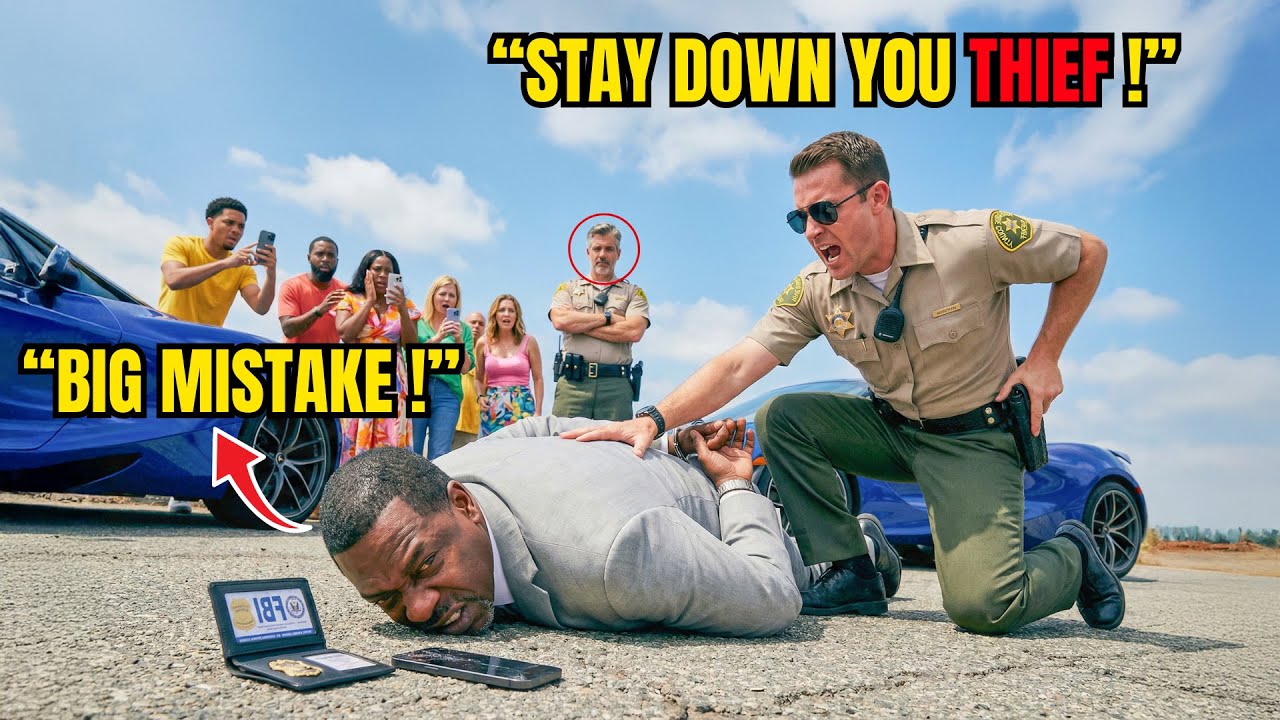
Ra ngoài ngay. Giơ tay lên cho tôi thấy, đồ khốn nạn. Thưa cảnh sát, tôi là chủ sở hữu chiếc xe này. Câm miệng lại. Anh nghĩ tôi ngu à? Những kẻ như anh không sở hữu những chiếc xe như thế này. Anh chỉ ăn cắp thôi. Thưa ông, giấy đăng ký xe của tôi ở ngay đây. Tôi bảo anh im miệng. Quỳ xuống, úp mặt xuống đất ngay. Hai tay ấn mạnh vào giữa hai bả vai. Mặt đường nóng bỏng áp vào má hắn.
Bộ vest may đo 200 đô la của anh ta dính đầy bụi và dầu mỡ. Làm ơn, tôi chỉ đang cố gắng thực hiện một trò lừa đảo thôi. Đó là những gì mà những người dùng giấy tờ giả bị đánh cắp thường làm. Các người lúc nào cũng nghĩ mình thông minh lắm. Còng tay siết chặt. Quá chặt. Kim loại cứa vào da. Một người phụ nữ quay phim từ bên kia đường. 2.000 người xem trực tiếp. Sau đó, tiếng chuông báo động vang lên qua bộ đàm.
Và chín từ tiếp theo sẽ chấm dứt một sự nghiệp. 13 phút trước đó, Samuel Owens hôn tạm biệt con gái ở cửa. Zoey, 16 tuổi, đeo ba lô trên vai, dừng lại trên hiên nhà. “Bố ơi, bố thực sự sẽ lái chiếc xe đó đến LA à?” “Bố xứng đáng với điều đó,” ông nói. “Bố được phép lái nó 25 năm rồi.” Cô cười toe toét, đảo mắt. “Chỉ đừng chạy quá tốc độ thôi nhé. Yêu bố.”
Em cũng yêu anh. Chiếc McLaren đậu trong gara như một viên ngọc bích từ trên trời rơi xuống. Owens đã làm việc trong các vụ án thực địa suốt một thập kỷ. Giám sát, theo dõi, những đêm lạnh giá trong những chiếc xe tải không biển số, bỏ lỡ sinh nhật, bỏ lỡ kỷ niệm, leo lên chức phó giám đốc ở tuổi 51. Chiếc xe không phải để khoe khoang, mà là đích đến cuối cùng.
Vợ anh, Angela, xuất hiện ở cửa, tay cầm cốc cà phê. “Cẩn thận đấy,” cô nói. “Lúc nào cũng vậy. Em nói thật đấy, Sam. Mọi người nhìn thấy chiếc xe đó, họ coi đó là mục tiêu.” Anh cười xòa. Nhưng cô ấy nói không sai. Tuần trước, một người phụ nữ da trắng ở cửa hàng tạp hóa đã nhìn chằm chằm quá lâu. Ở trạm xăng, một thiếu niên hỏi anh có phải là rapper không.
Tại trung tâm thương mại, nhân viên an ninh đã theo dõi anh suốt 20 phút. Zoe từng hỏi, “Sao mọi người lại nhìn anh kỳ lạ khi anh lái xe vậy?” Anh không có câu trả lời thỏa đáng. Giờ thì anh ngồi vào ghế lái. Da mát lạnh áp vào lưng anh. Động cơ nổ máy. Âm thanh êm ái và mạnh mẽ. Cửa gara mở lên. Ánh nắng tràn vào. Từ Riverside đến Los Angeles. 90 phút.
Anh ấy có một cuộc họp tại văn phòng FBI ở trung tâm thành phố. Phối hợp thường lệ với các cơ quan thực thi pháp luật địa phương. Một ngày thứ Năm bình thường. Đường cao tốc 91 hướng đông khá vắng vẻ. Giờ cao điểm buổi sáng chưa đến. Anh ấy nhập làn một cách êm ái. Làn trái chạy 70 dặm/giờ. Chế độ kiểm soát hành trình được bật. Nhạc cổ điển vang nhỏ trên loa. Yên tĩnh. Claire DeLoon. Trong 13 phút. Mọi thứ đều bình thường.
He thinks about the meeting agenda, about the federal grant applications sitting on his desk, about how the Riverside County Sheriff’s Department submitted theirs late again, about the email from Captain Coleman asking for an extension. Owens approved it. Professional courtesy. He doesn’t know Coleman’s name will matter later.
The McLaren glides past Corona. Traffic thickens slightly. A semitr merges right. Owens checks his mirror. Signals. Moves to the center lane. That’s when the sirens start. Suddenly, close. Three patrol cars behind him. Black and white. Riverside County Sheriff. Owens frowns. Checks his speedometer. 68. Under the limit.
Checks his mirrors again. No expired tags. No broken lights. The car is 2 weeks old. He signals right. Pulls onto the shoulder near the Maple Street overpass. Engine idles. He puts both hands on the wheel. Visible. Calm. This is the procedure. He’s done it a 100 times, but something feels wrong. Three cars for a traffic stop.
The first officer approaches fast, hand on holster. No smile, no courtesy wave. Owens lowers the window. Good morning, officer. Can I ask? License and registration. Now, the tone isn’t professional. It’s hostile. Owens reaches slowly for the glove box. My registration is right here. Stop. Hands on the wheel. He freezes. I’m just getting my I said hands on the wheel. Owens obeys.
Both hands 10 and two visible. Two more officers approach, one on each side. A fourth blocks traffic behind him with road flares. This isn’t a traffic stop. This is a felony stop. Sir, Owen says carefully. I don’t understand what. Step out of the vehicle slowly and that’s when it begins. Owen steps out, hands raised, palms open.
Officer, I’m happy to cooperate. Can you tell me what this is about? Turn around. Hands on the roof. He turns, spreads his fingers on the hot metal. The sun bakes the McLaren’s hood, burns his palms. Officer Blake Harrison pats him down. Rough, aggressive. Hands dig into pockets. Pull out wallet, phone, keys.
Everything hits the pavement. The phone screen cracks. Hey, that’s Shut up. A small crowd gathers across the street. A gas station. Morning coffee runs. A woman in scrubs. An older man with a dog. A teenager with earbuds. All watching. Phones come out. Harrison grabs Owen’s wrist, twists it behind his back. Sir, I haven’t done anything.
Yeah, that’s what they all say. The second wrist. Metal clicks. Handcuffs bite deep. Too tight. Deliberately tight. Officer, those are too. I’ll decide what’s too tight. Harrison shoves him toward the curb. Hard. Owens stumbles. His knee hits concrete. The suit jacket tears at the shoulder. Sit. Don’t move. Owen sits.
Pavement hot through his pants, hands cuffed behind him, shoulder throbbing. Officer Harrison, he says quietly. I’m a federal agent. My credentials are in my wallet. Harrison picks up the wallet, flips it open, sees the badge, and laughs. Federal agent, right? And I’m the Pope. Sir, if you just verify, you can buy these on Amazon for 12 bucks.
You think I’m stupid? I’m asking you to call. I’m asking you to shut your mouth before I add resisting to the charges. A rookie officer, young, maybe 25, stands nearby. He looks uncomfortable, shifts his weight, says nothing. Harrison walks to the McLaren, peers inside, runs a hand over the door frame. Let me guess, he calls out.
You’re a doctor, lawyer, tech CEO. I work for the FBI. Sure you do. Harrison turns to the crowd loud enough for everyone to hear. They always got a story. Always got an excuse. A woman across the street, Latina, early 30s, scrubs, holds up her phone. Filming. The red dot of a live stream blinks in the corner. Tik Tok.
Username at witnessjustice. Now the caption reads, “Black man arrested for driving his own car.” The view counter climbs 300 500 800 Harrison radio dispatch unit 1523 to dispatch. Possible GTA running plates now. The vehicle is a 2024 McLaren 720S California plate 8 JKT239. Static then a woman’s voice. Copy. 1523.
Stand by. Owen sits on the curb, hands numb, wrists bleeding where the cuffs cut in. A child across the street, maybe seven, holding his mother’s hand, stares. Mommy, why is that man in handcuffs? The mother pulls him away, doesn’t answer. Owens keeps his breathing steady. Controlled. FBI training. Deescalation.
Compliance. Don’t give them a reason. But his heart pounds, not from fear, from rage. 25 years, 4:00 a.m. stakeouts, missed recital, missed games, climbing a ladder built on merit and sacrifice. And here he sits on a freeway shoulder, face stre with dust, suit torn, cuffed like a criminal because he drives a nice car because officer Blake Harrison decided he doesn’t belong in it. Dispatch crackles again.
1523. Registration returns to Samuel Owens Riverside. No wants, no warrants. Harrison waves it off. Yeah, that’s what the fake papers say. I’m bringing him in. Owens closes his eyes. Breathes. Officer, please just verify my badge number. Call the FBI field office. It’ll take 2 minutes.
I know a stolen car when I see one. I know a con man when I hear one, and I know how this ends. Harrison grabs his arm, yanks him to his feet. You’re under arrest for grand theft auto and possession of stolen property, the crowd murmurs. The live stream hits 2,000 viewers. Comments scroll fast. This is insane. Call a supervisor.
I’ve seen this before. What city is this? And then finally, a different voice on the radio. A supervisor. 1523. What’s your 20? We need to talk. Harrison freezes. The supervisor doesn’t arrive for 6 minutes. 6 minutes where Owens sits on the curb. Where the sun climbs higher, where sweat soaks through his shirt, where the handcuffs cut deeper.
6 minutes where the live stream grows. 2,000 viewers, 3,000, 5,000. The woman filming, Maria Rodriguez, though Owens doesn’t know her name yet, narrates in real time. He’s been sitting there for 10 minutes. They won’t even let him explain. He keeps saying he owns the car. They won’t listen. Comments flood in. This is Riverside County. File a complaint.
I’m sharing this everywhere. Somebody call a lawyer. Me. A white man, late 50s, khakis, polo shirt, approaches from the gas station. He’s holding a coffee. Excuse me, officer, he says. I think you should listen to him. Harrison wheels around. Sir, step back. I’m just saying. He seems StepStep back or I’ll arrest you for obstruction.
The man raises his hands. Backs away, but he doesn’t leave. He stands at the edge of the crowd watching. More people gather. A UPS driver, a woman with a stroller, two construction workers on break. All watching, all filming. Harrison paces near the McLaren. Radio chatter crackles. 1523. Sergeant Morrison is on route.
Do not move the suspect until he arrives. Harrison’s jaw tightens. He keys the mic. Copy. Standing by, but he doesn’t look at Owens. Won’t make eye contact. The rookie officer name tag reads J. Phillips shifts his weight again. He glances at Owens, at the crowd, at Harrison. Owens catches his eye. Officer Phillips, Owens says quietly.
Please just call my office. My FBI Los Angeles field office. Ask for Deputy Director Samuel Owens. They’ll confirm. Phillips hesitates, looks at Harrison. Harrison snaps. Don’t talk to him. But sir, if he’s really I said don’t. Phillips steps back, says nothing more. The complicity stings worse than the handcuffs.
A black SUV pulls up. Sergeant Morrison, early 40s, graying temples, weathered face, steps out. He walks to Harrison. They talk in low voices. Owens can’t hear the words, but he sees Harrison’s gesture, sees him point at the car, at Owens, sees him shake his head. Morrison looks at Owens long, assessing.
Then he walks over. Sir, I’m Sergeant Morrison. What’s your name? Samuel Owens. And this is your vehicle? Yes. Can you prove that? My registration is in the glove box. My insurance card. The title is at home, but if you run the VIN, it’ll come back to me. Morrison nods. We did. It does. Owens exhales then.
But Officer Harrison says you presented a fake federal badge. It’s not fake. A lot of people buy badges online. Mine isn’t from online. It’s from Quantico. Morrison studies him. You’re saying you’re FBI? I’m saying I’m deputy director of the FBI, Western Region, based in Los Angeles. I oversee federal local coordination across six states, including California.
The words land like stones. Morrison’s expression doesn’t change, but something flickers in his eyes. That’s a pretty specific claim. It’s not a claim, it’s a fact. Call the field office. Extension 40425. Ask for my assistant, Grace Louu. She’ll verify. Morrison glances at Harrison, then back at Owens.
Why were you pulled over? I don’t know. I was going 68 and 70. No violations, no broken lights. He didn’t say. Officer Harrison says you were driving erratically. I wasn’t. He says you match the description of a vehicle reported stolen in Anaheim last week. This car was purchased 2 weeks ago from McLaren Newport Beach. I have the bill of sale. I have the financing paperwork.
I have everything. Morrison doesn’t respond. The live stream hits 8,000 viewers. Maria Rodriguez zooms in. The camera catches Owens’s face, the cut on his wrist, the torn jacket, the calm in his eyes. A comment appears. He’s not even angry. That’s the saddest part. Another. He knows if he gets angry, they’ll call it resisting.
Another, this is America. Morrison keys his radio. Dispatch, run a badge verification. Federal name Samuel Owens, FBI. Static. Then stand by, Sergeant. The weight feels infinite. Owens watches Harrison. Harrison watches the McLaren. Phillips watches the ground. The crowd grows to 30 people, maybe more. A news van pulls up. Channel 7.
A reporter and cameraman spill out. Morrison curses under his breath. The radio crackles. Sergeant Morrison, be advised. Everyone freezes. Badge number returns to Federal Bureau of Investigation. Deputy Director Samuel Owens. Confirmed active. Assigned to Los Angeles field office. Highle clearance. Repeat. Confirmed.
Federal senior official. The silence is total. Harrison’s face drains white. Philillips’s eyes widen. Morrison closes his eyes, opens them. Keys the mic. Copy, dispatch. Understood. He looks at Harrison. Uncuff him now. Harrison doesn’t move. Blake, uncuff him. Harrison walks over. His hands shake as he pulls the key from his belt.
The cuffs click open. Owens stands slowly, rubs his wrists. Blood smears his cuffs. Harrison tries to speak. Sir, there was a Owens cuts him off. His voice is quiet, cold, absolute. Stop talking. Owens picks up his phone. The screen shattered. He picks up his wallet, keys, dusts off his jacket. Harrison stands frozen, mouth half open.
Sir, I there was a misunderstanding. Owens looks at him. Just looks, doesn’t speak. The silence cuts deeper than any words. Morrison steps between them. Deputy Director Owens, on behalf of the department, I apologize for No. Morrison blinks. Sir, you don’t apologize on behalf of the department. You’re not authorized to do that.
Your captain is. Your sheriff is, not you. Morrison’s face reens. Owens turns to Harrison. Officer Harrison. Badge number. Harrison’s voice cracks. 1523. How long have you been with the Riverside County Sheriff? 12 years. 12 years. And in 12 years, how many times have you pulled over a luxury vehicle and accused the driver of theft? Harrison says nothing.
I asked you a question, officer. I I don’t Let me guess, more than once, less than a hundred, somewhere in between. The crowd presses closer. Every phone is up. The live stream count hits 12,000. Maria Rodriguez’s voice narrates, “He just asked how many times. He knows this isn’t the first time.” Owens steps closer.
Not threatening, just a present. You told me I’m a con man. You told me guys like me don’t own cars like this. You said you know a liar when you hear one. Harrison stares at the ground. What did you mean by guys like me, Officer Harrison? I didn’t mean it. What did you mean? Silence. Owens pulls out his badge. Gold FBI seal gleaming. This isn’t from Amazon.
It’s from 25 years of service. 4 a.m. stakeouts. Missing my son’s first steps. missing my daughter’s recital, earning every inch of the career that bought that car. He points at the McLaren. I signed the federal grant applications for this department. I approve your funding. I coordinate your task forces. And today, Officer Harrison, you put me on the ground because you couldn’t believe I earned what I drive.
Harrison’s lips tremble. Morrison tries again. Deputy Director, if we could handle this quietly, Owens finishes. Off the record with the phone call and a handshake. Morrison doesn’t answer. No. Owens pulls out his phone, dials, speaker on. It rings twice. FBI Los Angeles Deputy Director’s Office. Grace, it’s Sam.
Sir, your meeting starts in 40 minutes. Are you? I need you to document something. Time stamp 10:14 a.m. June 6th, 2024. I was unlawfully detained by the Riverside County Sheriff’s Department. Officer Blake Harrison. Badge 1523. Sergeant Morrison supervising. I was handcuffed, accused of grand theft auto, and held for approximately 20 minutes despite identifying myself as federal law enforcement. Grace’s voice sharpens.
Sir, are you injured? Minor lacerations. I’m fine. I need a formal complaint filed. I need the full dash cam footage from unit 1523. I need the dispatch logs and I need internal affairs notified. Understood. I’ll have legal start the paperwork immediately. Thank you. He hangs up. Morrison’s face is stone.
Harrison looks like he might vomit. Owens pockets his phone. Looks at the crowd. Maria Rodriguez is still filming at the news crew setting up across the street. You should know, Owens says to Morrison, that this interaction is being livereamed. 12,000 people are watching and they just heard me request a formal investigation. Morrison nods slowly. Understood.
I want your names, your badge numbers, your supervisor’s contact information. I want it now. Morrison pulls out a business card, writes on the back, hands it over. Owens takes it, doesn’t look at it, just pockets it. One more thing. Morrison waits. I’m driving to Los Angeles now. If I’m pulled over again between here and downtown for any reason by any department, I will assume its retaliation and I will respond accordingly.
That won’t happen. It better not. Owens walks to the McLaren, opens the door, sits down. The engine starts smooth, controlled. He looks at Harrison one last time. You should have listened. He drives away. The crowd watches in silence. Maria Rodriguez ends the live stream. Final view count 14200. Final comment. This man is my hero.
But for Owens, nothing feels heroic. It feels like surviving something that never should have happened. And wondering how many others didn’t survive it. The video goes viral in 6 hours. By evening, it hits 2 million views. By midnight, 5 million. By morning national news, CNN runs the headline. FBI deputy director handcuffed during traffic stop.
Fox News federal official claims racial profiling in California arrest. MSNBC viral video exposes pattern of aggressive policing. The comment section explodes. Thousands of people share their own stories. Luxury cars, suspicious looks, random stops, but Owens doesn’t read them. He’s in his office. Door closed, phone off.
Grace Lou brings him coffee. Sir, you have 43 interview requests. ABC, NBC, CBS, CNN. Decline them all. The sheriff’s office called. They want to meet. Tell them to talk to my lawyer. Already did. She pauses at the door. Sir, I’m glad you’re okay. He nods, doesn’t look up. When she leaves, he sits in silence.
Then his desk phone rings. Internal line. Owens. Sam. It’s Sarah Bennett, internal affairs, Riverside County Sheriff. Do you have a minute? He sits up. I’m listening. I need to meet with you. Not officially. Not yet. Why? Because Blake Harrison isn’t the problem. He’s a symptom. Owens is silent and I’ve been watching him for 8 months.
They meet at a diner in Corona. Off the record, no recording devices. Lieutenant Sarah Bennett is 44, 15 years in law enforcement, eight in internal affairs. She orders black coffee, doesn’t touch it. I saw the video, she says. I wasn’t surprised. Why not? She slides a folder across the table.
Because this isn’t his first time. Owens opens it. Case number BI2090847. Complaint filed by Miguel Santos, age 29, software engineer. Pulled over in his Lexus LS500. Harrison accused him of car theft. Detained 40 minutes. Released. No apology. Complaint marked unfounded. Case number BI2020156. Complaint filed by Jasmine Taylor, age 34.
Attorney pulled over in her BMW 7 series. Harrison searched her car, said she didn’t look like a lawyer, found nothing. Complaint marked resolved informally. Case number BI2020391. Complaint filed by Trevor Washington, age 41. Physician pulled over in his Porsche 911. Harrison accused him of drug dealing. Searched. Found nothing. Complaint marked no policy violation.
Owens flips pages. More complaints. More names. More expensive cars. More black and brown faces. 18 complaints in 5 years, Bennett says. 14 involve minority drivers, 11 involve luxury vehicles, zero resulted in discipline. Why? Because Captain Travis Coleman protects him. She slides another document across.
Email thread from Captain T. Coleman to Lieutenant S. Bennett. Subject: Re Harrison complaint review. Date: March 15, 2023. Sarah, I’ve reviewed the complaint. Officer Harrison followed procedure. The stop was justified. The complainant is oversensitive. Close the case. TC Owens reads it twice. This is how you close investigations.
That’s how Coleman closes investigations. She pulls out another email highlighted from Captain T. Coleman to all patrol officers. Subject traffic stats Q2. Date April 2nd, 2024. Team, we’re down 15% on vehicle stops compared to last quarter. Brass is watching. I need those numbers up. Focus on hight traffic corridors.
Be proactive. Let’s show them what this unit can do. TC Owens stares at it. Quotas. Unofficial. Unwritten, but real. That’s illegal under California law. Tell that to Coleman. She spreads more papers on the table. GPS tracking data from patrol vehicles. Color-coded maps. This is Harrison’s patrol pattern over 6 months.
See the clusters? Owens studies it. Riverside Auto Mall, Country Club Drive, the shopping district near the university. He’s hunting. Not for criminals, for stats. She taps another sheet. Overtime records. Harrison claimed $42,000 in overtime last year. Most of it logged as traffic enforcement operations. But look at the timestamps.
She highlights entries. June 14th, 2023. 6 hours OT. GPS shows his car parked at a Starbucks for 4.5 hours. July 22nd, 2023. 8 hours OT. GPS shows his car at the Auto Mall. Engine off. No calls logged. September 3rd, 2023. 7 hours OT. GPS shows his car at his own home. He’s clocking hours. He’s not working.
And Coleman approves every claim. Owens leans back. The pieces connect. Quotas push officers to make stops. Stops generate stats. Stats justify budgets. Budgets generate overtime. Overtime generates income. And nobody checks the work. Bennett nods. Now expand it. She slides a final document. Payroll records. Seven officers highlighted.
Harrison, $42,000 OT. Officer Daniels, $38,000 OT. Officer Ruiz, $35,000 OT. Officer Kim, $31,000 OT. Officer Patterson, $29,000 OT. Officer Hughes, $27,000 OT. Officer Grant, $28,000 OT. Total $230,000. Wait. Owen says, “You told me $180,000.” I did. That was last year. This year it’s climbing.
How much do you think is fraud conservatively? Half, maybe more. Owens does the math. $115,000. Taxpayer money stolen. Why are you telling me this? Bennett meets his eyes. Because I’ve tried for 8 months to get someone to care, I filed reports. I requested audits. I escalated to Coleman. And he buried it. He said I was overzealous.
He reassigned me to desk work. He froze my promotion. She leans forward. Then you got arrested on video for the whole world to see. And suddenly people care. Owens studies her. What do you want from me? Help me burn it down. Two days later, Owens sits in a conference room with Bennett and three others.
Maria Rodriguez, the doctor who filmed the stop. She’s nervous. Keep glancing at the door. I was pulled over by Harrison in 2023, she says. I was driving my BMW to the hospital. Emergency surgery. A child needed me. Harrison didn’t care. He detained me for 45 minutes, searched my car, made me late. Her voice cracks. The surgery had complications.
The child lived, but I’ll never know if those 45 minutes mattered. If I could have prevented it, she looks at Owens. I filed a complaint. Nothing happened. I stayed quiet because I was scared. I’m done being quiet. Next is Thomas Green. White, 52, owns a car dealership. Harrison pulled me over last year. He says, “I was test driving a customer’s Porsche.
He accused me of stealing it from my own lot. I showed him my business card, my license. He didn’t believe me.” He shakes his head. I didn’t file a complaint. I’m white. I figured nobody would believe me. But now I realize it’s not just about race. It’s about power. He goes after anyone he thinks can’t fight back. Third is Jamal Carter, 23, college student.
I drive a used BMW my grandmother left me when she died. He says I’ve been pulled over seven times in 2 years. Same officer, Harrison. Every time he says I match a description. Every time he searches my car. Every time he finds nothing. Every time he lets me go with a warning. He looks at the table.
I’m not scared of getting arrested. I’m scared of the day he decides to plant something. Bennett takes notes, record statements, collects dates, times, locations, seven victims, seven notorized affidavit, all describing the same pattern, all ignored by the same captain. Owens makes a call. Not to the FBI. Not yet. To the California Department of Justice.
This is Deputy Director Samuel Owens, FBI. I’m requesting a formal audit of overtime claims and use of force complaints at Riverside County Sheriff’s Department. I have evidence of systemic fraud and civil rights violations. I’m also requesting an independent investigation, not internal. The DOJ agent on the line is silent for a moment.
Sir, that’s a significant allegation. I have 18 complaints, seven witnesses, financial records showing $230,000 in questionable overtime, GPS data proving falsified time sheets, and a captain who’s buried every complaint for 5 years. Another pause. We’ll open a case file immediately. Thank you. Owens hangs up. Bennett looks at him.
Now what? Now we wait and we watch because systems don’t reform quietly. They fight back. The push back starts in 24 hours. Riverside County Police Officers Association holds a press conference. County courthouse steps. 50 officers in uniform stand behind the podium. Jennifer Walsh, Union Attorney, speaks. Officer Blake Harrison is a dedicated public servant with 12 years of exemplary service.
multiple commendations. He has served this community with honor. She pauses. The accusations against him are part of a broader anti- police agenda. Viral outrage. Officer Harrison followed Department policy. He acted on reasonable suspicion and he is being crucified in the court of public opinion. A reporter shouts, “What about the 18 complaints?” Complaints are not convictions.
Anyone can file a complaint. What about the video? The video shows a traffic stop. Buy the book. By afternoon, the narrative shifts. Conservative media. FBI official plays race card after routine stop. Police union defense officer amid politically motivated attack. Comments flood in. Thin blue line avatars. He was just doing his job.
Owens is using his power to destroy a good cop. Bennett calls at noon. They’re stonewalling me. What happened? I requested dash cam footage. Technical malfunction. 90 seconds missing. Owens goes silent. Right around the time Harrison made the theft accusation. And the IT administrator, Coleman’s brother-in-law.
Can you prove deletion? I’m trying, but Harrison’s on medical leave, stress, won’t be available for weeks. And the GPS data for the other officers, files corrupted, all of them. Bennett’s voice drops. My captain called me this morning. Captain Reed told me to be careful. Said evidence can be interpreted many ways. Did he tell you to drop it? He didn’t have to.
Owens hears fear in her voice. Sarah, are you okay? Just watch your back. She hangs up. That evening, Owens gets a text. Unknown number. Drop this. You’ve got a daughter in college. Be smart. Zoe is 16, not in college, but the threat is clear. He screenshots it, forwards it to FBI security, then calls Angela. I need you to lock the doors.
Set the alarm. If you see anything unusual, call me. Sam, you’re scaring me. I’m being cautious. They’re threatening us. They’re trying to. What are you going to do? My job. That night, he sits in the driveway. A patrol car drives by slowly. 9:00 p.m. then 11 p.m. Then 1:00 a.m. Different cars, different officers, same message.
We know where you live. Maria Rodriguez calls Bennett the next morning. Someone came to my house. Who? Two officers, not Harrison. They said they were following up on my 2023 complaint from a year ago. Yes. They asked if I still wanted to pursue it. Said complaints sometimes hurt careers, mine, not theirs. Did they threaten you? Not directly, but the way they looked at me. Sarah, I have a son. He’s eight.
They won’t touch him. I promise. But Bennett doesn’t know if that’s true. Week two. The media narrative continues shifting. Did an FBI official overreact? Opeds. When does accountability become retaliation? A retired police chief, Officer Harrison made a mistake. Does he deserve to be destroyed? The system protects itself.
Not with lies, with doubt, with delays, with whispers that maybe the victim is the problem. Bennett emails. Subject: We have a problem. My IIA file was corrupted. 5 months of documentation gone. It says it’s unreoverable. Owens calls immediately. Tell me you backed it up. Personal encrypted drive. I’m not stupid. Don’t tell anyone.
Not your captain. I won’t. They’re trying to bury this. You can still walk away. Long silence. My daughter’s in college. Criminal justice major. Wants to be a cop like me. Last week she asked why I do this job if the system is broken. Owens waits. I told her the system isn’t broken. It’s just run by people and people can change. Her voice hardens.
I’m not walking away. Then we keep going. But when Owens hangs up, he sits in darkness, think about quitting, about settling quietly, about protecting his family. Then he remembers the crowd on that curb, the 12,000 watching, the 84 complaints that disappeared. He opens his laptop, type a formal letter to the California Attorney General, not a request, a demand.
The Los Angeles Times received a leaked email that same night from Captain T. Coleman to Union President Rick Voss. Subject: Owens situation. We need to control this narrative before it spirals. Jennifer is handling the media. Make sure I understand this was by the book. The paper runs on its front page. Internal email suggests coordinated response to FBI complaint.
The headline changes everything. Week three. The leaked email makes national news, but nothing changes. No investigation was announced, no officers suspended, just statements. We take these allegations seriously. The matter is under review. Empty words. Owens goes to work, comes home, repeats. The McLaren sits in the garage.
He hasn’t driven it since that day. Friday evening. Zoe comes home from school, drops her backpack, doesn’t speak. Hey. Owen says, “How was your day?” She shakes her head, goes upstairs. Angela watches from the kitchen. She had a rough day. What happened? Kids at school. Some are saying you’re lying.
Some are saying you’re a hero. Everyone’s taking sides. She’s caught in the middle. Owens closes his eyes. She came home crying yesterday. Angela continues. Said she just wants it to stop. I know. Sam, maybe we should think about Don’t just listen. Maybe we will settle quietly, take whatever they offer and move on. They’re not offering anything.
Then maybe we stop pushing. He looks at her. You want me to drop it? I want my family back. I want to stop looking out the window every time a car drives by. I want to stop worrying every time Zoe leaves for school. Her voice cracks. I want you back. The man I married wouldn’t sit in the garage every night staring at that car like it’s cursed.
Owens has no answer because she’s right. That night he sits in the McLaren again. Engine off. Garage dark. His phone glows. He opens the video. Watches himself on that curb. Handcuffed. Crowd watching. Harrison’s voice. Guys like you don’t own cars like this. Owens replays it again again. His phone buzzes. Unknown number.
He almost ignores it then opens it. A photo. Zoe walking to school taken from a car across the street. Yesterday’s date was stamped in the corner. No message, just the photo. Owens stares at the screen. His hands start shaking. He gets out of the car, walks to his office, opens the safe, his service weapon, Glock 22, loaded.
He picks it up, feels the weight in his hand, thinks about the patrol cars circling his house, the anonymous texts, the photo of his daughter, thinks about what they’re trying to do. Scare him, break him, make him quit. He sits at his desk, gun in front of him, and realizes something. You’re winning.
Not because they’re right. Because they’re willing to go further than he is to threaten children. to corrupt evidence to protect each other no matter the cost. He’s one man. They’re a system. His phone rings. He doesn’t answer. It rings again. He looks at the screen. Bennett. He considers not answering. Consider telling her he’s done, that he tried, that it’s not worth it. But he picks up.
Sam. Her voice is urgent. I just got a call. Someone wants to help. A witness from inside. Who? Officer Phillips. The rookie who was there that day. Owens sits up. He says he can’t stay silent anymore. He says Harrison told him something the day before your stop. Something we need to hear.
Owens looks at the gun on his desk, then at the photo of his daughter. When can we meet him? tomorrow. But Sam, he’s scared. If Coleman finds out, we’ll protect him. Can we? Owens puts the gun back in the safe, locks it. We have to. He hangs up, looks at Angela standing in the doorway. She’s been there the whole time. I’m sorry, he says.
For what? For putting you through this. She walks over, sits beside him. You’re not putting us through anything. They are. She picks up the phone, looks at the photo of Zoe, so let’s end it. They meet Officer Phillips at a rest stop off the 60 freeway. Sunday morning early. Phillips is 26, pale, hands shaking when he holds his coffee. I shouldn’t be here, he says.
Bennett speaks gently. You’re doing the right thing. The right thing gets you fired or worse. Tell us what you know, Owen says. Phillips looks around. No one was nearby. Still, he lowers his voice. The day before your stop, Harrison was in the break room, bragging. He said he had a system.
Said, “Rich guys and expensive cars always have something to hide. You just got to find it.” Find what? Anything. drugs, warrants, unpaid tickets. He said, “Black guys with money, easiest targets. They never expect it.” Owens feels his jaw tighten. He said that? Those exact words? Yes, sir. Why didn’t you report it? Phillips looks at his hands.
Because I’m 3 months out of the academy. Because Harrison’s been there 12 years. Because everyone listens to him, not me. Bennett writes it down. Will you testify to this? If you protect me, we will. Phillips nods, leaves quickly. Owens watches him go. That’s the intent, Bennett says. Premeditation, not implicit bias, explicit targeting.
It’s also hearsay unless he testifies. He will. He’s ready. Monday morning, Maria Rodriguez posts on social media. A video 2 minutes, her in scrubs, speaking directly to the camera. My name is Dr. Maria Rodriguez. In 2023, officer Blake Harrison pulled me over, detained me for 45 minutes, made me late for an emergency surgery.
A child’s life was on the line. Her voice steadies. I filed a complaint. Nothing happened. I stayed quiet because I was scared. But I’m not scared anymore. The video goes viral. 50,000 views in 2 hours, 200,000 by evening. Comments flood in. I was pulled over by him, too. Same thing happened to me. This needs to stop.
Tuesday, the Riverside Accountability Coalition organizes a town hall, a church on Mission Boulevard. Capacity 200. 300 show up. Owens sits in the back, listens. Thomas Green, the car dealer, speaks first. I’m white. I thought this only happened to minorities. I was wrong. Harrison pulled me over in a customer’s Porsche. Accused me of stealing from my own lot.
Jamal Carter, the college student, goes next. Seven stops in two years. Same officer. Every time he says I match a description. Every time he searches my car. Every time he finds nothing. How many times is coincidence? An older black woman stands. Voice shaking. My son was pulled over by Harrison in 2021. He’s a teacher. Drives a used Audi.
Harrison made him sit on the curb for an hour. Called him a liar. A thief. My son hasn’t been the same since. One by one they speak. Different races, different ages, different cars, same story, same officer. By the end, 43 people have shared their experiences. Local news covers it. Channel 7, Channel 4. The story shifts again.
Not FBI official versus cop, but community versus system. Council member Alan Wright attends, takes notes, speaks last. I’m calling for an independent oversight board, civilian-led with subpoena power. This ends now. The crowd stands, applauds. Owens stays seated, watches. This isn’t about him anymore. It never was.
Wednesday morning, Bennett calls. The California DOJ just opened a formal investigation into Harrison, into the entire department, financial audit, civil rights review, everything. Owens closes his eyes. We’re not done yet, Bennett says. But we’re close. How close. Close enough that they’re going to try something desperate. She’s right.
Thursday morning, the union files a lawsuit against Owens. Defamation, $5 million. The lawsuit is a bluff. Owens knows it. Bennett knows it. But it buys time, delays the investigation, puts Owens on defense. Jennifer Walsh holds another press conference. Deputy Director Owens has engaged in a coordinated campaign to destroy Officer Harrison’s reputation and career.
We are seeking $5 million in damages for defamation and emotional distress. The media runs with it. FBI official faces lawsuit. Police union strikes back. For 48 hours, the narrative shifts again. Some see it as desperation. Others see it as proof Owens went too far. Then the California Department of Justice releases its preliminary audit.
Friday, 9:00 a.m. press conference, Sacramento. The DOJ auditor, Patricia Vance, 20 years forensic accounting, speaks with clinical precision. Our review of Riverside County Sheriff’s Department overtime records reveals significant irregularities. She clicks a slide. Numbers appear. Between January 2023 and June 2024, seven officers claimed a combined $340,000 in overtime pay.
Our GPS and dispatch log analysis shows that approximately 62% of claimed hours cannot be verified. Pause. That’s $210,000 in fraudulent claims. Taxpayer money stolen. The room goes silent. Officer Blake Harrison personally claimed $67,000 during this period. Our analysis shows he was off duty, at home, or in stationary positions during 71% of his claimed overtime hours.
Another slide. GPS tracking data. Heat maps. Captain Travis Coleman approved every claim despite multiple red flags despite GPS data showing officers were not where they claimed to be. The slide changes. Email thread. We also recovered deleted emails from department servers. This one dated March 2024 from Officer Harrison to Officer Daniels.
The email appears on screen. Got eight hours approved for last night. Told Coleman I was running traffic ops on the 91. Was actually home watching the game. Easy money. Gasps in the room. Another email. Harrison to Coleman. Cap. Need you to approve my OT sheet. I know the hours look high, but we both know how this works. Coleman’s response.
Approved. Just be smarter about the paperwork. Vance continues, “We also discovered that dash cam footage from unit 1523, Officer Harrison’s vehicle, was remotely accessed and edited on June 6th, 2024 at 2:19 p.m. 90 seconds of footage deleted.” She clicks to another slide. The IT administrator who accessed the system is Michael Coleman, Captain Coleman’s brother-in-law.
The reporters erupt, questions shouted, cameras flashing. Vance raises her hand. We are recommending immediate criminal charges, wire fraud, conspiracy to defraud, obstruction of justice, destruction of evidence. She looks directly at the camera. This is not a case of a few bad apples. This is organized criminal activity within a law enforcement agency.
By noon, the story is everywhere. DOJ finds 210K fraud ring in Riverside Sheriff’s Department. Captain, six officers accused of systematic theft. Deleted dash cam footage tied to Captain’s brother-in-law. Walsh’s lawsuit suddenly looks absurd. By 2 p.m., she withdraws it. No stateme
nt. By 400 p.m., Harrison’s lawyer quits. By 6 p.m., Captain Coleman is placed on administrative leave. Bennett calls Owens. Did you see it? I saw it, Sam. They’re done. The DOJ is recommending a grand jury. When? 2 weeks, maybe less. Owens leans back. Breathes. For the first time in a month, the weight lifts slightly. This isn’t just about Harrison anymore.
Bennett says it’s about all of them. The whole system. Good. Coleman’s trying to cut a deal. Wants immunity in exchange for testimony. Will they take it? Depends what he offers. Owens thinks about Coleman. The emails, the approvals, the cover-ups. Let him sweat. Bennett laughs, tired, but genuine. We did it, Sam.
Not yet, but we’re close. He hangs up, opens his laptop, reads the DOJ report in full. Every page, every email, every data point. The evidence is overwhelming, undeniable. Finally, Angela appears in the doorway. I saw the news. He nods. Does this mean it’s over? Almost. She sits beside him, looks at the screen. I’m sorry. I doubted.
You didn’t doubt. You were scared. That’s different. I’m still scared. Me, too. But less than before, because the receipts just spoke louder than any threat. The grand jury convenes August 15th, Riverside County Superior Court, closed session. Owens is not allowed inside. Neither is Bennett. Neither are the victims. They wait in the hall.
Maria Rodriguez, Thomas Green, Jamal Carter, 40 others, silent, anxious. The proceeding lasts 3 days. Witnesses testify. DOJ auditors present evidence. Forensic accountants walk through the fraud. IT specialists explain the dash cam deletion. Officer Phillips testifies for two hours, describes what Harrison said, the targeting, the system, the culture. Coleman testifies.
Granted partial immunity. He confirms everything. The quotas, the pressure, the overtime approvals, the cover-ups. He tries to minimize his role. I was following orders from above. The prosecutor asks, “Who above you ordered fraud?” Coleman has no answer. On day three, Harrison’s attorney makes a final statement.
“My client made errors in judgment, but he believed he was acting within department policy. He is not a criminal. He is a police officer who made mistakes under pressure.” The prosecutor responds, “The evidence shows officer Blake Harrison systematically targeted minority drivers in luxury vehicles, that he falsified overtime records, that he participated in evidence destruction.
These are not mistakes, these are crimes.” August 18th, the grand jury returns its decision. The indictments are read in open court. Judge Patricia Moore presides. The courtroom was packed. Media in the gallery. Victims in the front rows. The people of the state of California versus Blake Harrison. Harrison stands. Civilian clothes.
No uniform. Face blank. Count one, deprivation of rights under color of law. Count two, wire fraud. Count three, conspiracy to defraud the United States. Count four, obstruction of justice. Count 5 through 14, additional civil rights violations. 14 counts total. The people of the state of California versus Travis Coleman.
Coleman stands graying smaller than he seemed in uniform. Count one, conspiracy to commit wire fraud. Count two, obstruction of justice. Count 3 through 11, aiding and abetting civil rights violations. 11 counts, three supervisors, six counts each. Conspiracy, fraud, obstruction. Michael Coleman, IT administrator. Four counts. Evidence tampering.
Judge Moore sets bail. $250,000 for Harrison. $150,000 for Coleman. Harrison’s lawyer argues for lower bail. Denied. Coleman’s lawyer argues he’s not a flight risk. Denied. Bail is set. The next hearing is on September 10th. The gavl falls outside the courthouse. Council member Wright holds a press conference.
Today, justice moves forward, but indictments are not enough. We need systemic reform. He announces new policies effective immediately. Independent Civilian Oversight Board. Seven members. Monthly public hearings. Mandatory body cameras. Footage retained for 5 years. No exceptions. Ban on arrest quotas. Enforced with financial penalties.
Quarterly audits of overtime claims. Independent auditors only. Mandatory deescalation training. 80 hours per officer annually. These reforms are not optional. They are required and they are permanent. Maria Rodriguez steps to the microphone. Owens told her she should speak. I’m a surgeon. I save lives.
Two years ago, Officer Harrison made me late to an operation. A child needed me because he couldn’t believe a Latina woman could afford a BMW. Her voice doesn’t shake. That wasn’t a mistake. That was a choice. Today he faces consequences for that choice. But this isn’t just about him. It’s about a system that protected him for 12 years.
She looks at the camera. To everyone who stayed silent because they thought no one would listen. We’re listening now. To everyone who filed a complaint that disappeared, we see you now. To everyone who thought the system would never change, watch. Applause from the crowd. Owen stands in the back.
Doesn’t approach the microphone. This isn’t his moment. It’s theirs. Bennett finds him. Trial’s set for January. He’ll plead out. Probably, but the others might not. Either way, it’s done. She nods. They watch the press conference, the victims speaking, the reforms announced, the crowd is growing. Thank you, Bennett says.
For what? For not being silent. 6 months later, Blake Harrison pleads guilty to nine counts. Sentenced to 8 years federal prison, no parole. Travis Coleman pleads guilty to six counts, 4 years, banned from law enforcement permanently. The three supervisors take plea deals, 2 to 3 years each. All stripped of pensions.
Michael Coleman, 18 months, probation after six. The trials never happen. The evidence is too strong. The reforms take hold. The civilian oversight board meets monthly. Public hearings transparent. Seven community members review every complaint. In 6 months, 18 officers are dismissed for past violations. 42 receive retraining.
Three are referred for prosecution. Overtime fraud drops 91%. Body camera compliance 100%. Complaints filed up 40%. Complaints sustained up 180%. Not because the department got worse, because people finally believe they’ll be heard. Samuel Owens drives the McLaren again. Saturday morning, Zoe in the passenger seat, heading to brunch.
Bố ơi, bố có bao giờ nghĩ về ngày hôm đó không? Mỗi ngày. Chuyện đó còn làm bố tức giận không? Ông ấy nghĩ về nó. Còng tay, lề đường, đám đông. Không, không còn nữa. Tại sao không? Bởi vì sự tức giận mà không đi kèm hành động chỉ hủy hoại bạn mà thôi. Nhưng hành động, hành động sẽ thay đổi mọi thứ. Họ nhập làn vào đường cao tốc 91. Cùng một đường cao tốc, cùng một tuyến đường. Không có tiếng còi hú phía sau ông.
Anh ấy vẫn nhớ về cuộc trò chuyện thẳng thắn ngày hôm đó. Quyền lực không tự bộc lộ, nhưng trách nhiệm thì có qua bằng chứng, qua lời khai, qua những người không chịu làm ngơ. Cỗ máy vận hành trơn tru, được kiểm soát, được tạo dựng xứng đáng. Lần này, không ai đặt câu hỏi. Nếu câu chuyện này có ý nghĩa với bạn, hãy chia sẻ nó. Hãy bình luận với trải nghiệm của riêng bạn. Bạn không cô đơn.
Các hệ thống sẽ thay đổi khi ánh sáng chiếu rọi vào chúng. Hãy đăng ký theo dõi Black Voices Uncut để xem thêm các cuộc điều tra nơi sự thật chiến thắng bởi vì công việc chưa hoàn thành. Nó chỉ mới bắt đầu. >> Tại Black Voices Uncut, chúng tôi không che giấu nỗi đau hay làm giảm nhẹ thông điệp. Chúng tôi nói thẳng thắn bởi vì sự thật xứng đáng được như vậy.
Nếu câu chuyện hôm nay chạm đến trái tim bạn, hãy nhấn thích, tham gia thảo luận trong phần bình luận và đăng ký kênh để không bỏ lỡ những tập tiếp theo của Uncut Voice.