

Cop Laughed While Framing Black Man at the Mall — Then Froze Upon Learning the Man Was a Colonel
close
arrow_forward_ios
Read more
00:00
00:01
01:31
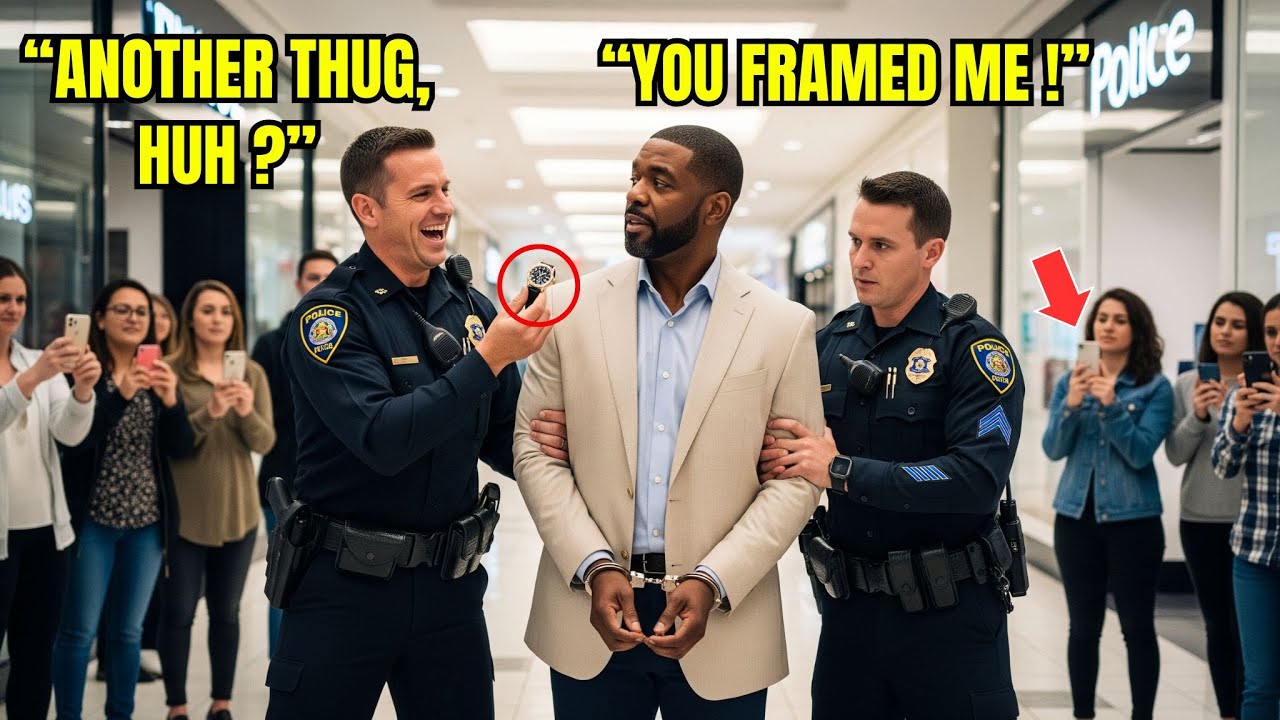
Another thug who thinks he can afford real jewelry. Officer Derek Mills laughs loudly into his radio, deliberately speaking loud enough for the well-dressed black man at the Zales counter to hear. Watch me put this criminal back where he belongs, behind bars. Mills approaches with swaggering confidence, his hand already reaching for the handcuffs on his belt as he eyes his target like a predator circling prey.
The customer, a tall, dignified man in his 50s, continues examining charm bracelets with the careful attention of a loving father, completely unaware of the trap being set. “These people never learn,” Mills mutters, palming a $200 silver watch from the display. With practiced deception, he bumps hard into the man’s shoulder, slipping the watch into the customer’s jacket pocket while sneering, “Watch where you’re going, boy.
Discover more
Handbags & Purses
Security Products & Services
Gems & Jewelry
Sir, step away from that counter immediately.” Mills barks, his voice echoing through the mall corridor. You’re under arrest for theft. The man turns slowly, his eyes meeting Mills for the first time. And something in that steady gaze makes Mills hesitate for just a split second. But Mills has no idea that this man possesses something that will destroy his career in the next 10 minutes.
The morning sun filters through the tall windows of Colonel Marcus Washington’s suburban Charlotte home, casting warm light across the kitchen where he sits with his coffee, reviewing his daughter’s latest text messages. At 52, Marcus carries himself with the quiet confidence that comes from 30 years of military service, though this Tuesday feels refreshingly ordinary.
No drills, no briefings, just a father planning to surprise his daughter on her upcoming 16th birthday. “Dad, promise me you won’t go overboard with the gift.” Kesha had texted him the night before, followed by three laughing emojis. “I know how you get when you’re shopping for me.” Marcus chuckles softly as he reads the message again, remembering last year when he’d returned from the jewelry store with not just the necklace she’d mentioned, but matching earrings and a bracelet as well.
Discover more
Earrings
Watches
Gifts
His wife Sandra had shaken her head in amused exasperation, but Kesha’s face when she opened that box had made every penny worth it. He checks his watch. 1:30 p.m. Perfect timing to beat the after school rush at Northgate Mall. Marcus has been planning this shopping trip for weeks, mentally cataloging every hint Kesha had dropped about wanting something special for her sweet 16.
She’d been eyeing a particular charm bracelet in a magazine, circling it with her pink pen and leaving the page conspicuously open on the kitchen counter. The drive to the mall takes him through the familiar neighborhoods of Charlotte, past the base where he commands the third regiment, past the high school where Kesha excels in both academics and debate team.
Marcus finds himself thinking about how quickly she’s grown up, how proud he is of the young woman she’s becoming. These quiet moments of fatherly reflection have become more precious to him as his daughter approaches adulthood. Northgate Mall buzzes with its typical Tuesday afternoon energy. Marcus parks near the main entrance, noting the mix of stay-at-home parents with strollers, teenagers killing time after school and retirees using the mall for their daily exercise walks.
The familiar hum of suburban commerce surrounds him as he enters through the automatic doors. Inside Zales, the jewelry store gleams under bright display lighting. Marcus approaches the charm bracelet section with the focused attention of a man on a mission. The store clerk, a young woman named Sarah Mitchell, with kind eyes and a genuine smile, notices his serious expression.
“Can I help you find something special today?” she asks. My daughter’s 16th birthday is coming up, Marcus explains, his voice carrying the warmth that always appears when he talks about Kesha. She’s been dropping hints about charm bracelets for months. Sarah’s face lights up with understanding. Oh, we have some beautiful options.
Does she like silver or gold? And does she prefer delicate pieces or something with more presence? As Marcus examines the various options, his phone buzzes with another message from Kesha. Dad, seriously, don’t spend too much. You already do way too much for me. The heart emoji makes him smile. Even as she’s trying to rein in his spending, she’s thinking about his feelings.
He types back quickly. Just picking up a few things. See you for dinner. Love you, kiddo. She sounds like a thoughtful daughter, Sarah observes, having noticed his gentle smile while texting. She is. Marcus agrees, his military bearings softening as he thinks about his girl. Sometimes I think she worries more about taking care of me than I do about taking care of her.
The conversation flows naturally as Sarah shows him different bracelet options. Marcus asks thoughtful questions about durability, about whether additional charms can be added later, about the craftsmanship of each piece. His approach to this purchase reflects the same methodical attention to detail that has served him well throughout his military career.
Other customers in the store notice him without quite knowing why. There’s something about Marcus’ presence, the straight shoulders, the measured movements, the way he speaks with quiet authority, but genuine kindness that commands subtle respect. An elderly couple browsing engagement rings nods approvingly when they overhear him talking about his daughter.
A young mother struggling with her toddler finds herself standing a little straighter when Marcus politely steps aside to give her more room at the counter. This one, Marcus finally decides, pointing to a sterling silver bracelet with delicate scroll work. It’s elegant but not too formal. She can dress it up or down.
Excellent choice, Sarah agrees. Would you like to see our charm selection? We have some beautiful initial charms. Or maybe something that represents her interests. Marcus considers this, remembering Kesha’s recent acceptance to the National Honor Society and her plans to study international relations in college.
Do you have anything that might represent achievement? Or maybe something with a globe or world theme. As they discuss charm options, Marcus remains completely unaware that across the mall corridor, officer Derek Mills has been watching him for the past 10 minutes. Mills stands near the Radio Shack, occasionally speaking into his radio with the practiced authority of someone who believes he’s protecting the community from suspicious characters.
The subject appears to be causing expensive merchandise, Mills reports quietly, spending unusually long time examining high- value items, requesting backup to monitor the situation. The irony is lost on Mills that Marcus’ careful consideration of the jewelry stems from the same attention to detail that has made him an exceptional military leader.
The same methodical approach that has earned him two bronze stars and the respect of every soldier under his command. Marcus finalizes his purchase, accepting Sarah’s offer to have the bracelet professionally gift wrapped. As he waits, he checks his phone again and sees a photo Kesha has sent from school. She’s wearing her debate team captain pin, grinning proudly with her teammates.
The image reinforces his decision about the charm bracelet. She deserves something beautiful to mark this milestone in her life. She’ll love it. Sarah assures him as she hands over the elegant gift bag. You can tell how much you care about her. Marcus thanks her warmly and turns to leave the store, his mission accomplished and his heart full of anticipation for his daughter’s surprise.
He moves through the mall with the same quiet confidence he’s carried all day, nodding politely to other shoppers, completely absorbed in thoughts of Kesha’s upcoming birthday celebration. He has no idea that his peaceful shopping trip is about to become a nightmare, or that Officer Mills is already positioning himself for what he believes will be an easy arrest.
Officer Derek Mills adjusts his security uniform and speaks into his radio with the satisfied tone of a hunter who has spotted his prey. Control, this is Mills. I’ve got eyes on a suspicious individual at Zale’s Jewelry. Black male, approximately 6 feet, well-dressed, but likely trying to blend in.
He’s been loitering at the expensive jewelry counter for over 15 minutes. Mills chuckles softly as he watches Marcus emerge from the store with a small gift bag. “These guys always think they’re so smooth,” he mutters to his partner, Officer Janet Torres, who’s monitoring from the security office. But I can spot a professional shoplifter from a mile away.
What Mills sees as suspicious behavior is actually Marcus carefully reading a text from his daughter asking about dinner plans. But Mills has already constructed his narrative. In his 12 years as a police officer and three years working mall security, Mills has developed what he calls an instinct for troublemakers. Though his arrest record shows a disturbing pattern of targeting black men in situations that rarely result in convictions.
Roger that, Mills. Torres responds through the radio. Do you need backup? Mills grins as he begins following Marcus from a distance, weaving through the Tuesday afternoon crowd of shoppers. Not yet, but keep someone ready. I want to see what else this guy has planned. Marcus walks leisurely toward Bath and Body Works, where he hopes to find something nice for Sandra.
Completely unaware of his shadow, he pauses to help an elderly white woman reach a bottle of lotion from a high shelf, steadying her gently as she stretches. “Such a gentleman,” the woman thanks him warmly. “You remind me of my grandson. He’s in the army, too.” “I force actually, ma’am. But thank you,” Marcus replies with a kind smile, though he doesn’t mention his rank.
Mills watches this interaction from behind a pillar, his radio crackling as he reports. Subject is now making contact with potential victims. Classic distraction technique. He’s definitely working the store. Mills actually laughs quietly at his own analysis, pleased with his detective work. These criminals think they’re so clever, but they follow the same patterns every time.
The irony of Mills’s observation is completely lost on him. Marcus is indeed following a pattern, but it’s the pattern of a devoted father and husband making thoughtful purchases for his family. Inside Bath and Body Works, Marcus examines various gift sets with the same careful attention he’d given to the jewelry.
The sales associate, recognizing quality customer service when she sees it, approaches with genuine helpfulness. Anniversary gift? She asks, noting his thoughtful expression. Just because, Marcus replies. My wife works so hard, and I wanted to surprise her with something nice. Mills positions himself near the store entrance, pretending to examine his phone while keeping Marcus in sight.
He speaks quietly into his radio. Subject is now attempting to establish alibis with store personnel. Textbook behavior for someone planning theft. I’m going to need that backup ready. His radio crackles with Torres’s voice. Mills, are you sure about this? He just looks like a regular customer to me on the cameras. Mills’s laugh is louder this time, drawing glances from nearby shoppers.
That’s exactly what they want you to think, Torres. Trust me, I’ve been doing this longer than you. This guy’s a pro. Marcus selects a lavender and vanilla gift set that he knows Sandra loves, making casual conversation with the sales associate about whether the scent is too strong for someone who works in a medical office.
His genuine concern for his wife’s professional environment and his thoughtful questions mark him clearly as a caring husband. But Mills interprets every interaction through his distorted lens. Now he’s pumping the staff for information about store policies, Mills reports with growing excitement. Probably trying to figure out their security procedures and return policies for stolen merchandise.
As Marcus completes his purchase and moves toward GameStop to browse for something Kesha might like for her gaming setup, Mills coordinates his next move. Torres, I want you to alert store security at GameStop. Tell them to watch for shoplifting activity. I’m going to get closer. Mills follows Marcus into the electronic store, positioning himself near the gaming accessories while Marcus examines iPhone cases and portable chargers.
The officer’s confidence grows with each moment, and he can barely contain his amusement at what he sees as his superior investigative skills. Control subject is now in GameStop, examining high-V value electronics. Mills whispers into his radio, then lets out a quiet snicker. It’s like watching a nature documentary about predators. They can’t help but follow their instincts.
Marcus picks up a phone case with a design Kesha would love. It features constellation patterns that remind him of her interest in astronomy. As he examines the price tag, Mills speaks louder into his radio, intentionally trying to rattle his target. Dispatch, I’m going to need backup units standing by. The subject is displaying increasingly suspicious behavior around electronics merchandise.
The radio chatter draws curious looks from other customers, but Marcus remains focused on his shopping, completely unaware that he’s being profiled and tracked. His military training has taught him situational awareness, but he’s in relaxation mode, thinking about his family rather than potential threats.
Mills coordinates with store security, building his case with fictional observations. The subject keeps checking his phone, probably coordinating with accompllices outside. He’s taking too long examining each item, clearly calculating value versus risk. What Mills doesn’t realize is that Marcus’ phone checks are responses to a group text thread with Sandra and Kesha about weekend family plans, and his careful examination of items reflects the thoughtful nature of someone who doesn’t make impulse purchases.
As Marcus moves toward the store exit with his small collection of gifts, Mills makes his final preparation. He slips behind the jewelry counter at a nearby kiosk and palms an expensive watch, a $200 silver time piece that will serve as the planted evidence he needs. This is it, Mills whispers into his radio, his voice filled with anticipation and barely suppressed laughter.
Time to make my move. He follows Marcus toward the main corridor, the stolen watch burning in his pocket like a loaded weapon, his face already forming the triumphant smirk he’ll wear when he makes his arrest. The main corridor of Northgate Mall buzzes with afternoon shoppers when Officer Mills makes his move, positioning himself directly in Marcus’ path near the fountain area where foot traffic naturally converges.
His hand rests confidently on his radio, and the stolen watch feels heavy in his jacket pocket. The perfect piece of evidence for what he’s already planning as his most satisfying arrest of the month. “Sir, I need you to stop right there,” Mills calls out in a voice deliberately pitched to carry across the open space.
His tone contains just enough authority to make heads turn, but also carries an undertone of amusement that suggests he’s enjoying himself. Marcus stops walking and turns calmly, his shopping bags held loosely at his side. Is there a problem, officer? His voice is steady, professional, the tone of someone accustomed to dealing with authority figures as an equal.
Mills approaches with theatrical slowness, clearly savoring the moment as curious shoppers begin to gather at a respectful distance. Several people instinctively reach for their phones, the modern reflex of documenting anything that looks like it might become significant. There might be, Mills says, and then he chuckles.
A sound that carries clearly in the mall’s acoustics. We’ve had reports of suspicious activity around the jewelry stores, and you seem to match the description we received. The laugh that follows is unmistakably condescending. the sound of someone who believes he holds all the cards. Funny how these reports always turn out to be accurate.
Marcus sets his shopping bags down carefully and keeps his hands visible. An automatic response from someone who understands how these situations can escalate. I’m happy to cooperate, officer. I was just shopping for my family. I’m sure you were, Mills replies, his grin widening as he gestures theatrically toward Marcus’s bags.
Mind if I take a look at what you’ve purchased? Just standard procedure, you understand? As Mills approaches, several onlookers hold up their phones, the small screens glowing as they begin recording. A teenage girl whispers to her friend, “This doesn’t look right.” An elderly man shakes his head disapprovingly, though it’s unclear whether his disapproval is directed at Marcus or at Mills’s behavior.
Mills examines the contents of Marcus’ bags with exaggerated thoroughess, making a show of inspecting each receipt and comparing it to the items. Bath and Body Works, GameStop Zales, he reads aloud, his voice carrying a mocking tone. Quite the shopping spree for someone who just happened to be in the neighborhood.
I was buying gifts, Marcus explains patiently. My daughter’s birthday is coming up. Mills laughs again, louder this time, clearly enjoying his audience. Oh, the family man’s defense. How original. He looks around at the growing crowd of onlookers. You’d be amazed how many thieves suddenly become devoted fathers and husbands when they get caught.
The comment draws uncomfortable murmurss from the crowd. A woman with a young child pulls her son closer while a security guard from Macy’s approaches to see what’s happening. Everything checks out. The Macy’s security guard observes quietly, having overheard Mills’s inspection of the receipts. All the purchases have proper documentation.
Mills waves him off dismissively. I appreciate the input, but this is police business. He turns back to Marcus with renewed confidence. Here’s the thing. I need to do a more thorough search. Standard procedure when we have reason to believe someone might be concealing merchandise. Marcus nods calmly. I understand.
You’re welcome to search me, officer. How accommodating, Mills says with another chuckle. Almost like you’ve done this before. Mills begins a deliberately invasive pat down. his hands moving slowly and obviously for the benefit of his growing audience. He starts with Marcus’ jacket pockets, making a show of being thorough while secretly maneuvering toward the pocket where he planted the stolen watch.
“Let’s see what we have here,” Mills announces as his hand approaches the planted evidence. His voice carries anticipation like a magician about to reveal his best trick. When his fingers close around the watch, Mills’s face lights up with triumphant satisfaction. Well, well, well. What’s this? He pulls out the silver time piece with theatrical flourish, holding it up so the crowd can see. Funny.
I don’t see a receipt for this expensive watch in your collection. The crowd’s reaction is immediate and divided. Some people gasp in surprise, while others look skeptical. Marcus stares at the watch with obvious confusion, his expression shifting from cooperation to understanding as the reality of the situation becomes clear. That’s not mine, Marcus says quietly, his voice carrying absolute conviction.
I’ve never seen that watch before. Mills laughs, the loudest, most mocking laugh yet. Oh, that’s rich. That’s not mine. He looks around at the crowd, inviting them to share in his amusement. You know, in 12 years of police work, I’ve never once arrested someone who actually admitted the stolen merchandise was theirs.
Several people in the crowd shift uncomfortably. A woman near the front whispers, “Something doesn’t feel right about this.” But Mills is too caught up in his performance to notice the changing mood. “Here’s what’s going to happen,” Mills announces, reaching for his handcuffs with obvious satisfaction. You’re going to turn around, put your hands behind your back, and we’re going to take a little trip downtown where you can explain to a judge how that watch jumped into your pocket all by itself.
Marcus doesn’t move. Instead, he looks directly at Mills with a steady gaze that carries no fear, no panic, no anger, just a kind of measured assessment that makes Mills pause for just a moment. Officer, I’d like to request that we review the security footage from the stores I visited,” Marcus says calmly.
“I believe that will clear up any confusion about my purchases.” Mills’s laughter becomes sharper, more aggressive. “Nice try, but security footage doesn’t show what happens in pockets, does it? The evidence is right here in my hand.” “And I’d also like to request that we examine the footage of this corridor.
” Marcus continues in the same steady tone. I believe it will show exactly how that watch came to be in my possession. This time, Mills’s laugh has an edge of irritation. You watch a lot of TV cop shows. Think you know how this works? He gestures with the watch still in his hand. This is the real world, friend. Evidence is evidence.
Marcus reaches slowly toward his wallet, keeping his movements deliberate and visible. Officer, before this goes any further, I think you should see my identification. Mills draws his taser with dramatic flare. Keep your hands where I can see them. Don’t make this harder than it needs to be.
The crowd gasps, several people stepping back. The situation has escalated beyond what anyone expected to see during a routine shopping trip. My identification officer, Marcus repeats calmly, his hand still visible and non-threatening. I think it might change your perspective on this situation. Mills keeps his taser trained on Marcus while reaching for his handcuffs with his free hand, his face flushed with the excitement of what he believes will be his most public victory.
The crowd has grown to nearly 30 people with phones recording from multiple angles, creating a semicircle of witnesses around the unfolding confrontation. Turn around, hands behind your back, Mills commands with theatrical authority, his voice echoing off the mall’s high ceiling. And save the soba stories for the judge.
Marcus doesn’t move. He stands perfectly still, his military bearing becoming more pronounced under pressure, shoulders square, and spine straight. Officer, I’m going to reach for my wallet very slowly. I believe my identification will resolve this situation. I said don’t move, Mills shouts, stepping closer with the taser.
The weapon’s red laser dot dances across Marcus’ chest as Mills’s hand trembles slightly with adrenaline. You think I’m playing games here? Mills turns to address his audience, unable to resist playing to the crowd. “This is what happens when criminals think they’re smarter than the law,” he announces with a harsh laugh that reverberates through the mall corridor.
They always have some excuse, some story, some magic piece of paper that’s going to save them. He pushes Marcus hard against the window of a nearby storefront. The impact loud enough to make several onlookers flinch and causing a small child to start crying. Marcus absorbs the shove without resistance, maintaining his composure even as the situation escalates beyond what anyone expected during a routine shopping trip.
“You’re making a mistake, officer,” Marcus says quietly. his voice steady despite being physically manhandled in full view of dozens of witnesses. Mills laughs so loudly that it echoes throughout the corridor, bouncing off the high ceiling and glass storefronts. The only mistake here is yours, boy. The racial slur hangs in the air like a physical slap, and the crowd’s collective intake of breath is audible throughout the space.
You picked the wrong mall and the wrong cop to mess with today. The word boy draws immediate reactions from the diverse crowd. Several black shoppers exchange knowing angry looks while others pull out their phones if they haven’t already begun recording. A white woman with teenage daughters shakes her head in disgust.
That’s not right, she says loudly enough for Mills to hear, her voice carrying moral authority. Mills either doesn’t notice or doesn’t care about the shifting mood around him. He’s too intoxicated by his own performance, too convinced of his righteousness to recognize that he’s completely lost his audience, and is now being viewed as the aggressor by most of the witnesses.
Let me guess, Mills continues, pressing Marcus harder against the glass window while laughing with increasing cruelty. You’re a good boy who just made one little mistake, right? You’ve got kids to feed. You’re just trying to get by in this tough world. His laughter becomes more vicious with each mocking word.
I’ve heard it all before from your kind. The phrase your kind causes several people in the crowd to step forward, their body language shifting from curious observation to protective solidarity. A black father holding his young son’s hand speaks up. Officer, this doesn’t look right. Mills whirls around to face the crowd, his authority challenged and his temper flaring.
This is police business, people. Everyone needs to step back and let me do my job. But his voice carries desperation now, not confidence. Marcus straightens to his full height and suddenly his presence fills the space in a way that makes several people in the crowd unconsciously step back. Not from fear, but from recognition of natural authority.
There’s something in his bearing that wasn’t there before. Not aggression, but command presence so natural and absolute that it seems to shift the very air around him. Officer, Marcus says, his voice carrying a different quality now, deeper, more resonant, the tone of someone accustomed to being obeyed without question. I’m going to show you my identification.
I don’t care if you’re the Pope himself, Mills snarls. But there’s something in Marcus’ tone that makes him hesitate. Some quality he can’t quite identify that suggests this man is not what he appears to be. You’re going downtown in handcuffs, and that’s final. Store manager Lisa Carter from Zales pushes through the crowd, having heard the commotion from her shop where she was helping other customers.
Officers, excuse me, but what exactly is happening here? This gentleman was just in my store. Mills spins toward her, irritated by the interruption to his performance. Police business, ma’am. This individual was caught stealing merchandise possibly from your store. That’s impossible, Lisa says firmly, her voice carrying professional certainty.
I personally sold him a charm bracelet about 20 minutes ago. He paid in full with a credit card, was extremely polite to my staff, and I gave him a proper receipt. If there’s some question about theft, maybe we should review our security footage immediately. Mills’s confidence waivers for just a moment before his anger resurfaces stronger than before.
The stolen merchandise isn’t from your store, lady. It’s this expensive watch he had hidden in his pocket. He waves the silver time piece in the air like a trophy, his voice rising triumphantly. Caught him red-handed trying to walk out with it. “That watch isn’t from our store either,” Lisa observes with growing suspicion in her voice.
“We don’t carry that particular brand or style. I’ll remember it.” Mills laughs again, but this time the sound is forced and hollow. So what if it’s not from your store? He could have stolen it from anywhere in this mall. That’s exactly how these people operate. They hit multiple stores, create confusion, then try to walk out with the merchandise.
The phrase these people draws more uncomfortable murmurss from the increasingly hostile crowd. A security guard from mall management approaches, speaking quietly into his radio while observing the situation with professional concern. The confrontation is clearly escalating beyond normal protocols.
Marcus reaches slowly into his jacket pocket, his movements deliberate and non-threatening despite the taser still pointed at him. Officer, I’m going to show you my military identification card. Military? Mills scoffs, but his voice has lost some of its earlier confidence as doubt creeps into his tone. Oh, let me guess. You’re going to claim you’re some kind of decorated war hero that’s supposed to make stealing okay somehow? The crowd murmurs angrily at Mills’s dismissive tone toward military service.
Several veterans in the crowd exchange meaningful glances, recognizing something in Marcus’ bearing that Mills has completely missed. Marcus pulls out a worn brown leather wallet and opens it carefully, removing a military ID card with the practiced efficiency of someone who has shown it countless times. He holds it up so Mills can see it clearly and his voice carries a quiet authority that cuts through the mall’s ambient noise like a blade.
Colonel Marcus Washington, United States Army, Third Regiment, Fort Bragg, North Carolina. Mills stares at the ID card, his face cycling rapidly through confusion, disbelief, and dawning horror as the implications begin to sink in. The crowd falls completely silent now, everyone straining to hear and see what’s happening as the dynamic of the entire situation shifts fundamentally.
Colonel, Mills repeats, his voice suddenly much smaller and less certain than it was moments before. That’s correct, Officer Mills. Marcus replies with calm precision. I command approximately 3,000 soldiers on active duty. I’ve served our country for 30 years, including three combat tours in Iraq and Afghanistan.
I hold two bronze stars, a Purple Heart, and a combat action badge. The transformation in the crowd is immediate and dramatic. Phones come up higher, recording more intensely as people realize they’re witnessing something extraordinary. Several people who had been looking skeptical about the entire confrontation now stare at Mills with open disgust and growing anger.
Mills examines the military ID more closely, his hands now visibly shaking as reality crashes down around him. This This could be fake, he stammers, but his voice lacks any conviction. Marcus pulls out his phone with the same careful, non-threatening movements. I’d be happy to call Fort Bragg directly, Officer Mills.
The main number is 910-3960011. Ask for the third regiment headquarters. Extension 4,451 will connect you directly to my office where my aid can verify my identity and current status. The specificity of the numbers delivered without hesitation or consultation makes Mills’s face go completely pale.
Real military personnel don’t memorize fake phone numbers with that kind of casual precision. Mills stares at the military ID card in his trembling hands, reading and rereading the official text as if hoping the words will somehow change. Colonel Marcus Washington, United States Army, he whispers, his voice barely audible above the mall’s ambient noise.
The crowd watches in absolute silence as the reality of the situation crashes over Mills like a wave. His face transforms from confident authority to pale terror as he realizes the magnitude of his mistake. This isn’t just any random shopper he’s been tormenting. This is a highranking military officer with the power to destroy his career with a single phone call.
You’re you’re really a colonel in the United States Army? Mills asks, his voice cracking with disbelief and growing panic. I am, Marcus confirms calmly, his tone carrying the quiet authority of someone who has commanded men in combat. 30 years of service to this country. And right now, Officer Mills, you’re conducting an unlawful search and detention based on evidence that you yourself planted.
The words planted evidence electrify the crowd. Gasps and angry murmurss ripple through the gathered witnesses as the full implications become clear. Several people push closer, their phone cameras capturing every moment of Mills’s mounting horror. Mills tries desperately to salvage the situation, his voice rising in pitch as panic sets in.
That’s that’s a very serious accusation, sir. Even if you are military, you can’t just claim I’m not claiming anything. Marcus interrupts with military precision. I’m stating facts. I observed your palm from the jewelry kiosk display case. I watched you deliberately bump into me and slip it into my jacket pocket.
I chose not to react immediately because I wanted to see exactly how far you would take this illegal action. Mills’s laugh this time is high-pitched and desperate. The sound of a man watching his world collapse in real time. That’s impossible. You’re lying. There’s no way you could have seen Marcus turns slightly to address the crowd while keeping Mills in his sight.
His military bearing now fully evident to everyone present. The transformation is remarkable. Where before he had seemed like any other middle-aged shopper, now he radiates the unmistakable presence of a combat leader. “How many people here have been recording this interaction?” Marcus asks the crowd. Dozens of hands shoot up immediately, phones glinting under the mall’s fluorescent lighting.
The response is overwhelming. Nearly everyone in the gathered crowd has been documenting the confrontation. And how many of you captured footage of Officer Mills and me near the jewelry kiosk approximately 5 minutes ago? I got it, calls out a teenage girl near the front. I was filming when he bumped into you.
Me, too, shouts a man from the back. The whole thing’s on my phone. I recorded everything, adds a woman, holding up her tablet. You can see him take something from the display case. Mills’s face goes from pale to ash and gray as he realizes that his carefully planned frame up has been captured from multiple angles by multiple witnesses.
His mouth opens and closes without sound like a fish gasping for air. Security guard Tommy Rodriguez approaches through the crowd holding a tablet displaying the mall’s security system. His expression is grim and professional as he addresses Marcus with obvious respect. Colonel, sir, Tommy says, his tone carrying the difference of someone who recognizes real authority when he sees it.
We have complete video coverage of the entire incident from our security cameras. Tommy shows the tablet screen to Marcus first, then tilts it so the crowd can see the damning footage. The video is crystal clear, shot from multiple angles that capture every detail. Mills palming the watch from the jewelry kiosk, following Marcus through the corridor, deliberately bumping into him and slipping the stolen merchandise into Marcus’ jacket pocket.
The silence that follows is absolute and profound. 30 people holding their breath as undeniable truth plays out on the screen. The evidence is so clear, so unambiguous that even Mills cannot deny what everyone is seeing. Mills stares at the tablet screen, his face cycling through denial, disbelief, and finally crushing realization.
The stolen watch slips from his nerveless fingers and clatters to the mall floor, the sound echoing like a gavvel in the sudden quiet. Oh god, Mills whispers, his voice barely audible. “Oh my god, what have I done?” Marcus reaches down and picks up the watch, examining it calmly before handing it to Tommy Rodriguez. This belongs to the jewelry kiosk near Radio Shack, he says matterofactly.
Officer Mills stole it approximately 10 minutes ago with the intention of planting it on me. The crowd erupts in angry voices. That’s criminal. Someone shouts. He tried to frame a military officer, calls another. The mood has shifted completely. Where before there had been uncertainty, now there is clear moral outrage directed entirely at Mills.
Mills looks around desperately at the hostile faces surrounding him, searching for any sympathy or support and finding none. His radio crackles with his supervisor’s voice. Mills, what’s your status? We’re getting multiple calls about an incident at your location. With shaking hands, Mills raises the radio to his mouth.
Control, I there’s been a situation here. Mills, respond clearly. What’s your status? Mills looks at Marcus, who watches him with the patient expression of someone waiting for justice to take its course. The colonel’s calm demeanor is perhaps the most unnerving aspect of the entire situation. He shows no anger, no vindictiveness, just professional assessment of a problem that needs to be resolved. Control.
Mills finally manages, his voice breaking completely. I need a supervisor and internal affairs at Northgate Mall immediately. I’ve I’ve made a serious error. Marcus nods approvingly. That’s the first honest thing you’ve said since this began, Officer Mills. The crowd watches as Mills sinks onto a nearby bench. His head in his hands.
The reality of his situation finally sinking in completely. His career, his reputation, his freedom, all destroyed by his own prejudice and corruption, captured in high definition by dozens of witnesses. Within minutes of the confrontation’s conclusion, the first video hits social media. Teenager Ashley Martinez, who had been filming since Mills first approached Marcus, uploads her footage to Tik Tok with the caption, “Racist cop tries to frame black man at mall. Plot twist.
He’s a colonel. Hashjustice hash. Military hash exposed.” The video spreads with the speed that only genuine outrage can generate. Within the first hour, it accumulates 50,000 views. 15,000 shares and hundreds of comments ranging from fury to celebration. Ashley’s phone buzzes constantly with notifications as her video rockets through the algorithm, her follower count jumping from 800 to 15,000 in real time.
Back at the mall, Marcus sits calmly on a bench near the fountain, his shopping bags beside him, while Mills remains slumped in defeat 20 ft away under the watchful eye of mall security. The crowd has thinned somewhat, but at least a dozen people remain. Some continuing to record, others simply unwilling to leave until they see how this unprecedented situation resolves.
Tommy Rodriguez approaches Marcus with professional courtesy. Colonel sir, your actions today, that was something else. The way you handled that situation with such composure under that kind of pressure. Marcus looks up from his phone where he’s been responding to concerned texts from his wife Sandra after she saw the early social media posts.
30 years in the military teaches you to stay calm under pressure, Tommy. Though I have to admit, this isn’t exactly the kind of situation they prepare you for in officer training. His phone buzzes with another notification, this time from Facebook, where someone has shared a longer video that captures the entire incident from start to finish.
The post already has 200 reactions and is being shared rapidly across military spouse groups, veterans organizations, and civil rights pages. The comments section is exploding with outrage and support. Meanwhile, at the Charlotte Meckllinburgg Police Department, Sergeant Patricia Williams receives the first of what will become dozens of calls about the incident.
Ma’am, you need to see what’s happening on social media. Her desk sergeant reports, his voice tight with concern. One of our officers is in some serious trouble. The videos are everywhere. Williams pulls up Tik Tok on her department tablet, her expression growing more grim with each passing second of the video.
She watches Mills plant evidence, watches him humiliate a decorated military officer, watches the entire shameful display unfold in crystal clear high definition. Get me a supervisor to Northgate Mall immediately, she orders. And contact internal affairs. We’re going to need them on scene right now. This is a disaster. Back at the mall, local news reporter Janet Kim receives an urgent tip from her assignment editor about the viral videos.
Janet, drop whatever you’re doing and get to Northgate Mall now. We’ve got a police corruption story that’s blowing up online. Every major outlet is going to be there within the hour. Within 30 minutes, Janet’s on scene with a camera crew approaching Marcus with professional respect while noting the continuing presence of onlookers recording everything with their phones.
Colonel Washington, I’m Janet Kim from Channel 9 News. Would you be willing to give us a brief statement about what happened here today? Marcus considers for a moment, glancing at Mills, who hasn’t moved from his position of defeated surrender. I think it’s important that people understand what occurred here. This wasn’t just about me.
It’s about a pattern of behavior that needs to be addressed. As Janet sets up for the interview, her phone shows her the exploding social media metrics. The hashtagjustice4 colonel has already been created and is gaining momentum by the minute. Military veterans across the country are sharing the videos with their own commentary. Many expressing outrage that a decorated officer was treated with such blatant disrespect.
Colonel, can you walk us through what happened here today? Janet asks as the camera rolls live for the evening newscast. Marcus’ response is measured and professional. I was shopping for my daughter’s birthday when Officer Mills began following me through the mall. He then planted stolen merchandise in my jacket and attempted to arrest me for theft.
The entire incident was captured on security cameras and by multiple witnesses with cell phones. How do you feel about what happened to you today? Disappointed, Marcus replies without hesitation. Not angry, disappointed. This officer’s actions reflect poorly on the many good police officers who serve our communities with honor and integrity.
My primary concern is that this appears to be part of a pattern of targeting innocent citizens based on racial profiling. The interview airs on the evening news, but by then the story has already exploded far beyond local coverage. CNN picks up the story for their evening newscast with anchor Anderson Cooper calling it a shocking example of police corruption caught on camera.
Fox News runs a segment focusing on respect for military personnel and veterans. MSNBC emphasizes the racial profiling aspects and calls for police reform. On Twitter, the story generates thousands of tweets within hours, creating trending topics and sparking nationwide debate. At veteran advocate, a decorated colonel with 30-year service is treated like a common criminal.
This is what systemic racism looks like in America. Hashjustice for Colonel at military spouse 47. My husband served three tours with Colonel Washington in Afghanistan. This man is a genuine hero who deserves respect, not harassment. Absolutely shameful. at Civil Rights Now. Clear video evidence of police planting evidence on an innocent man.
This is exactly why we need accountability and comprehensive reform. Hash police reform at Vets for Justice. If they’ll do this to a colonel in broad daylight, imagine what happens to people without rank and cameras. Hash systemic change. But the response isn’t universally supportive. The Charlotte Police Union releases a defensive statement.
We urge the public to withhold judgment until all facts are thoroughly reviewed through proper channels. Officer Mills has served this community faithfully for 12 years without incident. This defensive response only fuels more outrage. Reply threads fill with angry responses from veterans, civil rights advocates, and ordinary citizens who watched the videos and saw clear, undeniable evidence of corruption and racial bias.
By evening, the story had crossed over from social media into mainstream news coverage. Mills’s supervisor, Lieutenant Robert Hayes, arrives at the mall along with internal affairs detective Sarah Carter and a team of investigators. They find Mills still sitting on the bench, staring at his hands while Marcus waits patiently nearby, occasionally answering his phone as friends, family, and military colleagues call with concern and support.
Colonel Washington. Lieutenant Hayes approaches with obvious discomfort and professional embarrassment. I’m Lieutenant Hayes, Officer Mills’s direct supervisor. I want to formally apologize for what occurred here today on behalf of our department. Marcus stands to shake Hayes’s hand with military courtesy.
I appreciate that, Lieutenant, but I’m more interested in ensuring this doesn’t happen to others who might not have my resources, military rank, or legal knowledge to protect them. Detective Carter reviews the security footage on Tommy’s tablet, her expression growing more serious with each replay of Mills’s criminal actions. Colonel, we’ll need you to file formal complaints.
What we’re seeing here constitutes evidence tampering, attempted false arrest, civil rights violations, and potentially federal crimes. As they speak, Mills’s phone buzzes constantly with text messages from fellow officers who have seen the viral videos spreading across every social media platform. Most express shock and disappointment.
A few offer support, but even those ring hollow given the undeniable video evidence that has been viewed by millions. The story continues to spread throughout the evening across multiple platforms and demographics. Military blogs pick it up with detailed analysis. Veterans Facebook groups share it with thousands of comments from outraged service members.
Local radio talk shows take calls from listeners expressing everything from fury to demands for justice. Doctor Amanda Foster, a sociology professor at UNC Charlotte, provides expert commentary for the late news broadcast. What we’re seeing here is a perfect example of how social media can serve as a powerful tool for justice when traditional oversight systems fail.
The immediate widespread documentation of this incident makes institutional denial impossible. But the viral spread also brings negative consequences. Mills’s home address is somehow discovered and shared online, leading to dozens of angry phone calls and threatening messages. His wife, Jessica, who knew nothing about his pattern of racist behavior, finds herself defending her family against strangers accusations while struggling to reconcile the man in the videos with the husband she thought she knew. “I don’t understand any of
this,” she tells her sister over the phone while watching the videos for the first time with growing horror. “This isn’t the man I married. Derek was never like this at home. I would never have tolerated this behavior.” Meanwhile, Marcus finally drives home to find his driveway filled with news vans from local and national outlets.
Reporters call out questions as he walks to his front door, but he maintains his military bearing and dignity, offering only a brief, “I’ll have more to say tomorrow.” His daughter Kesha meets him at the door, her face filled with concern and unmistakable pride in her father’s composure under pressure. Dad, everyone at school is talking about what happened.
My phone’s been buzzing non-stop. Are you okay? Marcus hugs his daughter tightly, feeling the weight of the day, but also the warmth of her support. I’m fine, sweetheart. Sometimes standing up for what’s right puts you in the spotlight. But that doesn’t mean you stop doing what’s right. Sandra Washington watches her husband with mixed emotions.
Pride in how he handled an impossible situation with such grace, but growing concern about the intense media attention their family is now receiving. The phone hasn’t stopped ringing since the story broke. She tells him, “Military Times wants an exclusive interview.” The NAACP called twice. Even some producers from 60 Minutes reached out about a feature story.
As the evening progresses, the story evolves beyond simple viral content into a genuine national news event with political implications. The video evidence is so clear, so unambiguous that it becomes impossible for anyone to defend Mills’s actions without appearing complicit in corruption. The next morning arrives with unprecedented media attention focused on the Charlotte Meckllinburgg Police Department.
Detective Sarah Carter from internal affairs sits across from Marcus in a sterile conference room at police headquarters, surrounded by case files, video evidence, and a growing sense that this incident represents something much larger than a single officer’s misconduct. Colonel Washington, thank you for coming in so early.
Detective Carter begins, her laptop open to display the viral videos that have now been viewed over 5 million times across all platforms. I need to warn you upfront. What we’ve discovered in the past 12 hours suggests that officer Mills’s behavior yesterday wasn’t an isolated incident. Marcus leans forward, his military bearing evident even in civilian clothes.
I suspect it as much, detective. The efficiency with which he planted that evidence suggested significant practice and planning. Chen opens the first of several thick folders that line the conference table. We’ve been reviewing Mills’s arrest records going back 3 years, cross-referencing them with complaints that were filed but never fully investigated.
The pattern that’s emerging is deeply troubling and suggests systematic abuse of power. She slides a document across the table with careful precision. Marcus Johnson arrested 18 months ago for allegedly stealing cologne from Macy’s at Eastland Mall. Charges dropped when security footage showed inconsistencies in Mills’s report.
Damon Williams arrested 6 months ago for theft of electronics from Best Buy. Case dismissed when witnesses came forward contradicting Mills’s testimony. Marcus studies the files with the analytical precision of someone trained to identify patterns, vulnerabilities, and systematic failures in complex operations. All black men, all arrested for theft.
All cases either dropped or dismissed. The pattern is unmistakable. Exactly. And that’s just what we’ve found so far in our preliminary review. Carter opens her laptop to show a detailed spreadsheet with color-coded entries. In 3 years, Mills has made 47 arrests for theft or shoplifting. 39 of those arrests involved black men between the ages of 22 and 55.
Of those 39 cases, 31 were either dismissed, charges dropped, or resulted in acquitt. The statistics paint a clear picture of systematic abuse that makes Marcus’ stomach tighten with controlled anger. Not for himself, but for the men who didn’t have his resources, military rank, or legal knowledge to fight back effectively against the system.
Detective, do any of these previous victims know about each other’s cases? Have they been able to connect their experiences? That’s where this gets particularly interesting, Carter replies, pulling up social media screenshots and phone records. After your video went viral yesterday, three of Mills’s previous victims have come forward independently.
They’re organizing, comparing stories, and what they’re telling us corroborates everything we’re seeing in these official files. Chen’s phone buzzes with a text message from her partner. Speaking of which, Marcus Johnson is here now. He drove down from Greensboro this morning after seeing the news coverage.
Would you be willing to meet with him? His story might provide crucial context for our investigation. 20 minutes later, Marcus Johnson enters the conference room, a 34year-old construction worker whose encounter with Mills cost him a job when his employer learned of his arrest, despite the charges being ultimately dropped. The two Marcus’ shake hands with the immediate recognition of shared experience and mutual understanding.
Colonel sir, thank you for what you did yesterday.” Johnson says, his voice carrying both genuine gratitude and barely contained anger that has been building for months. I tried to fight my case, hired a lawyer, gathered evidence, but nobody believed me when I said the officer planted evidence.
Nobody cared about a black construction worker’s word against a police officer’s testimony. Marcus Washington listens intently as Johnson recounts his experience. the same targeting behavior, the same evidence planting techniques, the same public humiliation, but without cameras, military rank or community support to provide protection.
The difference, Johnson explains with bitter clarity, is that when it happened to me, there were no phones recording every detail. It was just his word against mine. And guess whose word the system believed? Detective Carter shows both men security footage from Johnson’s arrest.
Unlike yesterday’s crystal clear evidence from multiple angles, this older footage is grainy, poorly lit, and inconclusive. This is exactly why Mills felt confident in his methods for so long. Without clear video evidence and strong community support, these cases were easy for the system to dismiss or ignore. The door opens and Damon Williams enters with his attorney, Patricia Brooks, from the local NAACP legal defense fund.
Williams, a 28-year-old computer programmer with a master’s degree from Duke University, carries a folder thick with documentation he’s meticulously compiled about his own case over the past 6 months. I’ve been building a case against Mills for months, Williams explains, spreading documents across the table with organized precision.
But nobody would listen to my evidence or take my research seriously. Then I saw your video yesterday, Colonel, and I knew this was finally our chance for real justice. Williams has done remarkable investigative work in his own time, tracking down witnesses, gathering evidence, even identifying the specific electronic device Mills planted on him and tracing its origin.
I became completely obsessed with proving my innocence, he admits with a mixture of pride and exhaustion. It cost me my relationship, nearly cost me my job, but I couldn’t let this injustice stand. As the morning progresses, the conference room fills with evidence of systematic corruption that spans multiple years and involves numerous victims.
Detective Carter coordinates with her investigative team to review hundreds of arrest reports, interview additional witnesses, and examine financial records that might explain Mills’s underlying motivation. “Detective,” Marcus asks, studying the patterns with his trained analytical mind. Have you looked into Mills’s financial situation? This level of systematic evidence planting suggests more than just racial bias.
It suggests some kind of financial incentive structure. Chen’s eyes light up with recognition and approval. That’s exactly what we’re investigating now. We’ve requested his banking records through a federal warrant and discovered some very interesting financial connections that weren’t immediately apparent. She opens another laptop showing detailed financial documents and bank statements.
Mills has been receiving regular monthly payments from reliable bail bonds, a company owned by Alexander Cruz. Nothing illegal on its face, but the timing and amounts of these payments correlate directly with his arrest patterns and the bail amounts set for his arrestes. Marcus Johnson shakes his head in disgusted disbelief.
So, he was actually getting paid to frame innocent people. This was a business for him, it appears. So, the more arrests Mills made, the more business Cruz’s bail bond company received from family members trying to get their loved ones out of jail. We’re looking at what appears to be a sophisticated kickback scheme where Mills was essentially paid commission to manufacture crimes and create customers.
Damon Williams produces his own research, several folders of meticulously organized documents. I track down other victims through court records and social media. There are at least 12 men who fit the exact same pattern, but most were too scared, too ashamed, or too financially strapped to come forward until now.
Detective Carter’s radio crackles with an urgent update from her field team. Detective, we’ve got Alexander Cruz in custody at his bail bond office. He’s asking to make a deal before we even finish reading his rights. The investigation gains serious momentum throughout the afternoon as new evidence and witnesses emerge.
Cruz, faced with federal charges for conspiracy, fraud, and civil rights violations, provides detailed recorded testimony about his arrangement with Mills. The bail bondsman explains how the scheme worked with business-like precision. Mills would target black men in shopping areas, plant evidence, make arrests, and Cruz would profit from the bail bond business while sharing a percentage with Mills.
It was supposed to be completely foolproof, Cruz admits during his recorded confession, his voice flat and unemotional. Mills said, “Nobody ever questions a police officer’s word, especially when it’s against young black men without resources. We never thought anyone would have the military rank, legal knowledge, and community support to fight back effectively.
” By evening, Detective Carter has compiled a comprehensive case file that reads like an instruction manual for systematic police corruption. The criminal scheme involved not just Mills and Crews, but also three other officers who provided backup support and filed corroborating reports for the fraudulent arrests.
Colonel Washington, Carter says as they review the mountain of evidence. Your case yesterday wasn’t just about stopping one corrupt cop or exposing one bad apple. You’ve helped us uncover a criminal conspiracy that’s been systematically victimizing innocent people for years. Marcus studies the photographs of all the identified victims.
Young men whose lives were disrupted, whose careers were damaged, whose faith in justice was completely shattered by Mills’s corruption. Detective, what happens now? How do we ensure these men receive justice and compensation for what they’ve endured? Federal authorities are taking over the investigation as of tomorrow morning.
Carter explains, “The civil rights violations and conspiracy charges will be handled directly by the FBI’s civil rights division, but your case and the clear video evidence from yesterday is what made all of this possible and gave us the credibility to pursue federal involvement. As news of the expanded investigation breaks on the evening news, media attention intensifies dramatically.
The story evolves from a simple case of police misconduct to a complex federal investigation involving organized corruption, civil rights violations, and systematic abuse of power. Marcus’ phone rings constantly with interview requests from national news outlets, but he remains laser focused on supporting the other victims and ensuring the investigation proceeds properly and thoroughly.
His military training in leadership, mission focus, and strategic thinking serves him well as he becomes an unofficial coordinator for the victim’s collective efforts. That evening, Marcus meets with Patricia Brooks and the other identified victims at the NAACP offices downtown. The room fills with men who have suffered in silence for years, finally finding their voices through shared experience, mutual support, and the hope of real accountability.
The difference now, Marcus tells the group with quiet authority, is that we have irrefutable evidence. We have each other for support, and we have the attention of people who can make real lasting change happen. This isn’t just about individual justice. It’s about preventing this systematic abuse from happening to others.
Damon Williams nods in passionate agreement. Colonel, you gave us something we never had before. Institutional credibility. When a decorated military officer with 30 years of service says the same thing we’ve been saying for years, people finally listen and take action. The meeting develops into a comprehensive strategic planning session with the victims coordinating their testimony, sharing evidence and documentation, and organizing broader community support for systemic police reform.
Marcus finds himself naturally taking a leadership role, applying his extensive military experience in complex operations to civilian justice advocacy. “We need to think strategically beyond just these specific cases,” Marcus explains to the group with the measured tone of a military briefing. “This federal investigation is a unique opportunity to implement systemic changes that will protect future victims and prevent this kind of abuse from happening again.
” 3 days after the mall incident, the federal investigation has transformed from a local police matter into a multi- agency operations centered at the FBI’s Charlotte field office. Special Agent Michelle Rodriguez leads the federal team, her conference room now resembling a war room with evidence boards, timeline charts, and photographs of victims spanning the walls like a complex military operation.
Colonel Washington, thank you for coming in again. Agent Rodriguez begins, gesturing to a chair across from a table covered with new evidence files, digital tablets, and recording equipment. What started as your individual case has uncovered something much larger and more systematic than we initially anticipated.
We now have evidence of a criminal enterprise that extends well beyond mills and crews. Marcus studies the expanded evidence board with military precision, noting photographs of additional officers and civilians he doesn’t recognize, connected by a red string that maps out relationships and criminal connections. How many people are we talking about, Agent Rodriguez? 14 victims we’ve positively identified so far.
Three additional police officers directly involved, two bail bondsmen in the conspiracy, and at least one judge who we suspect was aware of the pattern but failed to act appropriately. Rodriguez opens a thick federal case file marked with multiple classification stamps. Your video didn’t just expose Mills, it gave other victims the courage and credibility to come forward with evidence they’d been collecting on their own for months or even years.
The conference room door opens and Marcus Johnson enters with a new ally, Reverend David Thompson from New Hope Baptist Church, who has been coordinating community support and legal resources for the victims. Behind them walks a man Marcus doesn’t recognize. Jerome Williams, a 31-year-old high school history teacher who was arrested by Mills 2 years ago but never gave up fighting his case.
Colonel, this is Jerome Williams, Reverend Thompson explains with obvious respect in his voice. He’s been documenting his case and investigating Mills for 2 years, and what he’s discovered is absolutely remarkable in its thoroughess and detail. Jerome sets down a professional briefcase and opens it to reveal meticulously organized folders, photographs, legal documents, and research materials that would impress any academic researcher.
I’m a high school history teacher, he explains with quiet intensity and scholarly precision. When Mills arrested me for allegedly stealing textbooks, textbooks I had actually purchased with my own money for my classroom, I decided to investigate his background and methods using the same research skills I teach my students every day.
Agent Rodriguez leans forward with genuine interest and professional curiosity. What exactly did you find, Mr. Williams? Your preliminary report suggests some significant discoveries. Jerome pulls out a detailed timeline he’s constructed using professional research methods, complete with dates, locations, and cross reference documentation.
Mills doesn’t work alone, and this isn’t random targeting. There’s a specific calculated pattern to his victim selection that suggests careful coordination and advanced planning. He spreads out detailed maps of Charlotte with red pins marking arrest locations, blue pins showing Mills’s patrol routes, and yellow pins indicating the locations of cooperating businesses.
Look at this geographic distribution pattern. Mills focuses on three specific malls in two shopping districts, always during shift rotations when his direct supervisor, Lieutenant Hayes, is off duty or unavailable. Marcus studies the map with the analytical precision of a military strategist examining enemy positions. That’s not coincidence or opportunistic behavior.
That’s deliberate operational planning with specific timing and target selection. Exactly. Jerome continues, producing more documentation, including spreadsheets, photographs, and witness statements. I also discovered that Mills has been filing false overtime reports for the hours he spends conducting these illegal operations.
He’s been paid overtime compensation by the city for time actually spent committing crimes against innocent citizens. Agent Rodriguez’s phone buzzes with an urgent message that requires immediate attention. Jerome, this is extraordinary investigative work that rivals professional law enforcement analysis. We’re going to need all of this evidence officially documented for the federal case.
She reads her phone with growing excitement. And speaking of breakthrough evidence, we just got a major development. Judge Patricia Morrison has agreed to cooperate fully with our investigation. The room falls completely silent as the implications of judicial cooperation sink in among all the participants. Judge Morrison has been on the bench for 15 years and has handled literally hundreds of cases involving Mills’s arrests, giving her unique insight into patterns that individual defendants couldn’t see.
Judge Morrison reviewed her official records and personal notes after seeing your video, Colonel Rodriguez explains with obvious satisfaction. She identified 17 specific cases where she suspected Mills was providing false testimony, but felt she couldn’t act decisively without concrete evidence to challenge police testimony.
Jerome nods knowingly, his academic training evident in his analytical response. I tried to bring my concerns and research to Judge Morrison during my own case, but the legal system doesn’t provide mechanisms for defendants to directly challenge officer testimony without overwhelming proof.
Marcus Johnson speaks up with frustrated understanding. So, she knew something was systematically wrong, but couldn’t do anything about it within the existing legal framework. That’s exactly the systemic problem we’re dealing with, Rodriguez confirms grimly. Individual judges, prosecutors, and even honest police officers suspected Mills was corrupt and lying under oath.
But the legal system is specifically designed to protect and privilege officer testimony unless there’s overwhelming contradictory evidence. The door opens again and Detective Carter enters with two more men Marcus recognizes from recent news coverage. Damon Williams, the computer programmer who has become a victim advocate, and a new face, Robert Jackson, a 45-year-old electrician who was arrested by Mills just 6 weeks ago in what appears to be one of his final operations.
Robert’s case is particularly important to our federal investigation, Detective Carter announces to the group. His arrest was so recent that we have access to all the contemporary electronic evidence, including Mills’s radio communications, GPS tracking data, and digital surveillance footage from multiple sources.
Robert Jackson speaks with the measured tone of someone who has spent weeks carefully preparing for this crucial moment. Mills followed me for 43 minutes before making his move to arrest me. I work as an electrician, so I had completely legitimate business reasons to be in multiple stores buying supplies and equipment.
But his radio chatter, which federal authorities obtained through subpoena, shows he was actively coordinating with someone else throughout the surveillance period. Agent Rodriguez opens her laptop to display detailed radio transcripts with timestamps and frequency analysis. Robert’s absolutely correct. Mills was receiving specific instructions from someone using an encrypted radio channel that deliberately bypassed normal police communications protocols.
Marcus examines the transcripts with growing concern and military understanding of command structures. Agent Rodriguez, this evidence suggests Mills wasn’t just taking bribes for personal gain. He was actually taking direct orders from a superior. Someone else was directing and coordinating his operations. That’s our current working theory based on all available evidence, Rodriguez confirms.
And we believe we’ve identified who that controlling person is. She displays a photograph of a well-dressed man in his 60s with silver hair and an expensive suit. Vincent DeMarco, former police lieutenant with 25 years of service, currently working as a security consultant for several major retail chains throughout North Carolina.
We believe he’s been coordinating a network of corrupt officers across multiple jurisdictions using his legitimate business as cover. Jerome Williams opens another carefully organized folder from his extensive briefcase. I’ve been tracking similar arrest patterns in three other North Carolina cities using public records and social media research.
The methods are virtually identical, but different officers are involved in each location. It’s like they’re all following the same detailed operational manual. Reverend Thompson shakes his head in moral disgust and disbelief. So, this criminal operation goes far beyond Charlotte. How many innocent people across the state are we potentially talking about? Based on our preliminary analysis, potentially hundreds of victims, Rodriguez replies with evident gravity.
We’re actively coordinating with federal authorities in Raleigh, Greensboro, and Winston Salem. Your case, Colonel Washington, has opened the door to what appears to be a sophisticated statewide criminal enterprise. Marcus feels the full weight of responsibility settling heavily on his shoulders. Agent Rodriguez, what specifically do you need from all of us to ensure justice is properly served.
Detailed testimony, complete documentation, and patience for the federal process, she replies. Federal cases require extensive preparation to build properly, but we’re absolutely committed to prosecuting this to the fullest extent of the law. Detective Carter produces a crucial new piece of evidence.
Mills’s complete financial records obtained through federal warrant. Mills has received over $50,000 in documented payments from various sources over the past 3 years. Cruz’s bail bond company was apparently just one revenue stream in a larger financial network. Robert Jackson studies the financial documents with growing anger. Look at these payment dates.
Every single payment corresponds exactly to a week when multiple arrests were made. He was literally being paid a commission per arrest like a salesman. Damon Williams, who has been quietly reviewing evidence with his computer programming analytical skills, speaks up with a new discovery. There’s something else we need to investigate.
I’ve been in contact with families of some victims and several mentioned that Mills offered to make the charges go away in exchange for cash payments. That’s extortion and bribery, Agent Rodriguez notes, adding another serious charge to her growing list. Mills wasn’t just framing innocent people. He was also systematically shaking them down for money to avoid prosecution.
The investigation has revealed multiple layers of corruption that extend far beyond a single racist officer acting independently. The mounting evidence points to a sophisticated criminal organization that deliberately exploited racial bias and systemic weaknesses in the justice system for substantial financial gain.
Jerome Williams produces his final piece of evidence, a digital recording he secretly made during his own arrest two years ago. I had my phone’s voice recorder running when Mills arrested me. He made several incriminating statements that directly contradict his sworn official report. Agent Rodriguez listens to the recording with growing amazement and professional satisfaction.
Mills’s voice is clearly audible, making racial slurs and discussing how these people never fight back in court because they don’t have resources. Jerome, this recording could be absolutely crucial evidence in establishing Mills’s criminal intent and mental state. Rodriguez explains it demonstrates clear racial bias, premeditation, and consciousness of guilt.
As the afternoon progresses, the conference room fills with evidence of a criminal conspiracy that has systematically victimized dozens of innocent people while generating hundreds of thousands of dollars in illegal revenue. The scope of the federal investigation has expanded to include racketeering charges under the RICO act.
Two weeks after the mall incident, the federal courthouse in Charlotte buzzes with unprecedented media attention as Colonel Marcus Washington prepares to address the public for the first time since the investigation began. The steps of the courthouse are lined with news crews from every major network. local activists, military veterans in dress uniform, and dozens of Mills’s victims who have found their voices through collective action.
Marcus emerges from the courthouse wearing his Army dress blue uniform, complete with 30 years of ribbons and decorations that tell the story of a distinguished military career. The sight of his uniform, crisp, professional, and adorned with combat awards, immediately silences the crowd and commands the respect that Mills had failed to recognize two weeks earlier.
“Ladies and gentlemen,” Marcus begins, his voice carrying the authoritative tone of someone accustomed to addressing large groups under pressure. “I want to thank you all for being here today as we seek justice, not just for individual victims, but for the integrity of our legal system itself.” The crowd of over 200 people includes not just media and activists, but families affected by Mills’s crimes, fellow military officers showing support, and community members who have followed the story since the viral videos first appeared. Several people
hold signs reading justice for Colonel Washington and end police corruption. Two weeks ago, I went shopping for my daughter’s birthday gift. Marcus continues, his calm demeanor contrasting sharply with the emotional weight of his words. What happened to me that day was not an isolated incident of one bad officer making poor choices.
What happened was the result of a systematic criminal enterprise that has been victimizing innocent people for years. Behind Marcus on the courthouse steps stand 14 of Mills’s confirmed victims. Marcus Johnson, Damon Williams, Jerome Williams, Robert Jackson, and 10 others who have found the courage to come forward since the investigation began.
Their presence represents a powerful visual testimony to the scope of Mills’s crimes. Agent Rodriguez approaches the microphone as Marcus steps aside. Based on our federal investigation, we are announcing today the indictment of 12 individuals in what we’re calling Operation False Evidence. This includes not just officer Mills, but three other police officers, two bail bondsmen, one court clerk, and five civilians who participated in this criminal conspiracy.
The crowd reacts with murmurss of satisfaction and some applause as the scope of the criminal network becomes clear. Jerome Williams, the history teacher whose research helped crack the case, nods approvingly as his months of investigation are finally vindicated. The charges include conspiracy, civil rights violations, racketeering under the RICO Act, extortion, fraud, and corruption.
Rodriguez continues, “We estimate that this criminal enterprise generated over $400,000 in illegal revenue while destroying the lives and reputations of dozens of innocent people.” As Rodriguez speaks, a black sedan pulls up to the courthouse and officer Derek Mills emerges in handcuffs, flanked by federal marshals.
The crowd’s reaction is immediate and intense. Some people shout angrily, others take photos, and several victims point at Mills with expressions of long- awaited vindication. Mills looks dramatically different from the confident, swaggering officer who had terrorized Marcus 2 weeks earlier. His uniform has been replaced by an orange jumpsuit.
His swagger has been replaced by a defeated shuffle. And his cruel laughter has been replaced by a haunted expression of someone whose world has completely collapsed. Marcus watches Mills’s arrival with the steady composure that has characterized his handling of this entire situation. There’s no vindictiveness in his expression, no celebration of Mills’s downfall, just the satisfied observation of justice taking its proper course.
Officer Mills, a reporter calls out, “Do you have any comment about the charges against you?” Mills keeps his eyes fixed on the ground, unable to meet the gaze of any of his victims or the assembled crowd. His lawyer, a court-appointed attorney who looks overwhelmed by the media attention, guides him quickly up the courthouse steps without comment.
Marcus returns to the microphone for his prepared statement, which he has carefully crafted to address not just this specific case, but the broader issues it represents. This case is about more than individual justice, he states with military precision. It’s about restoring faith in a system that should protect all citizens equally, regardless of their race, economic status, or ability to defend themselves.
The crowd includes several prominent civil rights leaders who have traveled to Charlotte to show support. Reverend David Thompson steps forward to introduce Dr. Angela Morrison from the Southern Christian Leadership Conference, who has been coordinating with other victim advocacy groups. Colonel Washington’s courage in standing up to corruption has inspired victims across the country to come forward with their own stories. Dr.
Morrison announces, “We have received over 300 calls from people in 12 states who believe they have been victimized by similar schemes.” The implication that this type of corruption might be widespread draws gasps from the crowd and intensified attention from the media. Marcus realizes that his shopping trip has potentially exposed a national problem rather than just a local issue.
Marcus Johnson, the construction worker who was Mills’s victim 18 months earlier, approaches the microphone with obvious emotion. Colonel Washington gave us something we never had before, proof that we were telling the truth. For too long, people like me were dismissed as unreliable witnesses. Today, that changes.
Damon Williams, the computer programmer, adds his perspective. The colonel didn’t just defend himself. He defended all of us. He could have walked away after clearing his name, but he chose to fight for justice for people he’d never met. As the press conference continues, news breaks that Mills’s supervisor, Lieutenant Robert Hayes, has been suspended pending investigation into his knowledge of Mills’s activities.
Internal Affairs has discovered that Hayes received multiple complaints about Mills over the past two years, but failed to conduct proper investigations. Lieutenant Hayes’s suspension demonstrates that accountability extends beyond the individual officers who committed crimes. Agent Rodriguez explains, “Supervisors who enable corruption through willful ignorance or deliberate cover-ups will also face consequences.
” The crowd erupts in approving applause as the principle of comprehensive accountability is established. Several victims nod with satisfaction, knowing that the systemic failures that enabled Mills will also be addressed. Jerome Williams, whose academic research helped expose the broader conspiracy, speaks about the importance of documentation and evidence.
As a teacher, I always tell my students that injustice thrives in darkness but dies in sunlight. The colonel’s video brought sunlight to a very dark corner of our justice system. Marcus’ daughter, Kesha, now 16 and wearing the charm bracelet her father bought that fateful day, watches from the crowd with obvious pride. She holds a sign reading, “My dad is my hero,” and beams as her father addresses the crowd with the same dignity and strength he’s shown throughout this ordeal.
The bracelet my father bought me that day has become a symbol in our house. Kesha tells a reporter. It reminds us that love and justice are worth fighting for. Even when the fight is difficult. As the formal press conference concludes, Marcus faces questions from national media outlets that have been following the story.
CNN, Fox News, MSNBC, and major newspapers have all sent representatives to cover what has become a national story about police corruption and military valor. Colonel, what message do you have for other victims of police corruption who might be watching today? asks a CNN correspondent. Marcus considers the question carefully before responding.
Document everything. Seek support from your community. Never accept injustice as inevitable and remember that individual courage can create collective change. A Fox News reporter asks, “How has your military training influenced your approach to this situation?” The military taught me that leadership means protecting those who can’t protect themselves, Marcus replies.
It taught me that integrity is non-negotiable and that sometimes doing the right thing requires personal sacrifice. An MSNBC journalist inquires about broader police reform. Colonel, what systematic changes do you believe are necessary to prevent this kind of corruption? Marcus’ response reflects the strategic thinking of his military background.
We need better oversight mechanisms, mandatory body cameras, independent investigation of complaints, and accountability for supervisors who ignore warning signs. But most importantly, we need to change the culture that protects bad officers at the expense of good policing. As the media event winds down, Mills emerges from the courthouse after his arraignment.
Still in handcuffs and an orange jumpsuit, the crowd’s reaction is notably different from their earlier anger. Now there’s a sense of satisfied justice rather than vengeful celebration. Mills glances toward Marcus for just a moment, their eyes meeting for the first time since that day in the mall, where once Mills had looked at Marcus with contempt and prejudice, now his expression shows something approaching recognition of the man he had so badly misjudged.
Marcus meets Mills’s gaze with the same steady composure he’s maintained throughout this entire ordeal. There’s no gloating, no anger, just the quiet satisfaction of someone who has seen justice served properly. As Mills is loaded into the federal transport vehicle, Marcus turns to address the victims one final time.
“This is not the end of our work,” he tells them. “This is the beginning of systemic change that will protect future generations from experiencing what we’ve endured.” The crowd begins to disperse, but many people approach Marcus to shake his hand, thank him for his courage and express their support for continued reform efforts.
Military veterans salute him. Community leaders offer partnership in future advocacy, and ordinary citizens express gratitude for his example of principled leadership. Marcus’ phone buzzes with a text from his wife, Sandra, watching on TV. So proud of you. See you at home. The message reminds him that while this public reckoning represents a major milestone, his most important role remains being a husband and father.
As Marcus walks down the courthouse steps in his dress uniform, surrounded by supporters and trailed by media cameras, he reflects on how a simple shopping trip for his daughter’s birthday has evolved into a catalyst for justice that may protect countless future victims. The late afternoon sun catches the ribbons on his uniform as he moves through the crowd.
every inch the military leader who refused to be intimidated by corruption and chose to fight for justice regardless of personal cost. 6 months after the viral video that changed everything, Colonel Marcus Washington returns to Northgate Mall on a crisp Saturday afternoon in March. The familiar fluorescent lighting and polished floors look exactly the same, but everything else has fundamentally changed.
Security cameras are more visible now, positioned to eliminate blind spots. New signs posted throughout the mall advertise bias training for all security personnel and emphasize the facility’s commitment to equal treatment of all customers. Marcus walks through the main corridor toward Zales, passing the exact spot where Mills had planted evidence and attempted to destroy his reputation.
A small memorial plaque has been installed by the fountain, reading, “In recognition of all victims of injustice who found the courage to seek truth.” The plaque was funded by donations from community members who followed the case. At the jewelry counter where this journey began, Marcus finds Sarah Mitchell still working as a sales associate, though she’s been promoted to assistant manager in recognition of her integrity during the investigation.
Her face lights up with genuine warmth when she recognizes him. Colonel Washington, it’s so good to see you again, Sarah says, coming around the counter to shake his hand. How’s Kesha? Did she love the charm bracelet? Marcus smiles, pulling out his phone to show Sarah recent photos of his daughter wearing the bracelet at her high school graduation ceremony. She treasures it.
Every time she looks at it, she’s reminded that fighting for justice is worth whatever price you have to pay. The conversation draws attention from other customers and mall employees who recognize Marcus from the extensive media coverage. But unlike 6 months ago, the attention is respectful, appreciative.
People approach to thank him rather than to gawk or judge. Tommy Rodriguez, the security guard who showed crucial footage that day, approaches with obvious respect. Colonel, sir, I wanted you to know that your case changed everything here. We have new training protocols, better oversight, and a zero tolerance policy for any form of discrimination.
Marcus nods approvingly. That’s exactly what we hoped would happen, Tommy. Individual justice was never the goal. systemic change was. Near the GameStop where Mills had stalked him months earlier, Marcus encounters an elderly black woman with her teenage grandson. She recognizes him immediately and approaches with tears in her eyes.
Colonel, you don’t know me, but I wanted to thank you, she says, her voice trembling with emotion. My grandson was arrested by that same officer 2 years ago. We never had the resources to fight it, and everyone told us to just accept it and move on. Your courage gave us hope that justice was still possible. Her grandson, a high school senior with college acceptance letters, adds his perspective.
Sir, what you did showed me that even when the system seems rigged against you, individuals can still make a difference. That’s why I’m studying criminal justice in college to be part of the solution. Marcus spends several minutes talking with them about the ongoing reforms, the federal monitoring of the Charlotte Police Department, and the scholarship fund that has been established for young people affected by police corruption.
Their conversation represents the ripple effects of accountability that extend far beyond the immediate case. Walking past the area where Mills was arrested, Marcus notices a young black father shopping with his two small children. The man moves confidently through the mall, his children laughing and playing without the weariness that Marcus had observed in similar families before the reforms.
The simple sight of a family shopping without fear, represents the kind of progress that makes all the struggle worthwhile. Marcus’ phone buzzes with a text from Damon Williams, the computer programmer who has become a leading advocate for police reform. Colonel, federal monitoring report shows 73% reduction in questionable arrests in Charlotte.
The changes are working. Another message comes from Jerome Williams, the history teacher whose research helped crack the case. Teaching a unit on your case in my civics class. Students are inspired by how one person’s courage can create systemic change. These updates remind Marcus that the impact of that confrontation continues to expand in ways he never anticipated.
The federal investigation ultimately led to convictions of 14 people, implementation of police reforms in four states, and the creation of new oversight mechanisms that are being studied by law enforcement agencies nationwide. At the mall’s main entrance, Marcus encounters Patricia Brooks, the NAACP attorney who coordinated legal support for all the victims.
She’s here for a meeting about the victim compensation fund that was established using assets seized from the criminal conspiracy. Marcus, I’m glad I ran into you. Patricia says the compensation fund is ready to make its final distributions. Every victim will receive full restitution plus additional compensation for the trauma they endured.
More importantly than money, Patricia explains the legal precedent established by the federal case has strengthened civil rights protections and made it easier for future victims to seek justice. Law schools are teaching the case as an example of how individual courage can catalyze systemic reform. As Marcus prepares to leave the mall, he stops at the customer service desk to thank the management for implementing meaningful changes rather than just cosmetic reforms.
The mall director, Jennifer Walsh, personally comes out to speak with him. Colonel, your case forced us to examine our own policies and training, Walsh admits. We discovered gaps we never knew existed. The changes we’ve made have created a safer, more welcoming environment for everyone. Walking through the parking lot where Mills once proud for victims, Marcus reflects on the unexpected journey that began with a simple shopping trip.
His daughter’s charm bracelet, intended as a birthday gift, became a symbol of justice and courage that has inspired people across the country. His phone rings with a call from General Patterson at Fort Bragg. Marcus, I wanted to give you an update. The Secretary of Defense is considering your case for inclusion in military leadership training curricula.
Your demonstration of army values in civilian circumstances exemplifies the kind of principled leadership we want to develop in all our officers. The recognition is gratifying, but Marcus knows the real measure of success isn’t awards or commendations. It’s the measurable reduction in police misconduct, the increased confidence of minority communities in law enforcement, and the knowledge that future victims will have better protection and recourse.
Driving home, Marcus passes the courthouse where Mills was sentenced to 5 years in federal prison. Mills’s conviction on federal civil rights charges ensured he can never work in law enforcement again. More importantly, the deterrent effect of his prosecution has led to increased reporting of police misconduct and better accountability mechanisms.
At home, Marcus finds Kesha studying for her college entrance exams while wearing the charm bracelet that started everything. She looks up from her books with the proud smile that has sustained him through the most difficult moments of this journey. “Dad, I’ve been thinking about my college application essay,” she says.
“I want to write about how my father taught me that ordinary people can do extraordinary things when they refuse to accept injustice.” Marcus hugs his daughter, knowing that the most important outcome of this entire experience isn’t justice for past victims. It’s inspiration for future leaders who will continue the work of creating a more just society.
Looking at the charm bracelet on Kesha’s wrist, Marcus reflects that sometimes the most meaningful gifts aren’t the ones you intend to give, but the ones that emerge from doing what’s right when it’s difficult. The story that began with laughter and humiliation has ended with dignity and hope, exactly as it should be.
6 months later, the changes continue to ripple outward across the country. Police departments in 12 states have implemented new oversight protocols based on the Charlotte case. The federal monitoring program has become a model for accountability that other jurisdictions are adopting voluntarily. But perhaps most importantly, victims of police misconduct now have hope that their voices will be heard, their evidence will be taken seriously, and their courage to speak truth to power can create meaningful change.
As Marcus often tells audiences when he speaks about this experience, justice isn’t guaranteed, but it’s always possible when ordinary people refuse to accept injustice as inevitable. This story of one man’s refusal to be silenced by corruption has inspired countless others to find their own voices, seek their own justice, and work toward a society where dignity and equality aren’t privileges.
They’re rights that belong to everyone. What would you have done in Colonel Washington’s situation? Have you or someone you know experienced similar injustice? Share your thoughts in the comments below. Your voice matters in this ongoing conversation about justice and accountability. If this story moved you, like this video, subscribe to Black Soul Stories for more true stories of courage overcoming corruption, and share it with others who believe in equality and justice.
Together, we can build a more just society, one story at a time. Remember, ordinary people can do extraordinary things when they refuse to accept injustice.